
Last updated: August 28, 2026
Quick Answer
A “vagus nerve reset” refers to short, intentional breathing or relaxation exercises designed to encourage a calmer physiological state by influencing the vagus nerve, a key component of the nervous system. These techniques, often lasting around 60 seconds, aim to interrupt a stress spiral and promote nervous system regulation without literally “resetting” the nerve like a device.
Key Takeaways
- The vagus nerve is a major nerve in the parasympathetic nervous system, influencing heart rate, digestion, and breathing.
- “Vagus nerve reset” is a common term for brief exercises that help shift your body towards relaxation.
- A 60-second breathing exercise involving longer exhales can provide a quick pause from stress.
- The goal is to create space between a stress trigger and your reaction, not to eliminate the stressor entirely.
- Slow, comfortable breathing can influence autonomic activity and interrupt stressful thoughts for many people.
- Other helpful techniques include short walks, reducing sensory overload, muscle relaxation, and grounding exercises.
- One-minute techniques are tools for acute stress; persistent stress may require professional support.
- Consistency in daily stress management practices complements these quick resets.
What is the vagus nerve and why does it matter for stress?
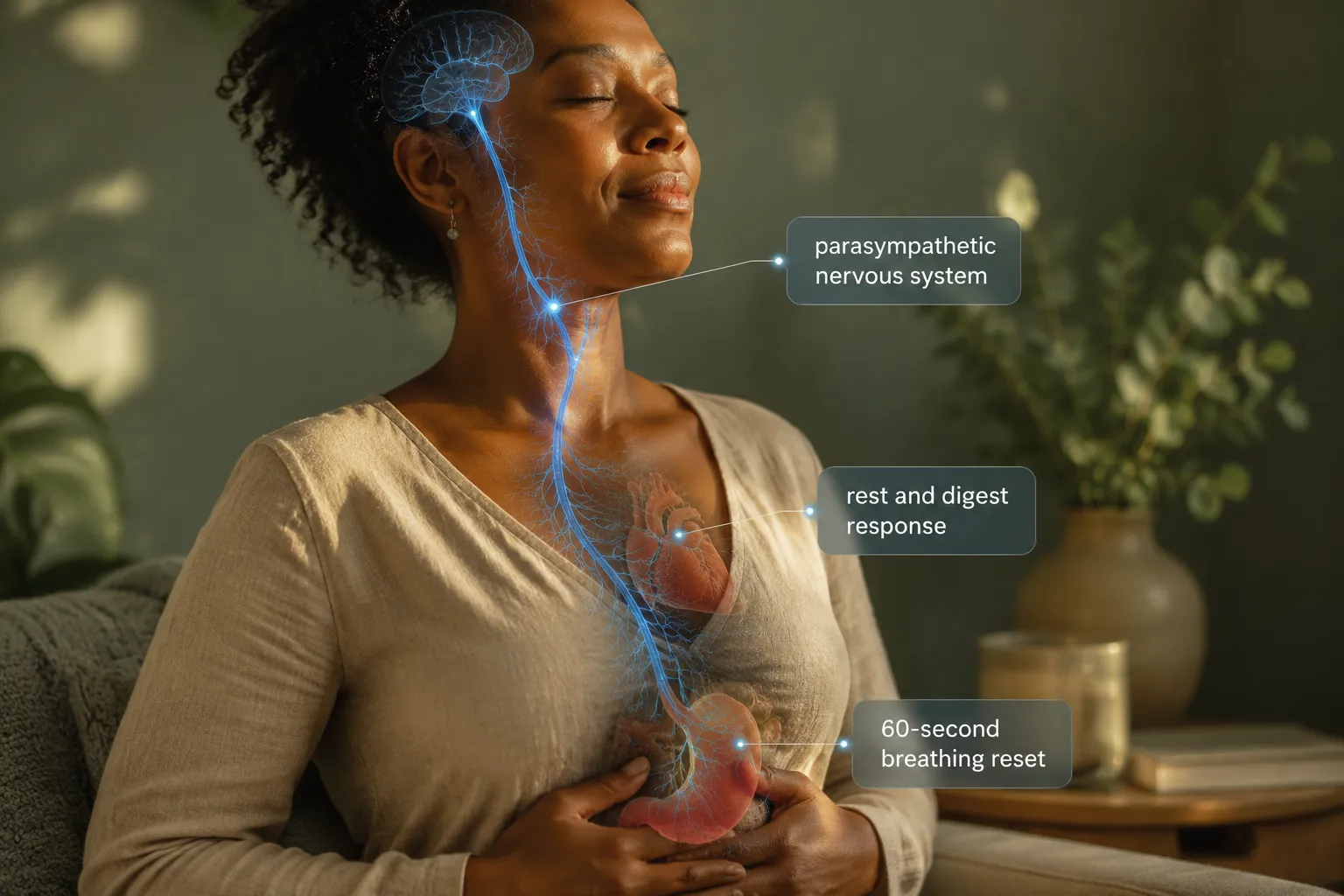
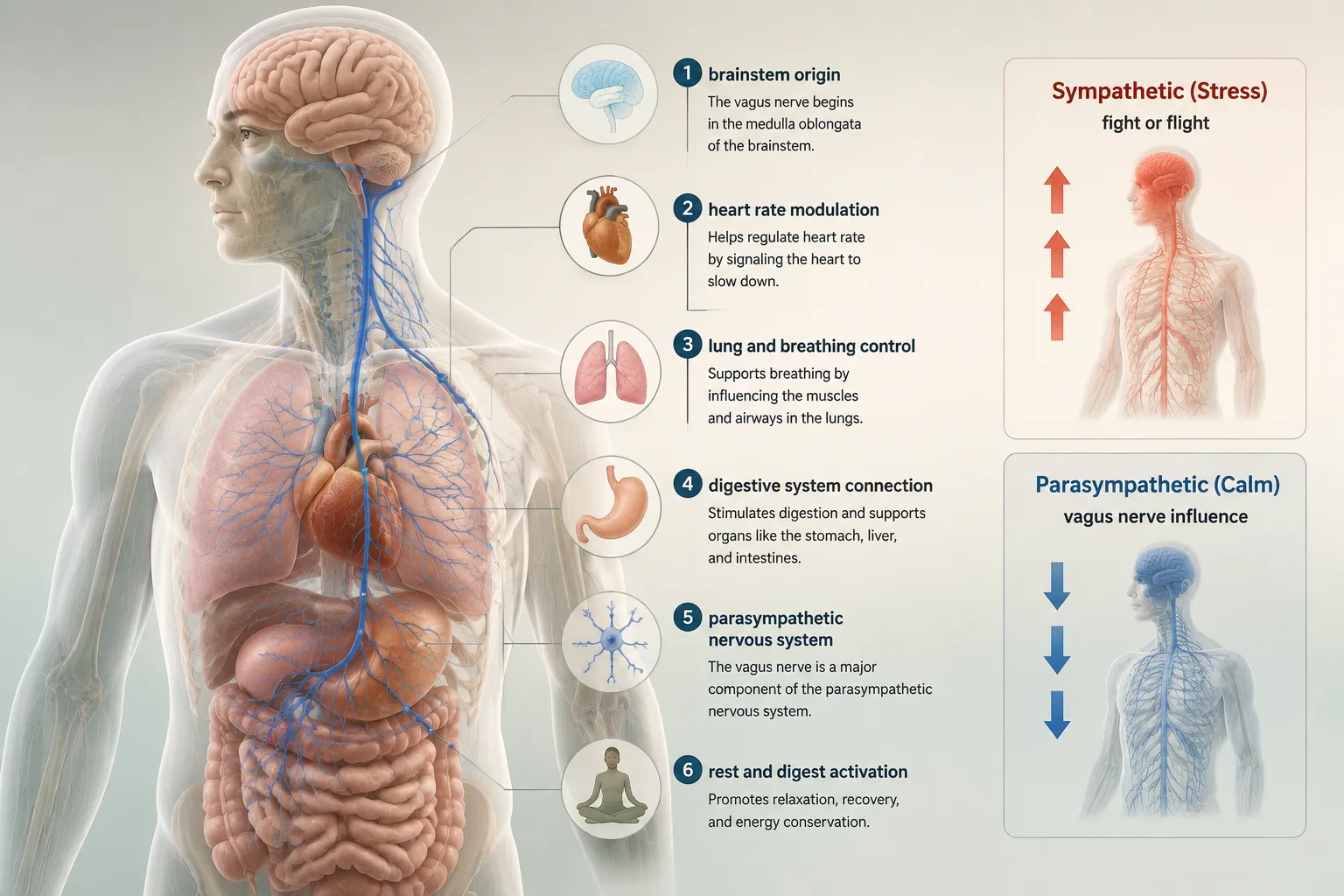
The vagus nerve is the longest and most complex of the cranial nerves, acting as a crucial communication highway between your brain and many vital organs. It’s a key player in the parasympathetic nervous system, which is responsible for your body’s “rest and digest” functions, counteracting the “fight or flight” response of the sympathetic nervous system. It directly impacts heart rate, breathing, digestion, and even your immune response.
Understanding the vagus nerve’s role is important because it’s central to how your body handles stress and recovers from it. When you’re stressed, your sympathetic nervous system often takes over, increasing heart rate and muscle tension. Engaging the vagus nerve through specific techniques can help shift your body back towards a calmer, more regulated state, easing the physical and mental grip of stress.
How does the 60-second vagus nerve reset actually work?
A “vagus nerve reset” is a popular term for quick, accessible techniques that encourage your body’s relaxation response, often through specific breathing patterns. It’s not about literally “resetting” the nerve like a device, but rather about guiding your nervous system towards a state of calm and balance. These exercises typically involve slower, more intentional breathing or focused awareness to gently influence vagal activity [10].
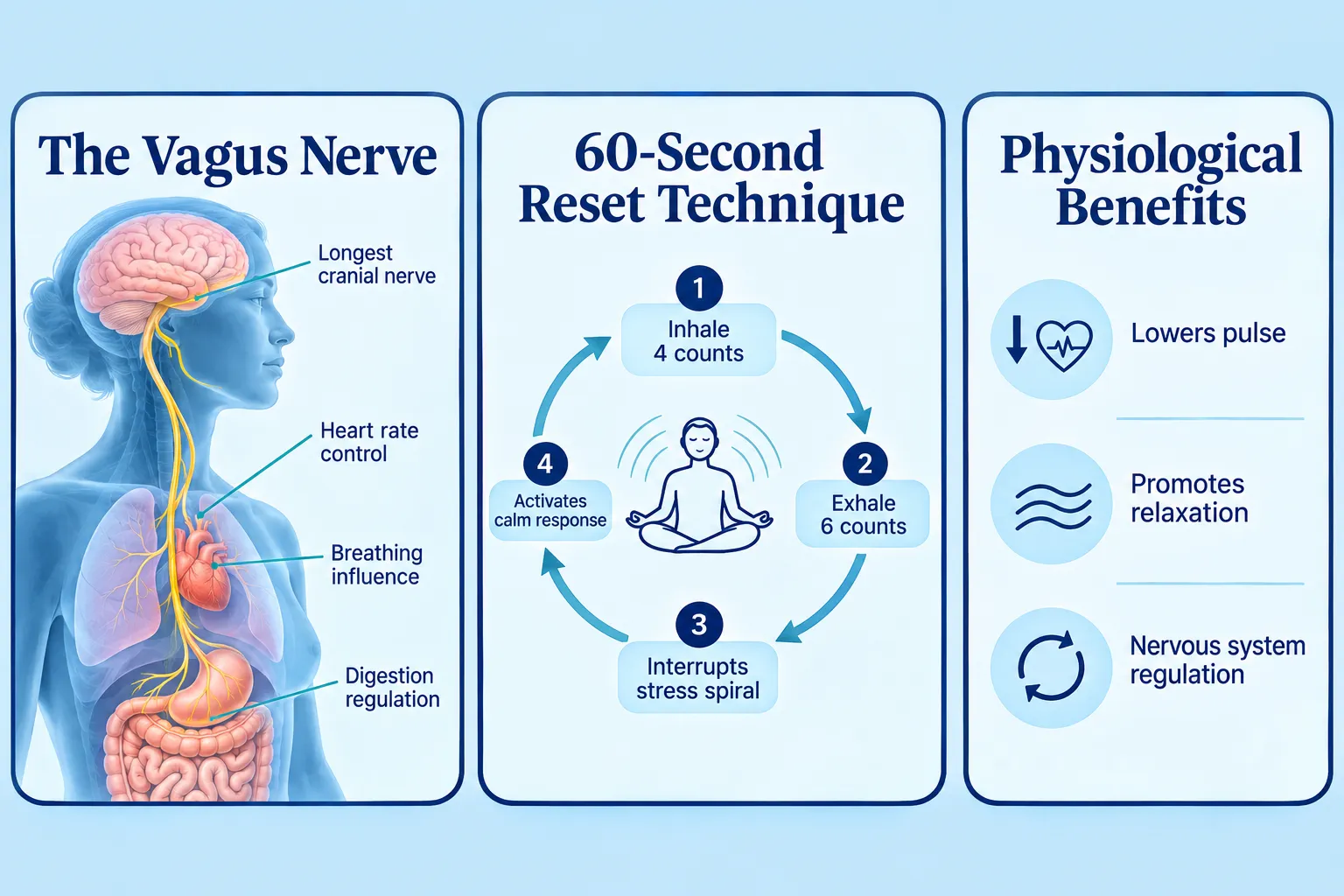
The core idea is to interrupt the stress response, even if only for a brief moment, by engaging mechanisms known to promote parasympathetic activity. This creates a pause, giving you a moment to respond more thoughtfully rather than react automatically to a stressor [5].
The 60-Second Reset: A Simple Breathing Exercise
Here’s a practical, breathing-based exercise that can serve as your 60-second vagus nerve reset:
- Step 1, Stop and Unclench: Wherever you are, take a moment to pause. Consciously relax your jaw, drop your shoulders away from your ears, and release any unnecessary tension you might be holding in your body, like tight fists or a furrowed brow.
- Step 2, Slow Your Breathing: Take a comfortable, gentle breath in through your nose, feeling your belly expand slightly. Then, slowly exhale through your mouth or nose, making this exhale slightly longer than your inhale. Don’t force it; keep it gentle.
- Step 3, Repeat: Continue this slow, gentle breathing pattern for approximately one minute. Focus on the sensation of your breath moving in and out, particularly the slightly longer exhale.
- Step 4, Reorient: After about a minute, gently open your eyes if they were closed. Notice your surroundings: identify one thing you can clearly see, one thing you can distinctly hear, and one physical sensation you can feel (like your feet on the floor or the texture of your clothes). This helps ground you in the present moment.
The purpose of this vagus nerve reset is not to force your body into an instant state of total calmness, but to create a brief, intentional pause between a stress trigger and your subsequent reaction, allowing for nervous system regulation [5].
Why Longer Exhales May Help You Feel Calmer
Focusing on longer exhales is a key component in many stress relief techniques aimed at nervous system regulation. This breathing pattern can influence the autonomic nervous system in a way that promotes relaxation for many people.
When you breathe out slowly, particularly when the exhale is longer than the inhale, it can stimulate the vagus nerve and signal to your brain that it’s safe to relax. This promotes parasympathetic activity, which in turn can lead to a slight decrease in heart rate and blood pressure, shifting your body out of a high-alert state [10]. Additionally, concentrating on your breath itself serves as a powerful distraction from repetitive, stressful thoughts, helping to interrupt a stress spiral. It’s worth noting that while effective for many, individual responses to specific breathing ratios can vary [10].
Can vagus nerve exercises really reduce anxiety and stress?
Yes, vagus nerve exercises, particularly those involving slow, paced breathing, can help reduce feelings of anxiety and stress for many individuals. Research suggests that consciously engaging in breathing protocols designed to stimulate the vagus nerve can lead to improvements in perceived stress and physiological arousal [1, 15]. These exercises facilitate a shift towards parasympathetic nervous system activity, which is associated with relaxation and recovery.
While a 60-second vagus nerve reset won’t “cure” anxiety or stop a panic attack instantly, it can be a valuable tool for acute stress relief and a component of a broader strategy for nervous system regulation. Regular practice of these techniques over time is often recommended for more durable improvements in stress resilience [5].
What’s the difference between vagus nerve reset and other breathing exercises?
While many breathing exercises promote relaxation, “vagus nerve reset” techniques specifically emphasize aspects known to influence the vagus nerve, such as prolonged exhales and diaphragmatic breathing. Other breathing exercises might focus on breath-holding, energizing breaths, or general mindfulness, but a vagus nerve reset often has a direct aim of boosting parasympathetic tone.
Many “vagus nerve reset” protocols, like the “physiological sigh” (a double inhale followed by a long exhale), are now explicitly framed as 30-60 second techniques to rapidly lower heart rate and reduce acute anxiety [4, 12]. This focus on a quick, targeted physiological shift is what often differentiates them from more general meditative or energy-focused breathing practices [5].
Best vagus nerve exercises you can do at work or home
Several simple vagus nerve exercises can be easily integrated into your daily routine, whether you’re at your desk, taking a quick break, or unwinding at home. These exercises are designed for quick stress relief and nervous system regulation.
- Physiological Sigh: This technique involves taking a normal deep nasal inhale, immediately followed by a second, short nasal inhale “on top,” and then a long, complete exhale through the mouth. Repeating this 2-3 times can quickly lower your heart rate and ease acute anxiety [4, 12].
- Extended-Exhale Breathing: As described in the 60-second reset, inhale comfortably and make your exhale slightly longer. Aim for an inhale-to-exhale ratio like 1:1.5 or 1:2 (e.g., inhale for 4 seconds, exhale for 6-8 seconds). This can be done subtly at your desk [2, 13].
- Humming or Gargling: Producing a sustained “voooo” sound during exhalation or gargling vigorously can stimulate vagal branches in the throat and chest, enhancing the effect of breathing resets [6, 9]. This can be done privately at home or during a short break.
- Cold Water Splash: Splashing cold water on your face, particularly around your eyes and temples, for 30-60 seconds can trigger the mammalian dive reflex, rapidly increasing vagal tone and down-regulating acute anxiety [12, 13]. This is a quick option at a sink.
These simple vagus nerve exercises can offer a brief respite when you need to know how to calm stress quickly.
When You’re in a Stress Spiral
A stress spiral can feel like a relentless cycle: your thoughts race, muscles tense, breathing becomes shallow and rapid, and you struggle to concentrate. You might constantly anticipate what could go wrong, feeling unable to “switch off” or find a moment of peace. This intense physiological and psychological state can be overwhelming.
The 60-second vagus nerve reset isn’t a magical solution to eliminate the underlying problem causing your stress, but it functions as a crucial pause. By intentionally slowing your breathing and reorienting your attention, even for a minute, you create a momentary break in the cycle. This allows for a small degree of nervous system regulation, giving you a chance to step back, take a breath, and perhaps choose a more thoughtful next action rather than being swept deeper into the spiral.
5 Other Ways to Regulate Stress
Beyond targeted vagus nerve exercises, several other practical strategies can help you manage stress and promote nervous system regulation throughout your day:
- Take a Short Walk: Even a five-minute stroll can offer a change of environment and interrupt prolonged sitting or rumination. Gentle movement helps release tension and provides a mental break. For more on the benefits, see our guide on The Benefits of Taking a Work Break: Boost Productivity and Relieve Stress! ».
- Reduce Sensory Overload: In a world full of notifications and constant stimuli, consciously reducing sensory input can be profoundly calming. Put your phone away, lower unnecessary app notifications, or step away from a noisy or visually busy environment for a few minutes.
- Relax Your Muscles: Pay attention to where you hold tension in your body. Notice if your jaw is clenched, your shoulders are up near your ears, your hands are fisted, or your forehead is furrowed. Consciously and gently release that tension. This simple act can send a signal of safety to your nervous system.
- Use Grounding: When your mind is racing with stressful thoughts, grounding techniques shift your attention to immediate sensory information. This could involve focusing on the feeling of your feet on the ground, the texture of an object in your hand, or naming five things you can see around you. This redirects focus away from rumination.
- Create a Transition Ritual: After a demanding workday or a stressful event, establish a consistent short routine to signal that the intense period has ended. This could be changing clothes, listening to a specific song, making a cup of tea, or performing a short breathing exercise. It helps your mind and body shift gears.
How often should I do vagus nerve resets for best results?
For best results in managing stress and promoting nervous system regulation, incorporate quick vagus nerve exercises as needed throughout your day during moments of acute stress. Many experts recommend using a 30-60 second reset like the physiological sigh several times daily when you feel overwhelmed [5, 9]. For more lasting changes in autonomic flexibility and stress resilience, however, these quick resets should be complemented by longer, consistent daily practices, such as a 10-minute slow-breathing routine [5].
Think of the 60-second reset as a tactical tool for immediate relief, while longer, regular practice builds your overall capacity to handle stress. One source suggests a 14-day schedule combining daylight exposure, physical movement, and evening paced breathing, with one-minute resets used as needed [5].
Does the vagus nerve reset work immediately or does it take time?
A 60-second vagus nerve reset can provide immediate, acute relief by shifting your physiological state within moments of practice. Techniques like the physiological sigh are reported to rapidly lower heart rate and reduce acute anxiety almost instantly [4, 12, 14]. This immediate effect is why they are recommended for interrupting a stress spiral or managing sudden overwhelm.
However, for durable, lasting changes in your baseline stress resilience and overall nervous system regulation, consistent practice over time is necessary. While a quick reset can calm you in the moment, building stronger vagal tone and improving your long-term ability to handle stress requires regular engagement with these exercises as part of a broader wellness routine [5].
Vagus nerve exercises for panic attacks and acute stress
For panic attacks and acute stress, vagus nerve exercises can function as immediate, tactical interventions to help down-regulate the intense physiological response. Techniques like the physiological sigh (double inhale, long exhale) or immersing your face in cold water are often cited as rapid ways to engage the vagus nerve and reduce acute anxiety [4, 12, 13]. These methods aim to shift the body quickly out of a heightened “fight or flight” state.
While these exercises can be highly effective in reducing the intensity of a panic attack or acute stress episode, it’s crucial to understand they are not a cure. They are tools to help regain some control and promote nervous system regulation during a crisis. If you experience frequent panic attacks, seeking professional support from a mental health professional is highly recommended.
What happens if you stimulate the vagus nerve too much?
It’s difficult to “overstimulate” the vagus nerve in a harmful way through natural, voluntary exercises like breathing or humming. These techniques are gentle and work with your body’s natural rhythms to promote nervous system regulation. The body has inherent feedback loops that prevent excessive parasympathetic activation from simple breathing.
However, medical devices for vagus nerve stimulation (VNS), used for conditions like epilepsy or depression, deliver electrical impulses and can have side effects if settings are too high or incorrectly managed. These devices are very different from the gentle, self-directed vagus nerve exercises discussed here. For healthy individuals engaging in breathing or relaxation, the risk of “too much” vagal stimulation is minimal and generally self-regulating.
Vagus nerve reset vs. meditation: which is better for stress?
Neither a “vagus nerve reset” nor meditation is inherently “better” for stress; they offer different approaches that can complement each other effectively for nervous system regulation. A vagus nerve reset, typically a 30-60 second breathing or grounding exercise, is a rapid, tactical tool for acute stress relief, designed to shift your physiological state quickly in the moment [5].
Meditation, on the other hand, is generally a longer, more holistic practice focused on cultivating sustained awareness, mindfulness, and often, emotional regulation over time. While meditation can certainly incorporate breathwork that influences the vagus nerve, its primary aim is broader mental training rather than immediate physiological shift. For optimal stress management, many find success by using quick vagus nerve resets for acute moments of stress, and integrating regular meditation for long-term resilience and a sustained sense of calm.
Can anyone do vagus nerve exercises or are there contraindications?
Generally, most people can safely perform gentle vagus nerve exercises like slow breathing, humming, or mild grounding techniques. These are non-invasive and work with the body’s natural systems for nervous system regulation. They are often recommended for various populations seeking stress relief, including professionals, students, parents, and adults experiencing everyday overwhelm.
However, if you have certain medical conditions, especially severe cardiovascular issues, respiratory problems, or neurological disorders, it’s wise to consult a healthcare professional before starting any new significant breathing practices or cold-water immersion techniques [12, 13]. People with conditions like severe asthma, uncontrolled high blood pressure, or a history of fainting might need to exercise caution or modify certain intense practices like extended breath holds or very cold exposures. For the simple, gentle 60-second reset described here, contraindications are rare.
Why isn’t my vagus nerve reset working?
If your 60-second vagus nerve reset isn’t providing the immediate relief you expect, there are several factors to consider. First, remember that one minute of breathing won’t necessarily eliminate intense, chronic stress or resolve a deep-seated stress spiral. It’s a pause, not a magic cure [5]. Your response may also vary based on the intensity of your current stress, your individual physiology, and your consistency with practice.
- Intensity of Stress: For very high levels of acute stress or panic, a one-minute technique might only provide minimal relief.
- Expectations: The goal is a brief shift towards calm, not instantaneous complete eradication of stress.
- Technique: Ensure you’re genuinely relaxing your muscles, making the exhale comfortably longer, and focusing on the sensations rather than forcing it.
- Underlying Factors: If stress is persistent or severe, it may require more comprehensive strategies than a quick reset.
- Consistency: Like any skill, the ability to calm yourself improves with regular, consistent practice.
If you find yourself remaining distressed, remember it’s not a failure. Continue with slower, comfortable breathing if it feels helpful; move to a quieter place; talk to someone you trust; or take a short break. The Benefits of Taking a Work Break: Boost Productivity and Relieve Stress! ». Address the underlying stressor when you are calmer.
Vagus nerve exercises for sleep and nervous system recovery
Vagus nerve exercises are highly beneficial for promoting better sleep and overall nervous system recovery, especially when practiced consistently before bedtime. Engaging the vagus nerve helps shift your body from a sympathetic (alert) state to a parasympathetic (rest and digest) state, which is crucial for falling asleep and achieving restorative rest.
- Extended-Exhale Breathing: Practicing slow, comfortable breathing with longer exhales for 5-10 minutes before bed can significantly calm your nervous system, signaling to your body that it’s time to rest [10].
- Humming or Chanting: Gentle humming during exhalations or soft chanting can create vibrations that further stimulate the vagus nerve, aiding relaxation.
- Progressive Muscle Relaxation: Tensing and then completely releasing different muscle groups, combined with slow breathing, helps release physical tension and promotes a deeper state of calm, preparing the body for sleep.
- Guided Relaxation Apps: Many apps offer guided 60-second breathing and grounding sequences designed specifically for stress relief and pre-sleep relaxation [7].
These practices help down-regulate an overactive mind and body, facilitating nervous system recovery after a stressful day and preparing you for a more restful night. For more tips on improving sleep, consider exploring 10 Simple Things That Will Make You Sleep like a Baby Tonight ».
Scientific evidence for vagus nerve stimulation and stress relief
Scientific evidence supports the principle that stimulating the vagus nerve, particularly through slow, paced breathing, can contribute to stress relief and nervous system regulation. Recent proof-of-concept data from 2025 indicates that vagal nerve-targeted paced-breathing protocols, especially when paired with biofeedback, can significantly reduce perceived stress and physiological arousal in highly stressed individuals during brief sessions [1]. Studies have shown that slow-paced breathing can acutely increase heart-rate variability (HRV), a key indicator of vagal tone, even in severely ill patients [15].
The “Respiratory Vagal Stimulation Model” has decades of data illustrating that slow, deep breathing (around 5-6 breaths per minute with controlled exhalation) consistently raises parasympathetic activity and can reduce anxiety and stress markers [10]. While a 60-second reset is an acute tool, it leverages these established mechanisms. Larger clinical trials, such as the 2026 LasaiON trial combining transcutaneous auricular vagus nerve stimulation (taVNS) with HRV-guided breathing, are further exploring multimodal approaches for reducing emotional distress and strengthening stress-regulation skills [3]. This ongoing research reinforces that while quick resets are helpful, integrating them into consistent behavioral training is key for durable benefits [5].
What If the Technique Doesn’t Work?
It’s important to understand that a one-minute breathing technique, while helpful, will not necessarily eliminate intense or persistent stress. If you try the 60-second vagus nerve reset and still feel distressed, it’s not a sign of failure. It simply means you might need a different or more extensive approach for your current situation.
If you remain distressed:
- Continue with Slower Breathing: If comfortable, continue with gentle, slower breathing for a few more minutes.
- Move Somewhere Quieter: A change of environment can sometimes help reset your focus.
- Talk to Someone You Trust: Sharing your feelings with a friend, family member, or colleague can often alleviate some burden.
- Take a Short Break: Step away from the demanding task or environment entirely. The Benefits of Taking a Work Break: Boost Productivity and Relieve Stress! »
- Address the Underlying Stressor: When you are calmer, consider how you might address or mitigate the source of your stress.
Remember, needing more than a one-minute technique is not a sign of weakness; it’s a normal part of managing complex human experiences.
When Stress Needs More Than a Quick Reset
While quick vagus nerve exercises are excellent tools for managing acute moments of stress, it’s crucial to recognize when persistent or severe stress requires professional support. A 60-second reset is a temporary aid, not a comprehensive treatment for chronic conditions.
You should speak with a qualified healthcare or mental-health professional if your stress is:
- Persistent: You feel overwhelmed or anxious most of the time, not just in specific moments.
- Interfering with Daily Life: Stress makes it difficult to perform at work or school or to maintain relationships.
- Affecting Sleep or Work: You experience chronic insomnia, fatigue, or a significant drop in productivity because of stress.
- Becoming Difficult to Manage: Your usual coping mechanisms are no longer effective, and you feel a loss of control.
- Accompanied by Severe Physical or Emotional Symptoms: This includes frequent headaches, digestive issues, chronic pain, feelings of hopelessness, intense irritability, or social withdrawal.
If you experience symptoms such as chest pain, severe difficulty breathing, fainting, or other potentially serious physical symptoms, seek appropriate medical care immediately. These could indicate an underlying medical issue that requires professional attention, not just stress management techniques.
The 60-Second Stress Reset, Quick Checklist
- Pause 👋
- Relax your shoulders and jaw.
- Breathe slowly and comfortably.
- Make the exhale slightly longer than the inhale.
- Notice your surroundings (one thing seen, one heard, one felt).
- Decide your next small action.
Conclusion
The “60-second vagus nerve reset” is a powerful, accessible tool for anyone looking for quick stress relief and nervous system regulation in the face of daily demands. By understanding that it’s a method to encourage a calmer physiological state rather than a literal device reset, you can leverage simple techniques like slow, exhale-focused breathing to create a vital pause between a stressor and your reaction.
You don’t need to solve the entire stressful situation in 60 seconds. You only need to create enough space to respond instead of automatically reacting. This brief exercise, along with other practical strategies like movement, sensory reduction, and grounding, forms a valuable part of a larger stress-management toolkit. Remember, for persistent or severe stress, seeking professional help is a sign of strength and self-care. Integrate these small shifts, and watch how they collectively contribute to a more resilient, regulated you in 2026.