Last updated: August 10, 2026
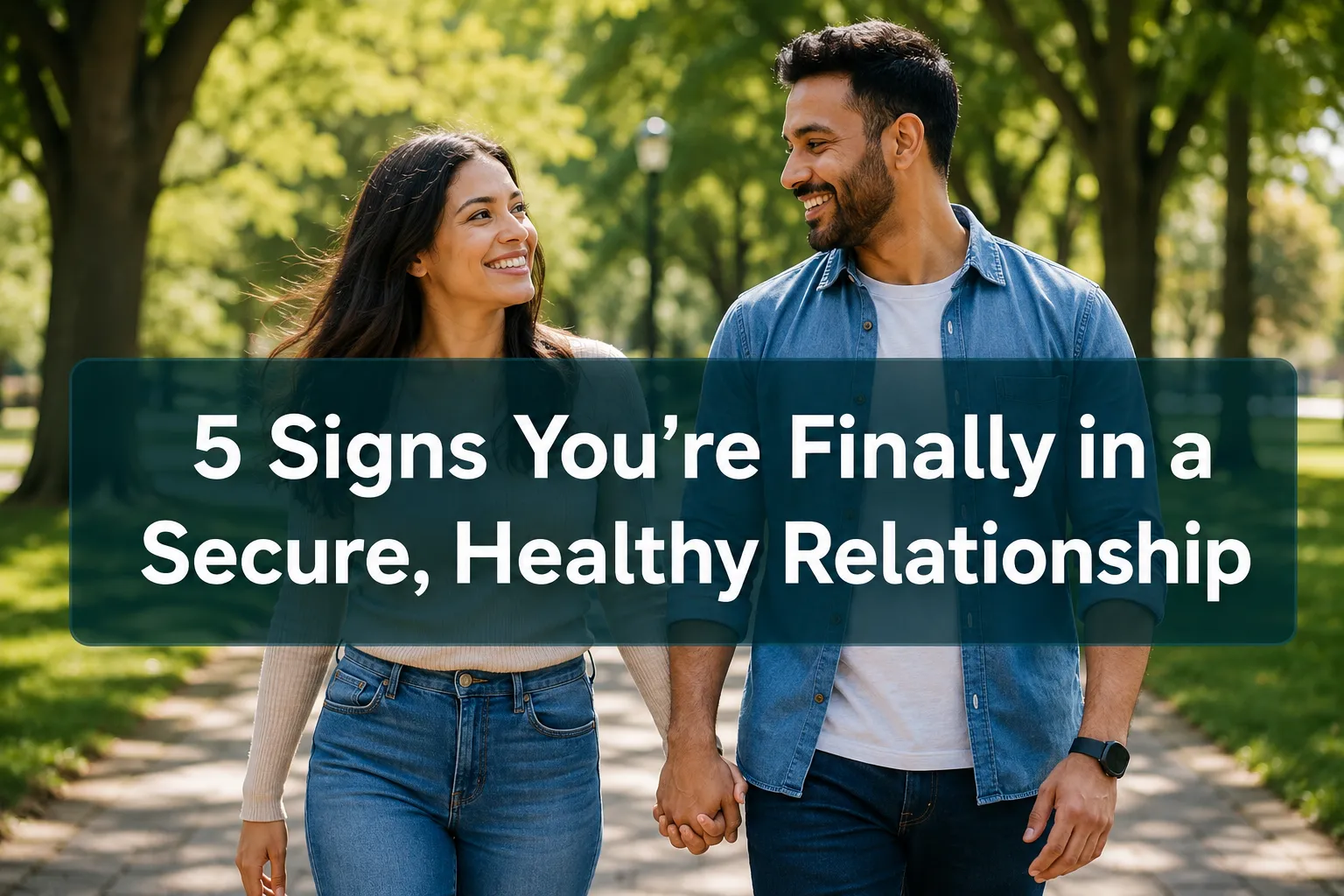
Identifying truly healthy relationship signs can be challenging in 2026, especially with dating apps and social media often highlighting “red flags” without adequately defining what positive behaviors, or “green flags in a relationship,” actually look like. This guide offers practical relationship advice for 2026, helping you recognize the hallmarks of a secure relationship built on emotional maturity and mutual respect.

Key Takeaways
- Green flags are positive indicators of a healthy and secure relationship, focusing on trust, respect, and emotional safety.
- Healthy communication involves active listening, honest expression, and mutual understanding, ensuring both partners feel heard and valued.
- Mutual trust in a relationship means having confidence in your partner’s intentions and actions without needing constant reassurance.
- Respect for personal boundaries is crucial for individual autonomy and signals a partner’s commitment to your well-being.
- Emotional support during difficult times builds resilience and deepens connection, showing partners are there for each other through thick and thin.
- Shared growth and encouragement mean partners inspire each and celebrate individual and joint successes, fostering a dynamic and evolving partnership.
- Emotional maturity in relationships is key to navigating challenges constructively and maintaining a strong bond.
What Are Green Flags in a Relationship?
Green flags in a relationship are positive indicators that signal a healthy, secure, and thriving partnership, contrasting sharply with the “red flags” that warn of potential issues [1]. These are the behaviors and dynamics that foster trust, mutual respect, and emotional security, crucial components of how to know if your relationship is healthy [2]. Recognizing green flags is just as important as identifying red flags because they provide a roadmap for what to cultivate and appreciate in a partner and a partnership.
Why They’re Just as Important as Identifying Red Flags
While “red flags” focus on avoiding harm, “green flags” actively guide individuals towards building connections that promote well-being and growth [2]. They represent the essential building blocks for a sustainable, fulfilling partnership.
The Role of Trust, Respect, and Emotional Security
At the core of green flags are trust, respect, and emotional security. Trust allows both partners to feel safe and vulnerable, knowing their partner has their best interests at heart. Respect ensures that each individual’s autonomy, values, and opinions are honored. Emotional security provides a stable foundation where both partners feel safe to express themselves without fear of judgment or abandonment [10]. These elements are vital for developing a secure relationship and fostering emotional maturity in relationships.
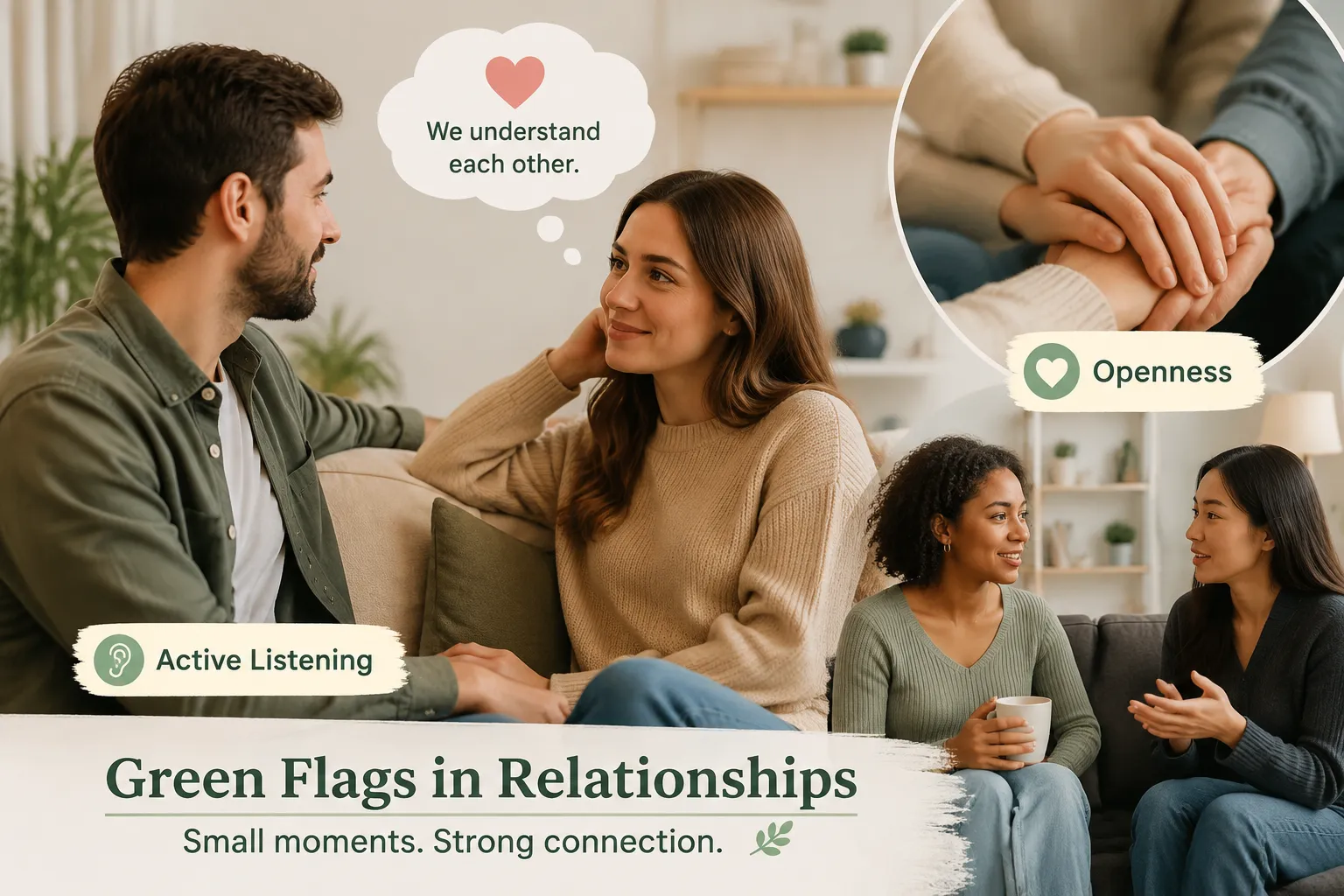
1. Healthy Communication: The Foundation of Connection
Healthy communication is the cornerstone of any thriving partnership, enabling partners to express their needs, feelings, and thoughts openly and respectfully [10]. This means not just talking, but actively listening and striving for mutual understanding.
Why It Matters Psychologically
Effective communication fosters psychological safety, allowing both partners to feel heard and valued, which is fundamental to a secure relationship [4]. When communication is healthy, it reduces misunderstandings, resolves conflicts constructively, and strengthens the emotional bond between partners [9]. It also demonstrates a high level of emotional maturity in relationships as partners navigate differences with empathy and a desire for resolution.
Relatable Real-Life Example
Imagine Sarah is feeling stressed about a looming deadline at work. Instead of bottling it up, she tells her partner, Mark, “I’m feeling really overwhelmed with this project. I might be a bit distant this week.” Mark responds, “Thanks for letting me know. How can I support you? Do you need some quiet time, or would a distraction help later?” This exchange shows clear, honest communication and an empathetic, supportive response. This is a prime example of effective communication in relationships.
Common Misconceptions
A common misconception is that healthy couples never argue. In reality, all couples argue; what matters is how they argue [4]. Healthy communication during conflict involves expressing disagreements respectfully, focusing on the issue rather than personal attacks, and working towards a solution together, not “winning” the argument [10].
Practical Advice for Nurturing This Behavior
- Practice active listening: Give your partner your full attention, make eye contact, and avoid interrupting. Paraphrase what they’ve said to confirm understanding.
- Use “I” statements: Frame your feelings and needs from your perspective (“I feel sad when…” instead of “You always make me feel…”).
- Schedule check-ins: Designate time to talk about your day, concerns, and joys, even if it’s just 15 minutes.
How to Tell if Your Partner is Emotionally Mature
A partner is emotionally mature when they can manage their own emotions, communicate effectively, take responsibility for their actions, and show empathy towards others [8]. They don’t shy away from difficult conversations and are capable of self-reflection and growth.
Why It Matters Psychologically
Emotional maturity is critical for navigating the complexities of a long-term partnership [4]. Psychologically, it means a partner can regulate their responses, rather than react impulsively, which creates a stable and predictable environment in the relationship. This trait is a significant green flag in a relationship because it underpins the ability to maintain a healthy and secure bond even when faced with challenges [8].
Relatable Real-Life Example
Consider Alex, who accidentally double-booked a dinner plan with friends on the same night as a long-standing date with his partner, Jamie. Instead of making excuses or getting defensive, Alex immediately apologizes, takes full responsibility, and suggests ways to make it up to Jamie, like rescheduling the date for another night and planning something special. This demonstrates an emotionally mature partner’s willingness to own their mistakes and prioritize their partner’s feelings [8].
Common Misconceptions
Some people confuse emotional maturity with a lack of strong feelings or always being calm. However, emotional maturity is not about suppressing emotions but about understanding and expressing them constructively, even in moments of intense feeling [4]. It’s also not about avoiding conflict, but engaging in it productively.
Practical Advice for Nurturing This Behavior
- Encourage self-reflection: Support your partner (and practice yourself) in understanding personal triggers and emotional responses.
- Practice empathy: Try to see situations from your partner’s perspective, even if you don’t agree with their viewpoint.
- Take ownership: Both partners should be encouraged to acknowledge their role in conflicts and actively work towards repair.
2. Mutual Trust Without Constant Reassurance
Mutual trust is a foundational pillar of any secure relationship, meaning both partners believe in each other’s honesty, integrity, and commitment without needing continuous verification [7]. This inherent belief in one another fosters a profound sense of safety and freedom.
Why It Matters Psychologically
Psychologically, trust allows for vulnerability and authentic self-expression, as partners feel safe enough to be themselves without fear of betrayal or judgment [7]. The absence of constant reassurance-seeking indicates a healthy attachment style, where partners are secure in their bond and don’t require external validation to feel loved or important [6]. This is a core element of how do you know if you trust your partner, indicating deep emotional safety in a relationship.
Relatable Real-Life Example
Consider a scenario where Maya’s partner, David, goes out with friends. Maya doesn’t feel the need to text him constantly, check his location, or question his every move. She trusts that David is being honest about his plans and will communicate if anything changes. Conversely, David trusts Maya to manage her own time and decisions, knowing she respects their relationship. This mutual, unspoken trust allows both individuals to enjoy their independence without insecurity [7].
Common Misconceptions
Some might confuse trust with blind faith or a lack of concern. However, mutual trust doesn’t mean ignoring red flags or being naive. It means having confidence in your partner’s character and actions, built on a history of reliability and open communication [7]. It also doesn’t mean never discussing concerns, but rather addressing them from a place of trust rather than suspicion.
Practical Advice for Nurturing This Behavior
- Be consistent and reliable: Follow through on your promises and commitments. Consistency builds a strong foundation of trust over time [7].
- Practice transparency: Be open about your activities and feelings, even when it’s uncomfortable. Transparency reduces suspicion.
- Give space and freedom: Allow your partner autonomy and trust them to make their own decisions. Over-control can erode trust.
What Does Secure Attachment Look Like in a Relationship?
A secure attachment style in a relationship is characterized by comfort with intimacy and independence, where individuals feel safe to express their needs and trust their partner’s responsiveness without excessive worry or avoidance [6]. Partners with secure attachment are typically reliable, emotionally available, and capable of both giving and receiving support.
Signs Your Relationship Has Good Communication
Good communication in a secure relationship is marked by active listening, direct and honest expression of feelings, respectful disagreement, and effective conflict resolution [4]. Partners genuinely strive to understand each other’s perspectives, offer validation, and work together to find solutions, avoiding blame or personal attacks [10]. They often initiate conversations about difficult topics rather than letting resentments fester.
3. Respect for Personal Boundaries
Respect for personal boundaries involves acknowledging and honoring each other’s individual needs for space, time, privacy, and personal choices [4]. This green flag signifies that both partners recognize and value each other as distinct individuals with their own lives outside the relationship.
Why It Matters Psychologically
Psychologically, respecting boundaries reinforces individual autonomy and self-worth within the partnership [10]. It prevents codependency and fosters a sense of personal freedom, which is crucial for individual well-being and the overall health of the relationship [4]. When boundaries are respected, it builds trust and demonstrates a profound level of emotional maturity in relationships.
Relatable Real-Life Example
Imagine Emily needs an hour of quiet time after work to decompress. Her partner, Ben, understands and respects this boundary. Instead of immediately engaging her in conversation or asking for favors, he gives her the space she needs, perhaps by focusing on his own activity or offering to make dinner while she unwinds. This demonstrates healthy relationship boundaries examples and mutual respect for individual needs.
Common Misconceptions
A common misconception is that boundaries create distance or a lack of intimacy. In reality, healthy boundaries enhance intimacy by creating a safe space where both partners feel secure and respected enough to be truly vulnerable [10]. Boundaries are not about keeping secrets but about defining personal limits and needs.
Practical Advice for Nurturing This Behavior
- Clearly articulate your boundaries: Communicate your needs and limits explicitly to your partner.
- Respect “no”: When your partner expresses a boundary, honor it without argument or guilt-tripping.
- Regularly check-in: Discuss how boundaries are working for both of you and adjust as needed.
4. Emotional Support During Difficult Times
Emotional support during difficult times means being a reliable source of comfort, empathy, and practical help when your partner faces challenges, distress, or personal setbacks [2]. This unwavering presence reinforces the idea that you are a team, facing life’s ups and downs together.
Why It Matters Psychologically
Psychologically, receiving emotional support during hardship strengthens resilience and deepens the emotional bond [4]. It validates feelings and reduces the burden of stress, fostering a sense of shared experience and unwavering commitment. This is a powerful green flag in a relationship, showing that a secure relationship is built on compassion and mutual care [2].
Relatable Real-Life Example
When David loses his job, his partner, Sarah, doesn’t just offer platitudes. She actively listens to his fears, reassures him of her belief in his abilities, and offers practical support, like helping update his resume or managing household tasks while he searches for new opportunities. She validates his emotions, saying, “It’s okay to feel upset and scared right now. We’ll figure this out together.” This comprehensive support demonstrates genuine care and commitment.
Common Misconceptions
Some people believe “tough love” is always the best approach, or that a partner should just “get over it.” However, true emotional support involves empathy and validating feelings first, rather than immediately jumping to solutions or downplaying their experience [4]. It’s about being present and understanding, not necessarily solving every problem for them.
Practical Advice for Nurturing This Behavior
- Listen without judgment: Allow your partner to express their feelings fully without interrupting or offering unsolicited advice.
- Validate their emotions: Acknowledge their feelings (“That sounds incredibly frustrating,” or “It’s understandable you feel sad”).
- Offer practical help: Ask, “How can I best support you right now?” or “Is there anything I can do to help ease your burden?”
What Does Emotional Safety Mean in a Relationship?
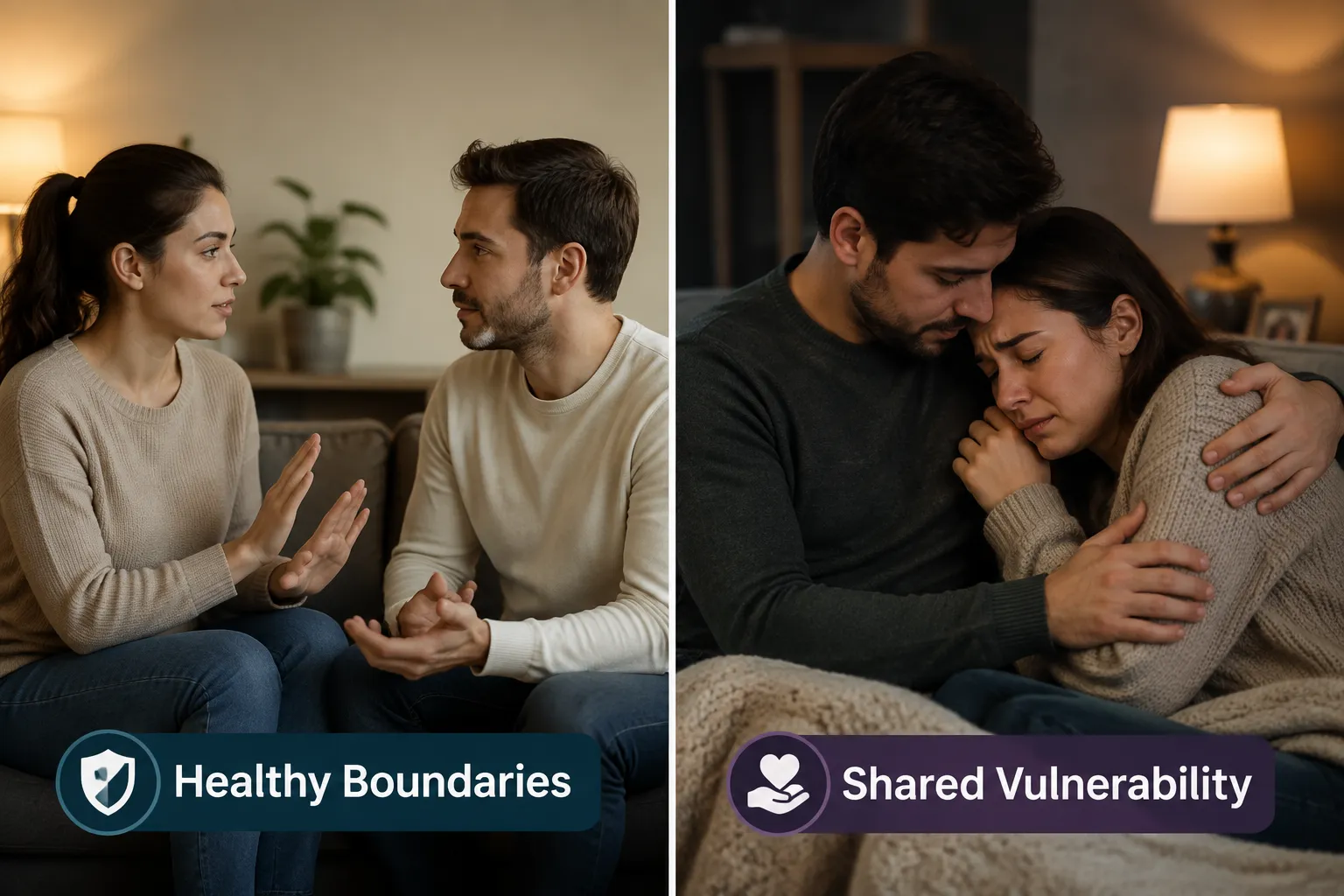
Emotional safety in a relationship means both partners feel secure enough to be vulnerable, express their true selves, and share their deepest fears and desires without fear of judgment, ridicule, or abandonment [10]. It’s the assurance that your partner will respond with empathy, respect, and care, creating a sanctuary where you can truly be yourself.
5. Shared Growth and Mutual Encouragement
Shared growth and mutual encouragement signify that both partners are invested in each other’s personal development, goals, and aspirations, both individually and as a couple [2]. This green flag means you’re each other’s biggest cheerleaders, inspiring and supporting progress rather than hindering it.
Why It Matters Psychologically
Psychologically, this dynamic fosters personal fulfillment and prevents stagnation within the relationship, which is vital for long-term compatibility [4]. When partners encourage each other’s growth, they contribute to a more dynamic and satisfying partnership, continuously evolving and adapting together. This demonstrates a proactive approach to [relationship advice 2026], ensuring the bond remains fresh and resilient.
Relatable Real-Life Example
Imagine Clara decides to go back to school to pursue a long-held dream. Her partner, Michael, not only expresses pride and enthusiasm but also offers practical support: he might take on more household chores, help her study, or celebrate her small victories along the way. He doesn’t feel threatened by her ambition but sees it as an enrichment to their shared life, showcasing mutual encouragement and a secure relationship dynamic.
Common Misconceptions
Some people might confuse mutual encouragement with constantly pushing a partner, or only celebrating “big” achievements. However, true encouragement involves celebrating small steps, providing gentle support during setbacks, and respecting when a partner needs space or time to pursue their goals, rather than imposing expectations [2]. It’s about being a consistent source of positive reinforcement.
Practical Advice for Nurturing This Behavior
- Listen to aspirations: Actively listen to your partner’s dreams, goals, and interests, and remember them.
- Offer specific praise: Acknowledge their efforts and achievements, no matter how small. “I’m so impressed by your dedication to learning that new skill!”
- Collaborate on goals: If appropriate, find ways to support their goals actively, or set joint goals that encourage shared growth.
Green Flags vs. Red Flags
Understanding the distinction between green flags and red flags is crucial for navigating modern relationships. While red flags signal potential danger or unhealthy patterns, green flags indicate positive, healthy behaviors and dynamics [1].
| Aspect | Green Flags | Red Flags |
|---|---|---|
| Communication | Open, honest, respectful dialogue [10] | Evasiveness, yelling, silent treatment [4] |
| Trust | Mutual belief without constant verification [7] | Suspicion, jealousy, dishonesty |
| Boundaries | Respect for individual needs and space [4] | Disregarding limits, control, manipulation |
| Support | Empathetic, reliable during tough times [2] | Indifference, criticism, blame |
| Growth | Mutual encouragement and personal development | Discouragement, possessiveness |
| Conflict | Constructive resolution, compromise [10] | Avoidance, aggression, unresolved issues |
This comparison highlights that green flags lead to a secure, healthy relationship, whereas red flags often indicate a lack of emotional maturity in relationships.
Can a Relationship Develop Green Flags Over Time?
Yes, absolutely! Healthy relationships are not born perfect but are built and evolve through consistent effort, open communication, and a commitment to growth from both partners [4]. While some green flags might be present early on, many, like deep trust, emotional safety, and mature handling of conflict, develop and strengthen over time as partners learn about each other and commit to the relationship.
Relationships can recover from trust issues if both partners are committed to rebuilding it through consistent honesty, accountability, and a willingness to work through the underlying problems [7]. Similarly, emotional maturity can be cultivated through self-awareness, therapy, and conscious effort. It’s a journey of continuous learning and adaptation, emphasizing that a secure relationship is an ongoing process, not a static state.
What’s the Difference Between Being Independent and Distant in a Relationship?
Being independent in a relationship means maintaining your individuality, interests, and friendships while still being connected to your partner [4]. It’s a sign of a secure attachment. Being distant, however, suggests an emotional withdrawal, a lack of engagement, or an unwillingness to connect, which can be detrimental to a healthy relationship. An independent partner might enjoy solo hobbies, while a distant partner actively avoids intimacy or shared experiences.
How Often Should Couples Argue in a Healthy Relationship?
There’s no specific “right” number of arguments for a healthy relationship. Healthy couples do argue, but they do so constructively, focusing on resolving issues and understanding each other, rather than resorting to personal attacks [10]. Frequent, unresolved arguments can be a red flag, but occasional disagreements that lead to greater understanding are often a sign of open communication and a growing partnership.
How to Know If You’re With the Right Person
Knowing if you’re with the right person involves recognizing a consistent pattern of green flags that align with your values and needs [3]. It means feeling emotionally safe, respected, and supported, and seeing a future where you both grow and thrive together [2]. While there’s no single checklist, a strong sense of peace, mutual effort, and shared joy are significant indicators. The relationship should feel like a secure haven, not a constant source of anxiety or doubt.
Signs You’re in a Codependent Relationship Instead of Secure
In a secure relationship, partners maintain their individuality, support each other’s growth, and have independent lives. In contrast, signs of a codependent relationship include an excessive reliance on your partner for self-worth, difficulty making decisions independently, feeling responsible for your partner’s emotions or actions, and losing your sense of self within the relationship [4]. Codependency often lacks the healthy boundaries and mutual respect found in a truly secure relationship.
What Does Vulnerability Look Like in a Healthy Relationship?
Vulnerability in a healthy relationship means openly sharing your true thoughts, feelings, fears, and past experiences with your partner, trusting that they will respond with empathy and acceptance [10]. It’s about being authentic and showing your imperfections without fear of judgment or rejection. This deep level of honesty builds profound emotional intimacy and strengthens the bond, knowing your partner loves and accepts the real you.
How to Build Emotional Intimacy With Your Partner
Building emotional intimacy involves consistent efforts to foster deep connection. This includes effective communication in relationships, sharing personal stories and feelings, practicing active listening, being present and attentive, engaging in shared experiences, and showing consistent empathy and support [4]. It also means being vulnerable and allowing your partner to see your authentic self, which strengthens the bond over time.
Conclusion
Recognizing green flags in a relationship shifts our focus from simply avoiding harm to actively seeking and nurturing positive connections. In 2026, with the complexities of modern dating, understanding these healthy relationship signs is more vital than ever for building a truly secure relationship. By prioritizing healthy communication, mutual trust, respecting boundaries, offering emotional support, and fostering shared growth, you pave the way for a partnership rich in emotional maturity and lasting happiness. Embrace these insights to cultivate relationships that are not just exciting, but profoundly fulfilling and sustainable for the long term.
References
[1] Five Green Flags To Look For When Dating – https://www.cnbc.com/2026/03/18/five-green-flags-to-look-for-when-dating.html
[2] Healthy Relationship Green Flags – https://www.crushyheart.com/2026/07/healthy-relationship-green-flags.html
[3] A Psychologist Made A Test To Find Your Best Relationship Green Flag – https://www.forbes.com/sites/traversmark/2026/02/10/a-psychologist-made-a-test-to-find-your-best-relationship-green-flag/
[4] 10 Green Flags For Relationships – https://www.psychologytoday.com/us/blog/assembly-required/202401/10-green-flags-for-relationships
[6] What Does Secure Attachment Look Like 15 Signs – https://psyculator.com/blog/what-does-secure-attachment-look-like-15-signs/
[7] 5 Signs Your New Partner Has A Genuinely Secure Attachment Style 289628 – https://www.femina.in/relationships/love-sex/5-signs-your-new-partner-has-a-genuinely-secure-attachment-style-289628.html
[8] 3 Signs You Have A Secure Partner According To A Psychologist – https://www.forbes.com/sites/traversmark/2025/03/08/3-signs-you-have-a-secure-partner-according-to-a-psychologist/
[9] 2026 08751 001 – https://psycnet.apa.org/record/2026-08751-001
[10] Green Flags In A Relationship – https://www.wondermind.com/article/green-flags-in-a-relationship/