The year is 2026, and in a world teeming with constant change and relentless demands, the ability to maintain unshakeable confidence has never been more crucial. Many individuals find themselves caught in cycles of self-doubt, anxiety, and unfulfilled potential, often without understanding the root cause. This often stems from a deeply ingrained, often unconscious, self-image. What if you could upgrade your mental software? What if you could deliberately reshape your self-beliefs, halt self-sabotage, and unleash an intrinsic, unwavering confidence that profoundly affects every decision and relationship? This is the transformative promise of Psycho-Cybernetics for 2026: Reprogram Your Self-Image to Build Unshakeable Confidence.
Maxwell Maltz, a plastic surgeon, first introduced the principles of Psycho-Cybernetics in 1960. He observed that patients who underwent physical changes often retained their old self-image, leading to a persistent lack of confidence despite their altered appearance. He realized that the ‘self-image’—our internal blueprint of whom we believe ourselves to be—governs our actions, feelings, and potentially far more than our external reality. For 2026, his timeless insights offer a potent framework for personal mastery. This article will delve into how these principles can be applied today to cultivate an unshakeable inner core, leading to greater success, happiness, and fulfillment in all areas of life.


Key Takeaways
- Your Self-Image is Your Operating System: Understand that your internal self-image dictates your behavior, emotional responses, and ultimate achievements. It acts like a guidance system, ensuring your actions align with your internal beliefs.
- The Power of Imagination and Visualization: Learn to use your creative imagination consciously to pre-experience success and positive outcomes, effectively “reprogramming” your subconscious mind.
- Deactivating Negative Self-Talk and Beliefs: Discover techniques to identify and neutralize self-defeating thoughts and limiting beliefs that hold you back from reaching your full potential.
- Goal-Oriented Action and Feedback: Embrace the concept of goal-striving as a cybernetic mechanism, continuously adjusting your course based on feedback to achieve desired results and reinforce a positive self-image.
- Cultivating a Success Mechanism: Activate your innate “success mechanism” by focusing on positive outcomes, forgiving past mistakes, and acting as if you are already the confident person you aspire to be.
Understanding the Core Principles of Psycho-Cybernetics for 2026: Reprogram Your Self-Image
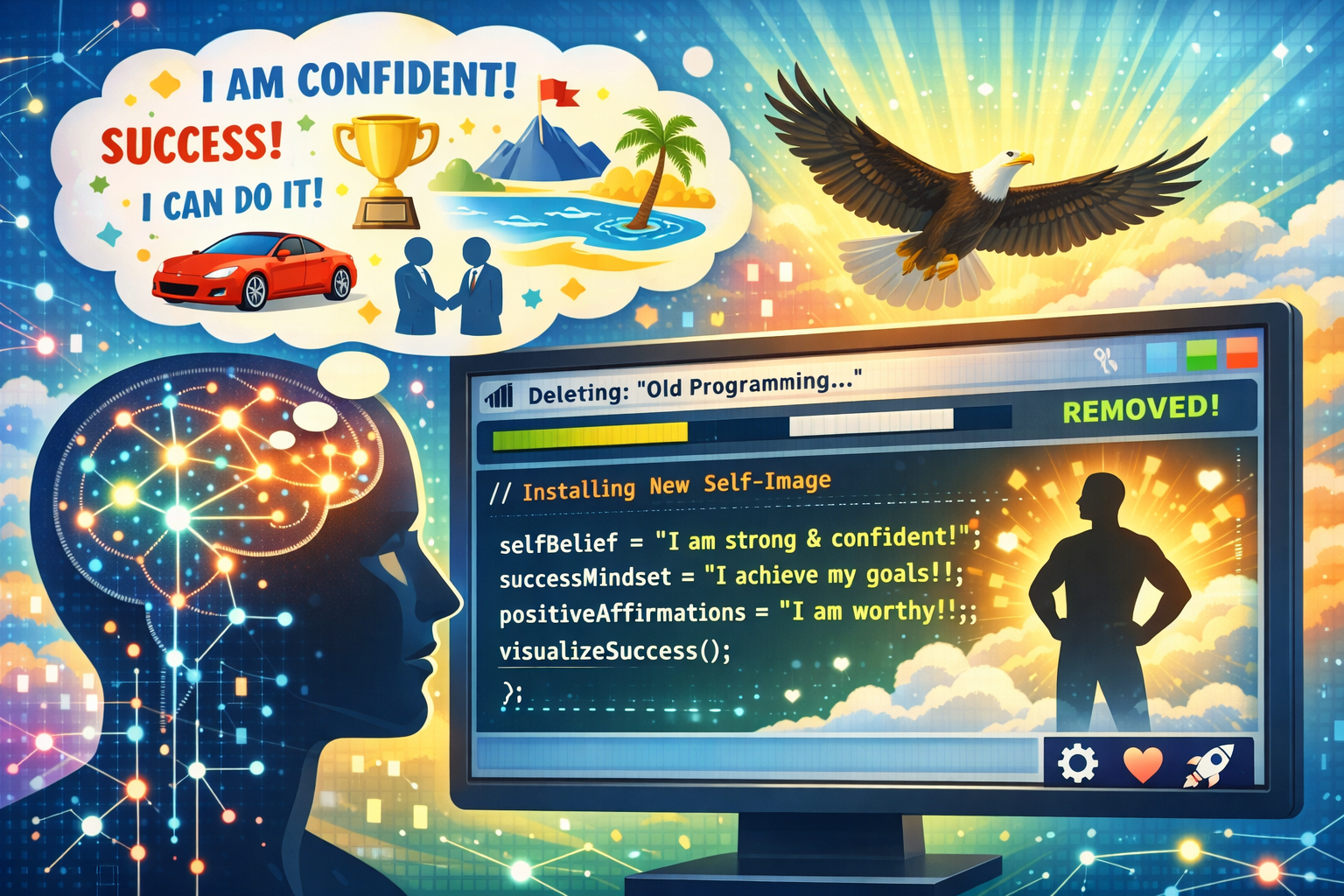
At the heart of Psycho-Cybernetics lies the understanding that the human mind operates much like a sophisticated goal-seeking mechanism, akin to a servo-mechanism or a guided missile. Just as a missile is programmed to hit a target, your nervous system is continuously working to achieve the goals set by your self-image. If your self-image is one of inadequacy, fear, or failure, your internal guidance system will consistently steer you towards experiences that confirm these beliefs. Conversely, an empowered self-image directs you toward success and fulfillment. In 2026, with the rapid advancements in technology and information, understanding this internal programming is more vital than ever for personal effectiveness.
Maltz’s groundbreaking work revealed that many people suffer from an inaccurate or negative self-image, which acts as an invisible barrier to their potential. This self-image is formed over years through experiences, beliefs absorbed from others, and our interpretations of events. It resides deep within the subconscious mind, influencing every thought, feeling, and action without conscious effort. The exciting news is that this self-image is not fixed; it can be reprogrammed.
The Self-Image as Your Personal “Thermostat” 🌡️
Imagine your self-image as a thermostat for your life. If your thermostat is set to 68 degrees, your heating and cooling system will constantly work to maintain that temperature. If the room gets too hot, the AC kicks in; if it gets too cold, the heat turns on. Similarly, if your self-image is set to a “success temperature” of, say, average achievement, your internal system will unconsciously sabotage efforts that would take you beyond that point, or conversely, pull you back if you fall below it. This concept helps explain why individuals often revert to old patterns even after experiencing temporary success or failure.
To truly build unshakeable confidence in 2026, the primary task is to reset this internal thermostat. This involves:
- Awareness: Recognizing the current state of your self-image. What beliefs do you hold about yourself? Are they empowering or limiting?
- Acceptance: Understanding that your current self-image is not a reflection of your true potential but a collection of past learnings.
- Action: Deliberately taking steps to change and improve this internal blueprint.
The “Success Mechanism” vs. The “Failure Mechanism”
Maltz posits humans possess an inherent “success mechanism,” a natural ability to achieve goals, solve problems, and adapt. Children, for example, naturally learn to walk, talk, and interact, driven by this innate mechanism. However, negative experiences, criticism, and limiting beliefs can activate a “failure mechanism,” causing individuals to focus on perceived weaknesses, past mistakes, and potential obstacles.
The goal of Psycho-Cybernetics is to deactivate the failure mechanism and fully engage the success mechanism. This isn’t about ignoring problems but approaching them with a mindset of capability and resourcefulness. It’s about training your mind to seek solutions rather than dwelling on limitations.
“You are a success mechanism. You were designed for success. You are born with all the equipment you need to achieve your goals and live a fulfilling life.” — Maxwell Maltz
For those looking to understand the dynamics of their internal guidance system, exploring the concept of self-leadership can be highly beneficial. Learning how to become a self-leader directly correlates with effectively managing and reprogramming your self-image.
The Role of Imagination and Relaxation
Maltz emphasized the critical role of imagination in reprogramming the self-image. The subconscious mind does not differentiate between a vividly imagined experience and a real one. So, visualization is such a powerful tool. By consistently imagining yourself successfully achieving goals, embodying confidence, and overcoming challenges, you are essentially providing your success mechanism with new, positive programming.
Relaxation is equally important because it allows the conscious critical mind to quiet down, making the subconscious more receptive to new ideas and mental imagery. Techniques like meditation or deep breathing create the ideal mental state for this reprogramming to occur. For those interested in enhancing their mental focus and ability to relax, exploring 16 Useful Tips for Improving Your Mental Focus can provide valuable insights.
| Principle | Description | Impact on Confidence |
|---|---|---|
| Self-Image | The mental blueprint of whom you believe you are. It determines your capabilities, limitations, and potential. | A positive, accurate self-image leads to proactive behavior, resilience, and a belief in one’s abilities, fostering unshakeable confidence. A negative one breeds doubt and self-sabotage. |
| Goal-Setting | Your nervous system acts as a servomechanism, working to achieve goals. Clear, vivid goals give your success mechanism a target to aim for. | Setting achievable yet stretching goals, coupled with positive self-imagery, builds a track record of success, reinforcing confidence and proving capability. |
| Imagination | The “creative faculty” through which you can vividly pre-experience desired outcomes. The subconscious mind treats imagined experiences as real. | Regular positive visualization builds a mental library of successful scenarios, preparing your mind for real-world achievement and reducing anxiety, thereby strengthening confidence. |
| Relaxation | A state of mental and physical calm that allows the conscious mind to quiet, making the subconscious more receptive to new programming and ideas. | Reduces stress and tension, which are major confidence inhibitors. Allows for deeper, more effective self-image reprogramming and enhances mental clarity. To understand how to achieve such a state, consider reading our article on Meditation In Depth. |
| Acting ‘As If’ | Behave in the way the confident person you desire to be would act, even if you don’t yet feel fully confident. This bypasses the analytical mind and directly programs the subconscious. | Creates a feedback loop where actions lead to feelings. By acting confidently, you felt confident, which further reinforces your new self-image. |
| De-Hypnotization | The process of identifying and breaking free from negative beliefs and self-imposed limitations, often adopted unconsciously from experiences or others’ opinions. | Frees you from mental shackles, allowing your true potential to emerge. Reduces self-doubt and empowers you to make choices aligned with your desired self-image, boosting confidence significantly. |
| Rational Thinking | The ability to objectively evaluate situations, separate facts from fears, and make logical decisions rather than being driven by emotional reactions rooted in an old self-image. | Helps you override irrational fears and insecurities, leading to more effective problem-solving and a greater sense of control, which are foundational to unshakeable confidence. |
In summary, the foundational principles of Psycho-Cybernetics teach us that our self-image is the master key to our achievements and happiness. By understanding its mechanics and learning how to deliberately reshape it, we can unlock our true potential and build an unshakeable confidence that serves us well in all aspects of life in 2026 and beyond.
Practical Strategies for Reprogramming Your Self-Image to Build Unshakeable Confidence in 2026
Reprogramming your self-image is not a passive activity; it requires consistent, deliberate effort. Here are practical, actionable strategies drawn from Psycho-Cybernetics that you can implement in 2026 to cultivate an unshakeable sense of confidence.
1. Define Your Ideal Self-Image (The “You” You Want to Be)
Before you can reprogram, you need a clear blueprint.
❓ Ask yourself:
- What would the supremely confident version of me look like?
- How would they speak, walk, and carry themselves?
- What decisions would they make?
- How would they react to challenges?
Write down these characteristics in detail. Be specific. This isn’t about being someone else; it’s about uncovering the best version of yourself. For example, instead of “confident,” write, “Speaks clearly and directly, maintains eye contact, takes initiative in meetings, and handles criticism calmly.”
2. Master the Art of Mental Practice and Visualization
This is the cornerstone of Maltz’s method. Dedicate 10-15 minutes daily to vivid mental practice.
- Relax: Find a quiet place, close your eyes, and take a few deep breaths. You can try simple techniques to release stress, trauma, anxiety, and pain to prepare your mind.
- Visualize: Imagine yourself as if you are already the confident person you defined. See yourself performing tasks successfully, interacting confidently with others, and handling challenging situations with grace.
- Engage All Senses: Don’t just see it; feel it. What does that confidence feel like in your body? What do you hear when you speak confidently? What are the reactions of others?
- Repeat: Consistency is key. The more you “practice” in your mind, the more real it becomes for your subconscious.
This mental rehearsal creates new neural pathways, making confident actions more natural when they occur in real life.
3. Deactivate Negative Self-Talk and Limiting Beliefs
Your inner critic is the primary saboteur of your self-image. Learn to identify and challenge its voice.
- Catch Yourself: Become aware of negative thoughts like “I’m not good enough,” “I’ll probably fail,” or “They won’t listen to me.”
- Question the Evidence: Is there actual proof for this thought, or is it an old, habitual belief? Most often, it’s the latter.
- Replace and Reframe: Actively replace negative self-talk with positive affirmations that align with your desired self-image. Instead of “I can’t do this,” try “I am capable and resourceful. I will find a way.”
- Forgive Yourself: Maltz emphasized the importance of forgiving past mistakes. Dwelling on them reinforces a negative self-image. Learn from them, then let them go. Our article, “The Art of Letting Go: How to Forgive Someone?” offers guidance on this critical step.
4. Act “As If”—The Power of Behavior
Don’t wait to feel confident to act confident. Begin behaving in ways that align with your ideal self-image, even if you feel a bit awkward at first.
- Body Language: Stand tall, make eye contact, and offer a firm handshake. Your physiology impacts your psychology.
- Speech: Speak clearly and with conviction. Avoid apologetic language or excessive hedging.
- Take Small Actions: If your confident self takes initiative, start by taking one small initiative each day. This could be volunteering for a task, asking a question, or introducing yourself to someone new.
This “acting as if” creates a powerful feedback loop. Your brain observes your confident actions and begins to adjust your internal self-image to match, making the feeling of confidence more genuine over time.
5. Set and Achieve Small Goals (Feedback Loop)
Your success mechanism thrives on feedback. Setting and achieving small, measurable goals provides tangible evidence that you are capable and reinforces your positive self-image.
- Identify a Goal: Choose a small, achievable goal related to an area where you want to build confidence (e.g., “Speak up once in a team meeting this week”).
- Visualize Success: Mentally rehearse achieving this goal.
- Take Action: Execute the plan.
- Acknowledge Success: When you achieve it, no matter how small, celebrate it. This positive feedback is crucial for strengthening your self-image.
This continuous cycle of goal-setting, action, and positive reinforcement steadily builds your confidence. This is also a key component of the broader concept of self-improvement.
6. Embrace Imperfection and Learn from Mistakes
Unshakeable confidence isn’t about never making mistakes; it’s about how you respond to them.
- Mistakes as Learning Opportunities: View errors as data points for your internal guidance system, not as personal failures. Analyze what went wrong, adjust your approach, and move forward.
- Avoid Overthinking: Don’t get caught in analysis paralysis. Learn to make decisions and trust your judgment, even if it’s not perfect. Our article, “Why We Overthink & How To Overcome It,” can provide valuable strategies here.
- Persistence: A confident person knows that setbacks are temporary and part of the journey. They persist in the face of obstacles, trusting their ability to find a way.
7. Cultivate an Attitude of Happiness and Gratitude
Maltz observed that a positive emotional state significantly aids in the reprogramming process.
- Focus on the Good: Actively seek reasons to be happy and grateful. This shifts your internal focus from what’s lacking to what’s abundant. Our article on “How Gratitude Makes Us Happier and Healthier?” offers profound insights.
- Positive Self-Talk: Engage in affirmations that promote happiness and well-being.
- Self-Care: Ensure you are nurturing your physical and mental health. A healthy body and mind are foundational for lasting confidence. For overall well-being, refer to “The Ultimate Guide to Staying Healthy.”
By integrating these practical strategies into your daily life, you actively engage your “success mechanism” and consistently reprogram your self-image. This deliberate effort, maintained over time, will inevitably lead to an unshakeable confidence that empowers you to thrive in 2026 and beyond.
Case Studies and Modern Applications of Psycho-Cybernetics in 2026

The principles of Psycho-Cybernetics, while decades old, are remarkably relevant in 2026. From professional athletes to entrepreneurs and from individuals seeking personal growth to those navigating complex relationships, Maltz’s insights provide a roadmap for internal transformation. Let’s explore how these concepts manifest in real-world scenarios today.
Case Study 1: The Entrepreneur Overcoming Imposter Syndrome
Scenario: Sarah, a brilliant software developer, started her tech company in early 2026. Despite her expertise, she constantly struggled with imposter syndrome, feeling she wasn’t truly qualified to lead a team or make high-level decisions. This lack of confidence led to hesitation in client pitches and delegating tasks.
Psycho-Cybernetics Application:
- Defining Ideal Self-Image: Sarah mentally outlined her ideal self as a decisive, visionary leader who trusted her expertise and empowered her team.
- Mental Practice: Daily, she spent 15 minutes visualizing herself confidently leading meetings, delivering persuasive pitches, and making strategic decisions with ease. She imagined the feeling of certainty and the positive reactions of her team and clients.
- Acting “As If”: Sarah consciously adopted the body language of a confident leader, straightened her posture, made consistent eye contact, and spoke with greater conviction. She started taking the lead in team brainstorms, even if her voice wavered initially.
- Deactivating Negative Self-Talk: Whenever the thought “I’m not good enough for this” crept in, she actively replaced it with “I am a skilled and capable leader, and I bring unique value to my company.” She also found immense benefit in understanding how to make yourself happy by focusing on her achievements rather than her perceived shortcomings.
Outcome: Within months, Sarah’s internal self-image began to shift. Her team noticed her increased assertiveness and clarity. Client conversions improved, and her imposter syndrome significantly diminished, replaced by a genuine sense of leadership confidence.
Case Study 2: The Athlete Breaking Through Performance Plateaus
Scenario: Alex, a competitive swimmer, had reached a plateau in his training for the 2026 national championships. Despite rigorous physical training, he consistently failed to beat his personal best times in high-pressure races, often “choking” when it mattered most. His self-image was that of “a good swimmer, but not a champion.”
Psycho-Cybernetics Application:
- Clear Goal & Self-Image: Alex defined his goal: winning gold. His new self-image was “a champion swimmer who performs optimally under pressure.”
- Creative Imagination (Mental Rehearsal): Beyond physical training, Alex incorporated detailed mental rehearsals. He would vividly imagine every stroke, every breath, the feel of the water, and the roar of the crowd, crossing the finish line first with a new personal best. He played this “movie” in his mind repeatedly, engaging his emotions and senses.
- Affirmations & De-Hypnotization: He actively challenged the belief “I always choke under pressure” with “I perform my best when it counts.” He focused on past successes to build a more positive internal narrative.
- Forgiveness: He practiced forgiving himself for past races where he felt he had failed, understanding that dwelling on them only reinforced the old self-image.
Outcome: Alex’s mental game dramatically improved. He approached races with a new calm and certainty. His brain had already “experienced” success, making it easier to execute under pressure. He ultimately surpassed his plateau, securing a medal and cementing his belief in his champion self-image.
Case Study 3: Enhancing Relationships Through Self-Image Transformation
Scenario: Maria struggled with insecurity in her romantic relationships in 2026. She often felt unworthy of love, leading her to be overly anxious, jealous, and to self-sabotage by pushing partners away. Her self-image was that of someone “not truly lovable.”
Psycho-Cybernetics Application:
- Reprogramming Self-Image of Worthiness: Maria committed to reprogramming her self-image to “I am a lovable and valuable individual who deserves healthy, fulfilling relationships.”
- Visualization of Healthy Interactions: She visualized herself communicating openly and honestly, setting healthy boundaries, and trusting her partner without excessive worry. She imagined feeling secure and appreciated. For insights into building trust, she consulted articles like “The Importance of Trust in Relationships: Building and Maintaining Trust” and “Unlock Secrets to Building Trust in Relationships.”
- Focus on Positive Attributes: Maria started a gratitude journal, listing her positive qualities and moments where she felt loved and appreciated, however small. She also began exploring resources on effective communication in relationships.
- Acting “As If” in Relationships: She practiced communicating her needs calmly, expressing affection without fear of rejection, and trusting her partner’s intentions rather than jumping to negative conclusions.
Outcome: Maria’s new self-image began to attract and sustain healthier relationships. Her partners responded positively to her increased confidence and reduced anxiety. She learned to foster deeper, more meaningful connections, demonstrating how self-image transformation directly enhances interpersonal dynamics. This also aligns with principles discussed in articles like “The Benefits of Couples Therapy: How It Can Help Improve Your Relationship” by improving one’s individual contributions to the relationship.
These examples illustrate that Psycho-Cybernetics is not merely theoretical; it provides a practical, powerful methodology for personal transformation in any domain. By consciously applying its principles, individuals in 2026 can effectively reprogram their self-image, dismantle limiting beliefs, and cultivate the unshakeable confidence required to achieve their fullest potential and lead more fulfilling lives.
Conclusion: Activating Your Success Mechanism in 2026
The journey to building unshakeable confidence in 2026, guided by the timeless wisdom of Psycho-Cybernetics, is an investment in your most valuable asset: your self-image. We have explored how Maxwell Maltz’s revolutionary insights reveal that our subconscious blueprint of whom we believe ourselves to be profoundly dictates our actions, emotions, and achievements. By recognizing your self-image as a dynamic, reprogrammable system, you gain the power to transcend past limitations and activate your innate “success mechanism.”
In a world that constantly evolves, the ability to adapt, innovate, and thrive hinges on an internal core of unwavering self-belief. Reprogramming your self-image isn’t about wishing for change; it’s about systematically installing new, empowering software into your mental operating system. It involves understanding the power of your imagination, deactivating destructive self-talk, and consciously choosing to “act as if” the confident version of yourself is already present.
Actionable Next Steps: Your 2026 Confidence Blueprint
To fully harness the power of Psycho-Cybernetics and build unshakeable confidence, embark on these actionable steps:
- Define Your Ideal Self-Image: Take time to write, in vivid detail, the characteristics of the confident person you aspire to be. How do they think, feel, and behave? Be specific and positive.
- Implement Daily Mental Practice: Dedicate 10-15 minutes each day to relaxation and creative visualization. See, feel, and hear yourself successfully embodying your ideal self-image in various scenarios. Consistency is paramount.
- Monitor and Challenge Self-Talk: Become hyper-aware of your internal dialogue. Whenever a negative or limiting belief surfaces, consciously challenge its validity and replace it with an empowering affirmation that aligns with your desired self-image.
- Practice “Acting As If”: Identify one small action you can take each day that a confident version of yourself would do. This could be making eye contact, speaking up, or taking a calculated risk. Your actions will reprogram your feelings.
- Set and Achieve Mini-Goals: Break down larger aspirations into small, achievable steps. Celebrate each accomplishment, however minor, to provide positive feedback to your success mechanism and reinforce your new self-image.
- Embrace Learning, Not Failure: View setbacks as opportunities for change and growth, rather than as reflections of your inadequacy. Forgive past mistakes and focus on present solutions.
Remember, your self-image is not a prison sentence; it is a continuously editable program. By applying the principles of Psycho-Cybernetics for 2026, you are not just building confidence; you are transforming your internal world, setting the stage for a life filled with purpose, achievement, and profound self-mastery. The power to build unshakeable confidence lies within you—begin the reprogramming today.