

Do you ever find yourself questioning your accomplishments, attributing your success to sheer luck or timing rather than your own hard work and talent? Perhaps a voice inside whispers that you’re not truly qualified, and it’s only a matter of time before someone discovers you’re a fraud? If these thoughts resonate, you’re likely grappling with imposter syndrome. This powerful, pervasive feeling can undermine your achievements, stifle your potential, and prevent you from fully embracing your capabilities. Understanding the imposter syndrome meaning, learning why I feel like a fraud, and discovering how to overcome imposter syndrome are crucial steps towards building genuine confidence and recognizing your true worth in 2026 and beyond. This article delves into the psychology of imposter syndrome, highlights the common signs of imposter syndrome, and provides practical confidence-building tips to help you conquer this widespread phenomenon.


Key Takeaways
- Imposter syndrome is a pervasive feeling of inadequacy despite evident success, often experienced by high-achievers.
- Psychological triggers like perfectionism, comparison, and fear of failure fuel the feeling of being a fraud.
- Common signs include downplaying achievements, attributing success to luck, and overworking.
- Beating imposter syndrome involves reframing thoughts, building self-awareness, and openly discussing feelings.
- It’s a common experience, even among highly successful individuals, and is not a sign of weakness.
What is imposter syndrome? Understanding the Psychology
Imposter syndrome, first identified by psychologists Pauline Rose Clance and Suzanne Imes in 1978, is the internal experience of believing that you are not as competent as others perceive you to be. It’s a feeling of intellectual phoniness despite overwhelming evidence of success. Essentially, it’s a persistent, internalized fear of being exposed as a “fraud.” Individuals with imposter syndrome typically feel like their achievements are because of luck, timing, or deceiving others into thinking they are more intelligent and capable than they believe themselves to be.
This phenomenon is incredibly common, affecting an estimated 70% of the population in their lives. It’s prevalent among high achievers, creatives, professionals entering new roles, students, and entrepreneurs. The irony is that the more successful someone becomes, the more intensely they might experience these feelings. The imposter syndrome psychology suggests that this isn’t a lack of competence but rather a misinterpretation of one’s own abilities and an inability to internalize success. It’s not a recognized mental disorder but rather a psychological pattern that can significantly impact self-esteem and career progression.

“The irony of imposter syndrome is that it often afflicts those who are most competent and driven. They set such high standards for themselves that they can’t believe they genuinely meet them.”
Why Do I Feel Like a Fraud? Unpacking the Triggers
The sensation of feeling like a fraud isn’t random; it stems from a complex interplay of psychological, environmental, and social factors. Understanding these triggers is the first step in addressing the root cause of the problem.
Perfectionism
One of the strongest links to imposter syndrome is perfectionism. Individuals who strive for flawlessness often find themselves caught in a cycle of self-doubt. When they achieve success, they dismiss it as “not good enough” or attribute it to their excessive effort rather than inherent ability. This mindset leaves little room for celebrating accomplishments, as any minor perceived imperfection can trigger feelings of inadequacy.
Comparison with Others
In an increasingly connected world, comparing oneself to others is almost inevitable. Social media, in particular, typically presents a curated highlight reel of others’ successes, making it easy to feel you’re falling short. Whether it’s comparing your career trajectory to a colleague’s or your creative output to another artist’s, constant comparison can fuel the belief that everyone else is more capable and deserving. This relentless social comparison can intensify the question, “Why do I feel like a fraud?” For strategies on managing overwhelming thoughts, consider our guide on Why We Overthink & How To Overcome It.
Fear of Failure or Success
Both fear of failure and fear of success can trigger imposter syndrome. The fear of failure can lead to procrastination, overworking, and avoidance, as individuals believe that if they try, they’ll be exposed as incompetent. Conversely, the fear of success can also be paralyzing. Achieving a new level of success often brings increased expectations and scrutiny, which can intensify the feeling that one is not truly deserving or capable of maintaining that level of achievement.
Childhood Conditioning or External Validation
Early life experiences play a significant role. If individuals were consistently told they were “gifted” without recognizing their effort, or if their worth was tied to external validation rather than internal satisfaction, they might struggle to internalize their achievements. Similarly, growing up in an environment where mistakes were heavily criticized can foster a belief that competence is fragile and easily lost.
Entering New Environments
Stepping into a new job, receiving a promotion, starting a new academic program, or moving to a different industry can all be potent triggers. In unfamiliar territory, even highly capable individuals might feel out of their depth, leading to self-doubt. The “new kid on the block” feeling can make one question their qualifications and experience, wondering if they truly belong in this new, challenging space.
Common Signs of Imposter Syndrome
Recognizing the signs of imposter syndrome is crucial for addressing it. While experiences vary, several common patterns emerge among those who struggle with this internal battle.
Downplaying Achievements
Individuals with imposter syndrome frequently minimize their accomplishments. A promotion might be attributed to being “in the right place at the right time,” a successful project to “just getting lucky,” or excellent feedback to the reviewer “being nice.” There’s a persistent inability to internalize and own their successes.
Attributing Success to Luck
One of the hallmark signs of imposter syndrome is crediting external factors, particularly luck, for positive outcomes. “I only got the job because others weren’t available,” or “That presentation went well because the audience was easy,” are typical sentiments. This mechanism prevents them from connecting their efforts and skills to their results, making them feel like their achievements are undeserved.

Overworking to “Prove” Worth
To compensate for their perceived inadequacy, individuals often engage in overworking. They believe that if they work harder than anyone else, they can prevent being “found out.” This can lead to burnout, stress, and an unsustainable pace, all driven by an internal need to continually “prove” their competence rather than an enjoyment of their work. This can make it difficult to find a healthy work-life balance. For tips on managing stress and improving focus, take a look at our article on 16 Useful Tips for Improving Your Mental Focus.
Fear of Being Exposed
Beneath all these behaviors lies a deep-seated fear of exposure. The constant worry that one’s true incompetence will be revealed can be exhausting. This fear can lead to avoidance of new challenges, a reluctance to ask for help, or even declining opportunities that would highlight their skills, all to avoid the imagined moment of being “found out.”
How to Beat Imposter Syndrome: Practical Strategies for 2026
Overcoming imposter syndrome is an ongoing process, but with consistent effort and the right strategies, you can learn to manage and ultimately diminish its impact. Here’s how to overcome imposter syndrome with practical, actionable steps designed for the modern professional in 2026.
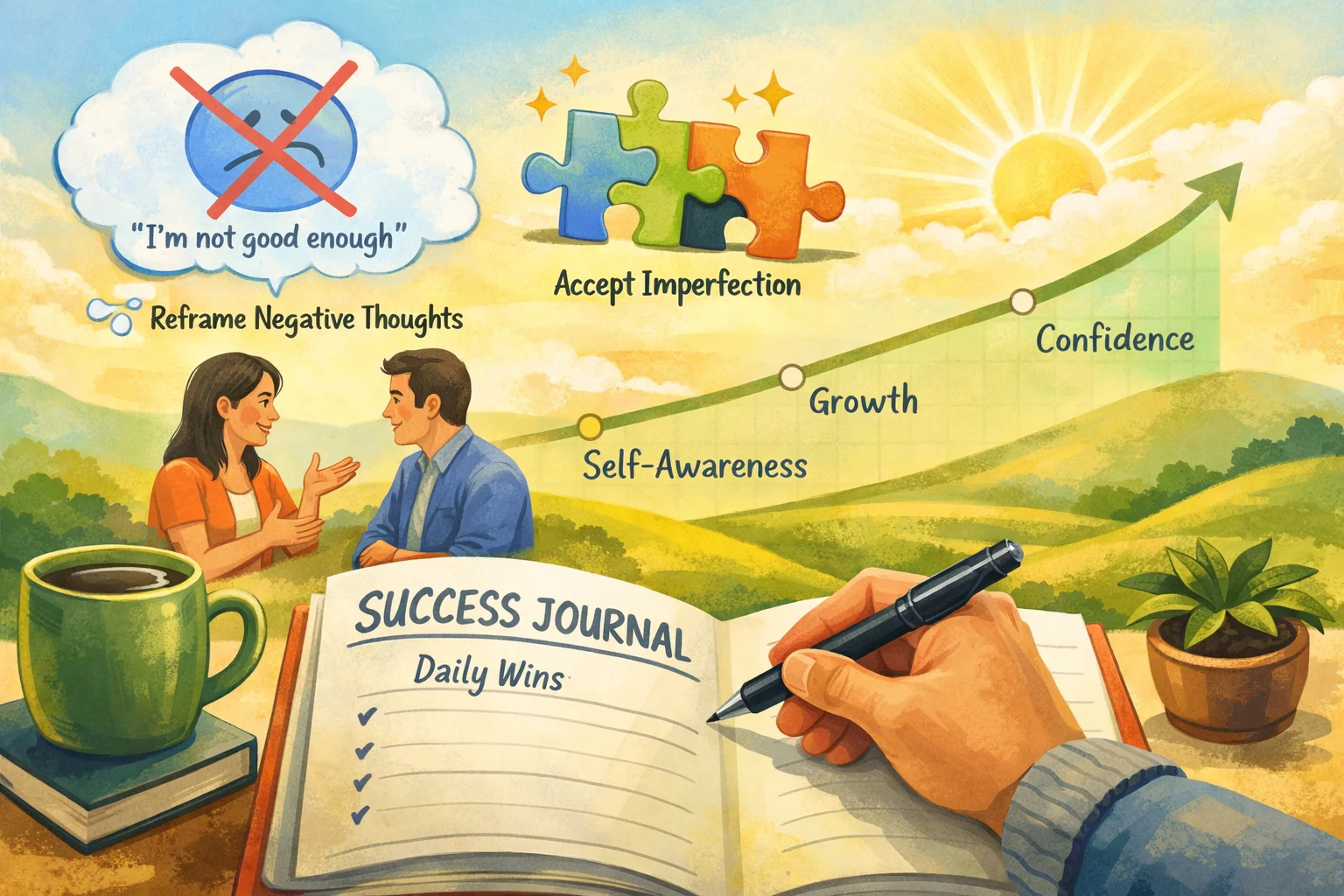
Reframing Negative Thoughts
Self-criticism often fills the internal monologue of individuals with imposter syndrome. The key is to challenge these thoughts. When you hear yourself thinking, “I just got lucky,” intentionally reframe it to, “My hard work and skills contributed to this positive outcome.” Acknowledging that negative thoughts are typically distortions, not facts, is a powerful step. Try to replace “I can’t do this” with “I will try my best and learn along the way.” This is a critical aspect of imposter syndrome psychology that can be consciously altered.
Keeping a Success Journal
Dedicate a journal to documenting your achievements, big or small. Note down positive feedback, successful projects, challenges you overcame, and new skills you’ve acquired. When feelings of self-doubt creep in, revisit your journal to see tangible evidence of your competence. This practice helps to build a concrete record of your capabilities and serves as a powerful antidote to the feeling of being a fraud.
Accepting Imperfection
Perfectionism is a significant driver of imposter syndrome. Understand that no one is perfect, and making mistakes is a natural part of growth and learning. Embrace the idea of “good enough” rather than striving for an unattainable ideal. Allowing yourself to be imperfect frees up immense mental energy and makes success feel more attainable and less like a burden.
Talking About It Openly
One of the most liberating steps is to talk about your feelings with trusted friends, mentors, colleagues, or a therapist. You’ll likely discover that many successful people share similar struggles. This open dialogue helps normalize the experience, reduces the feeling of isolation, and can provide external validation and perspective. Sharing your vulnerabilities is a powerful form of confidence-building tips.
Setting Realistic Standards
Often, the standards we hold for ourselves are far higher than those we hold for others. Evaluate if you expect realistic. Break down large goals into smaller, manageable steps. Celebrate progress, not just perfection. This approach can help alleviate the pressure that fuels the feeling of inadequacy.
Building Self-Awareness
Pay attention to when and why you experience imposter feelings. Are there specific situations, people, or types of tasks that trigger it? Understanding your patterns can help you expect and develop coping mechanisms. Mindfulness practices, such as meditation, can also enhance self-awareness and help you observe thoughts without judgment. Cultivating self-awareness is fundamental to navigating the complexities of your inner world. For more on improving mental well-being, explore our insights on How to Make Yourself Happy.
Modern Insights: Workplace Culture, Social Media, and Remote Work
In 2026, new factors exacerbate imposter syndrome. Workplace cultures that prioritize competition over collaboration, the curated perfection seen on social media, and the isolation of remote work can all intensify feelings of inadequacy. Companies can foster psychologically safe environments where asking questions and admitting struggles are encouraged. Individuals can practice digital well-being by limiting social media comparison and actively seeking connection in remote settings.
Why Even Successful People Feel This Way
It’s common to assume that once someone reaches a certain level of success, they are immune to self-doubt. However, this is far from the truth. Numerous high-profile figures, including Maya Angelou, Tina Fey, and Tom Hanks, have openly spoken about their experiences with imposter syndrome. This phenomenon often affects those who are genuinely talented and intelligent precisely because they hold themselves to superior standards and are capable of critical self-reflection.
Successful individuals typically face escalating challenges and increased scrutiny, which can amplify feelings of being out of their depth. They might believe that their current success was a fluke and that their next endeavor will expose their perceived shortcomings. Normalizing this experience is crucial; it helps to understand that feeling like a fraud is not a sign of weakness or incompetence but a common human experience, particularly for those driven to excel. It shows a capacity for growth and self-awareness, not a lack of ability.
Conclusion
Imposter syndrome is a formidable internal adversary, but it is not an insurmountable one. By understanding its meaning, recognizing its psychological triggers, and actively implementing strategies to challenge self-doubt, you can dismantle the belief that you are a fraud. In 2026, with increasing pressures from work, social media, and the need for constant adaptation, cultivating genuine self-confidence and self-acceptance is more important than ever.
Remember, your achievements are real, and your capabilities are valid. Start by reframing your thoughts, celebrating your successes, and talking openly about your experiences. Embrace imperfection, set realistic standards, and continue to build your self-awareness. You are not alone on this journey. By taking proactive steps, you can quiet the inner critic, internalize your accomplishments, and fully step into your true potential. It’s time to own your success and recognize the accomplished individual you truly are.
References
- Clance, P. R., & Imes, S. A. (1978). The imposter phenomenon in high-achieving women: Dynamics and therapeutic intervention. Psychotherapy: Theory, Research & Practice, 15(3), 241–247.