
Are you tired of setting ambitious New Year’s resolutions only to abandon them by February? Do grand plans for self-improvement often collapse under the weight of their intensity? You’re not alone. In a world brimming with digital distractions, burnout culture, and the constant pressure to achieve more, many individuals struggle to maintain consistency with significant life changes. However, what if the secret to profound transformation in 2026 wasn’t about radical overhauls but about embracing the power of micro habits for success? This article will delve into life-changing habits in 2026 by exploring small, almost imperceptible actions that, when practiced daily, create small habits with big results over time. Get ready to discover daily habits for productivity and truly effective self-improvement habits in 2026 that actually stick, offering a practical guide on how to build micro habits.
Key Takeaways
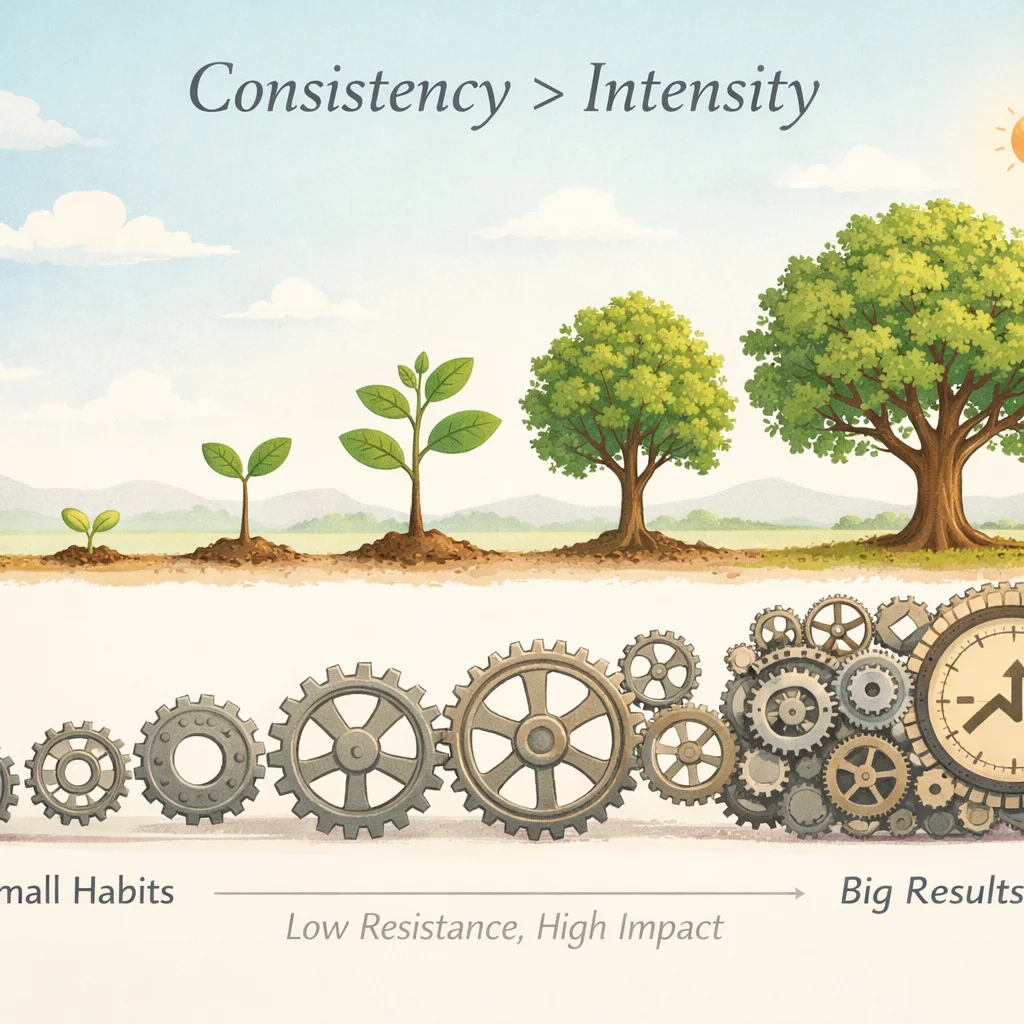
- Consistency Trumps Intensity: Micro-habits succeed because they prioritize consistent, tiny actions over large, overwhelming efforts, making them easier to start and maintain.
- Leverage Psychological Ease: By reducing the barrier to entry, micro-habits bypass resistance and willpower fatigue, tapping into the brain’s natural inclination for simplicity.
- Embrace the Compounding Effect: Each small action, when repeated, builds upon the last, leading to significant, often underestimated, growth and transformation over months and years.
- Strategic Integration is Key: Use techniques like habit stacking and environmental design to seamlessly weave new micro-habits into your existing routine, ensuring long-term adherence.
- Focus on Foundational Improvement: The selected micro-habits target key areas like focus, gratitude, learning, and physical well-being, providing a holistic approach to self-improvement.
What Are Micro-Habits and Why They Work
At its core, a micro-habit is a tiny, often ridiculously easy action that can be performed in two minutes or less. It’s so small that it feels insignificant, almost not worth doing—yet, that’s precisely its genius. Unlike monumental goals that demand immense willpower and often lead to burnout, micro-habits are designed for psychological ease and maximum consistency.


Consistency Over Intensity
The most profound transformations don’t come from massive, one-time efforts, but from consistent, minor improvements. Think of it like a dripping faucet filling a bucket. Each drop is insignificant on its own, but over time, it overflows. When it comes to self-improvement habits in 2026, people often aim for intense workout routines, hour-long meditation sessions, or reading an entire book a week. These are admirable goals, but they are also highly susceptible to failure when motivation wanes or schedules get hectic. Micro-habits flip this script: a single push-up is less intimidating than an hour at the gym, and two minutes of reading is more achievable than finishing a chapter. The goal is to show up every single day, building a streak that reinforces the habit’s existence, regardless of how small the action is.
Psychological Ease (Low Resistance)
Our brains are wired for efficiency and tend to resist anything perceived as difficult or energy-intensive. This is where most ambitious new habits fail. The thought of a challenging task triggers an internal battle of wills, often resulting in procrastination. Micro-habits bypass this resistance almost entirely. The action is so minimal that there’s virtually no mental barrier. Want to write a book? Start by opening the document. Want to exercise? Put on your running shoes. These are “starter steps” that make the real goal seem less daunting and reduce the cognitive load associated with initiating change. This low-resistance approach is a critical component of how to build micro habits effectively.
Compounding Effect Over Time
The true power of micro-habits lies in their compounding effect. What seems like a trivial action today, when repeated daily for weeks, months, and years, yields exponential results. A single minute of learning each day adds up to over six hours of learning in a year, and that’s just one minute. Imagine multiplying that across several micro-habits targeting different areas of your life. This consistent, incremental progress leads to significant advancements in personal growth, productivity, and well-being. It’s the ultimate strategy for achieving small habits and big results without feeling overwhelmed.
“Success is the sum of small efforts, repeated day in and day out.”–Robert Collier
7 Micro-Habits That Will Completely Transform Your Life in 2026
Here are seven life-changing habits for 2026 that are so simple, you’ll wonder why you haven’t adopted them sooner. Each one is low-effort, high-impact, and perfectly suited for building micro habits for success.
1. The 2-Minute Rule Habit: Just Start It
The 2-Minute Rule, popularized by author James Clear, is a powerful technique for overcoming procrastination and initiating new habits. The core idea is simple: when you start a new habit, it should take less than two minutes to do.
- What the habit is: If a task takes less than two minutes, do it immediately. For larger tasks, focus only on the first two minutes of the activity.
- Why it works: This rule targets the psychological barrier of “getting started.” Most tasks feel overwhelming at the outset, but once you begin, momentum often takes over. By committing to just two minutes, you trick your brain into overcoming the initial inertia. It reduces the perceived effort, making the habit less intimidating and significantly increasing the likelihood of follow-through. It’s an excellent way to cultivate daily habits for productivity.
- How to start:
- Identify a tricky habit: Choose one habit you’ve struggled with (e.g., exercising, writing, or cleaning).
- Shrink it to two minutes: For exercise, it might be “put on my workout clothes” or “do 5 push-ups.” For writing, “open the document.” For cleaning, “wipe one counter.”
- Commit to only two minutes: Tell yourself you only have to do this tiny action. If you feel like continuing, great! If not, you’ve still kept your streak alive.
- Real-life example: Instead of telling yourself you need to “work out for an hour,” commit to “walking to the mailbox and back” or “doing 10 jumping jacks.” Often, once you start moving, you might find the motivation to continue for longer. This micro-habit makes exercise less of a chore and more of an achievable daily action, supporting healthy lifestyle tipshealthy lifestyle tips for a fresh start.
2. Daily Reflection or Journaling: The Single Sentence
In our fast-paced world, carving out time for deep introspection can seem impossible. Yet, reflection is crucial for personal growth and emotional intelligence. This micro-habit makes it accessible.
- What the habit is: At the end of each day, write down one sentence summarizing your biggest win, challenge, or learning from the day.
- Why it works: Even a single sentence forces you to pause, process your experiences, and extract meaning. This practice fosters self-awareness, helps in problem-solving, and reinforces positive experiences, all while being incredibly low-effort. Over time, these daily reflections create a valuable record of your growth and insights, aiding in self-improvement habits in 2026. It can also be a simple yet effective way to stop worrying about everything and live today to the fullest.
- How to start:
- Choose your medium: a physical journal, a notes app on your phone, or even a dedicated digital document.
- Set a reminder: Schedule a daily notification for 5-10 minutes before bedtime.
- Keep it brief: Resist the urge to write more if you’re feeling resistant. One sentence is enough to start.
- Real-life example: Before bed, quickly type, “Today’s win: successfully navigated a tough client meeting by staying calm” or “Today’s challenge: felt overwhelmed by digital notifications.” This consistent, brief check-in improves mental clarity and emotional regulation without demanding significant time.
3. 5-Minute Learning Habit: Absorb Something New
The desire to learn and grow is innate, but finding time for formal learning can be tough amidst work, family, and other commitments. A 5-minute learning habit ensures continuous intellectual development.
- What the habit is: Dedicate just five minutes each day to learn something new. This could be reading an article, watching a short educational video, or reviewing flashcards.
- Why it works: Consistent, brief exposure to new information keeps your mind sharp, expands your knowledge base, and prevents intellectual stagnation. This micro-habit leverages the power of spaced repetition and consistent input, making learning less of a daunting task and more of a sustainable lifestyle choice. This is one of the most impactful daily habits for productivity for knowledge workers. This can significantly boost cognitive function and aligns with the benefits of Reading for Brain Health: How Did It Boost Cognitive Function and Mitigate Risks?.
- How to start:
- Choose your source: Subscribe to a daily newsletter, bookmark a reliable news site, or pick a specific topic you are eager to learn about.
- Integrate it: Read during your morning coffee, while waiting for water to boil, or during a short break.
- Be specific: Instead of “learn something,” aim for “read one page of X book” or “watch one educational YouTube short.”
- Real-life example: Every morning, while your computer boots up, open a tab to a reputable science news site and read one short article. Or, before a meeting, review 2-3 new vocabulary words related to your industry. Over a year, this builds a vast repository of knowledge.
4. Digital Detox Micro-Step: Reclaim Your Focus
In 2026, digital distractions are rampant, leading to reduced focus, increased anxiety, and productivity drain. A targeted digital detox micro-step can help reclaim your attention.
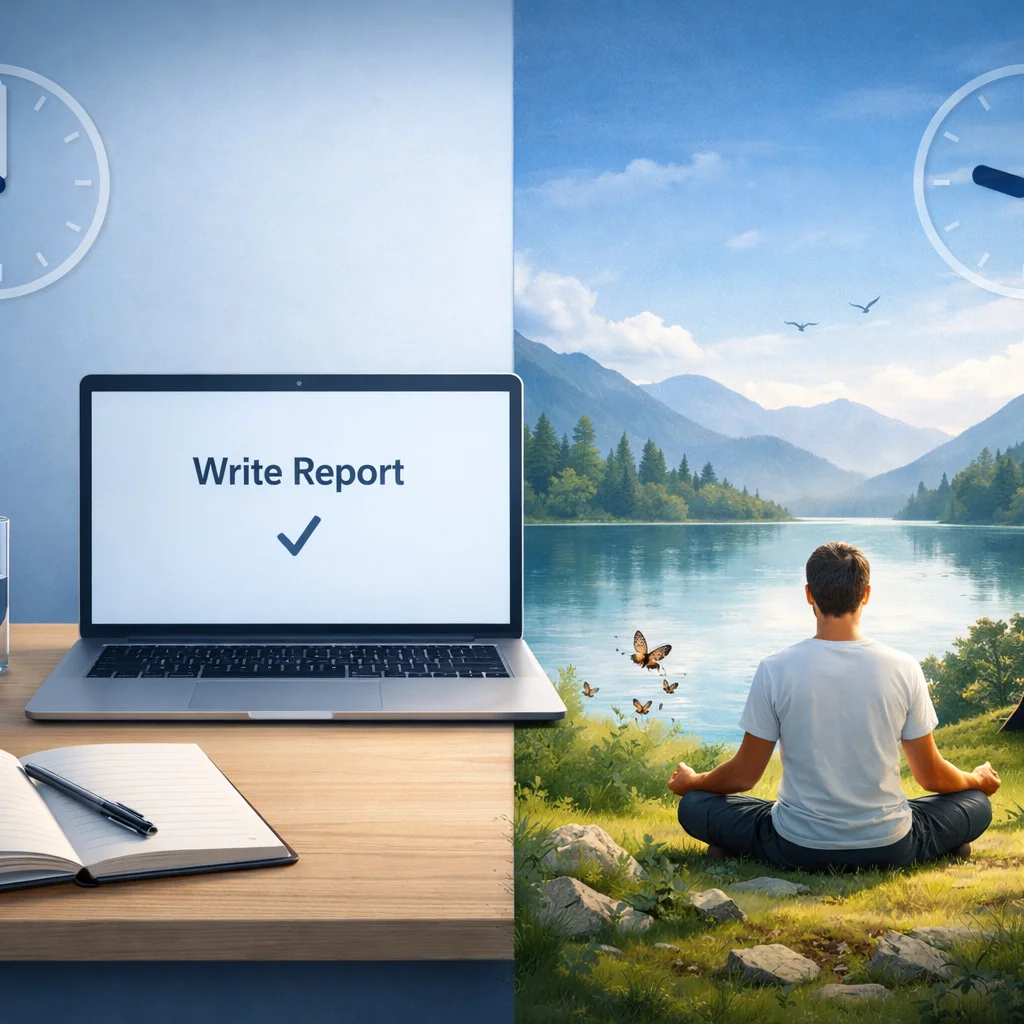
- What the habit is: Identify one small digital interruption and eliminate or minimize it for a specific, short period each day. For example, put your phone on ‘Do Not Disturb’ for the first 30 minutes of your workday.
- Why it works: Constant notifications fragment our attention and make deep work challenging. By consciously creating small pockets of digital silence, you train your brain to focus, improve your attention span, and reduce the mental fatigue associated with constant connectivity. This is crucial for improving your mental focus.
- How to start:
- Identify a trigger: What’s the biggest digital distraction for you (e.g., social media alerts, email notifications, news apps)?
- Choose a time: Pick a consistent time slot when you’ll implement this micro-detox (e.g., the first 15 minutes after waking up, during dinner, or one hour before bed).
- Actionable step: Turn off notifications for specific apps, place your phone in another room, or activate a focus mode.
- Real-life example: Upon waking, instead of immediately checking your phone, spend the first 10 minutes of your day without screens. Use this time for quiet reflection, stretching, or making coffee. This small act sets a calm tone for your day, preventing early morning information overload and becoming a powerful self-improvement habit in 2026.
5. Health-Related Micro-Habit: The Hydration Cue
Maintaining physical health often feels like a monumental task, but micro-habits can make it effortless. Hydration is a simple yet profoundly impactful area.
- What the habit is: Drink a full glass of water immediately after a specific, existing trigger (e.g., waking up, brushing your teeth, finishing a meal).
- Why it works: Many people are chronically under-hydrated, which can lead to fatigue, poor concentration, and headaches. By linking water intake to an already established routine, you ensure consistent hydration without having to “remember” to drink. It’s an easy way to boost energy, improve cognitive function, and support overall well-being. This is a foundational micro habit for success in physical health.
- How to start:
- Pick your cue: What’s a non-negotiable part of your morning or daily routine?
- Prepare: Keep a glass or bottle of water next to your bed or at your workstation.
- Take the first sip: Commit to drinking that one glass.
- Real-life example: As soon as your alarm goes off, reach for the glass of water you placed on your nightstand the night before and drink it. This simple act jumpstarts your metabolism and hydration for the day, and it’s so quick it feels almost automatic.
6. Gratitude Habit: Three Good Things
Cultivating gratitude is a powerful way to enhance happiness and resilience, yet it’s often overlooked in the daily grind. This micro-habit makes it an accessible practice.
- What the habit is: Each day, take 60 seconds to mentally (or physically) list three specific things you are grateful for.
- Why it works: Practicing gratitude shifts your focus from what’s lacking to what’s abundant, improving mood, reducing stress, and fostering a more positive outlook. It trains your brain to notice the good, which can be particularly impactful in challenging times. This is a profound, life-changing habit 2026 for mental well-being and is closely linked to how gratitude makes us happier and healthier.
- How to start:
- Choose your moment: during your commute, while eating breakfast, or before going to sleep.
- Be specific: Instead of “I’m grateful for my family,” try “I’m grateful for my sister’s funny text message today.” Specificity makes the feeling more potent.
- Keep it brief: It doesn’t need to be a long list; just three things are enough to establish the habit.
- Real-life example: While you’re waiting for your coffee to brew, mentally list “the warm sun on my face,” “a quiet moment to myself,” and “the satisfying feeling of finishing a task.” This small pause can significantly impact your emotional state for the day.
7. Focus Habit: Single-Tasking for 10 Minutes
In an age of constant multitasking, true focus is a superpower. This micro-habit helps you train your attention span.
- What the habit is: Choose one task and dedicate your undivided attention to it for just 10 minutes, eliminating all distractions.
- Why it works: Multitasking is a myth; our brains actually switch rapidly between tasks, leading to reduced efficiency and increased errors. By practicing single-tasking, even for a short duration, you train your brain to concentrate, improve task completion rates, and reduce mental fatigue. It’s a core daily habit for productivity in a hyper-connected world.
- How to start:
- Select a task: Pick something that needs your attention but isn’t too overwhelming for 10 minutes (e.g., responding to a few emails, drafting an outline, or organizing files).
- Eliminate distractions: Close unnecessary tabs, put your phone away, and tell colleagues you need uninterrupted time.
- Set a timer: A 10-minute timer makes the commitment clear and finite.
- Real-life example: Before diving into your email inbox, pick one crucial email, set a 10-minute timer, and draft a thoughtful response without checking any other messages or getting sidetracked. This short burst of focused effort significantly increases the quality and speed of your work.
How to Stick to Micro-Habits in 2026
Building life-changing habits in 2026 isn’t just about knowing what to do but about engineering your environment and routine for success. Here’s how to build micro habits that truly last.
Habit Stacking
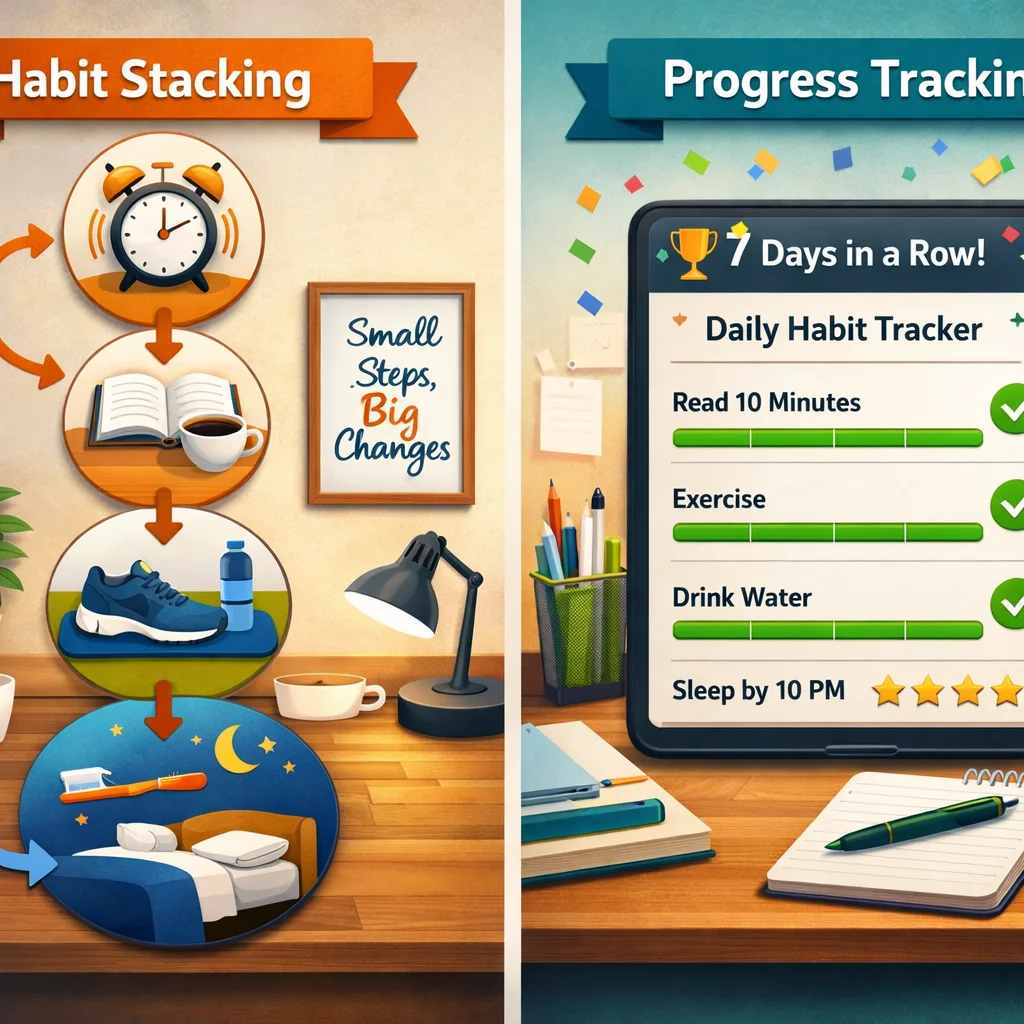
This technique involves attaching a new micro-habit to an existing, well-established habit. It leverages the momentum of an existing routine to kickstart a new one.
- Concept: “After I [current habit], I will [new micro-habit].”
- Why it works: Your brain already has neural pathways for your existing habits, making it easier to append a new action rather than trying to create an entirely new routine from scratch. This reduces the mental effort required to initiate the new behavior.
- Example: “After I pour my morning coffee, I will write one sentence in my gratitude journal,” or “After I finish my lunch, I will read one page of a non-fiction book.”
Tracking Progress
Seeing your progress visually can be a powerful motivator. It provides concrete evidence of your consistency and reinforces the habit loop.
- Concept: Use a simple method to mark off each day you complete your micro-habit.
- Why it works: Tracking creates a “streak,” which you become reluctant to break. It provides a sense of accomplishment and visual feedback, making the abstract idea of “consistency” tangible. Even missing a day provides valuable data for change, not a reason to quit.
- Example: A calendar where you put an ‘X’ for each completed day, a simple habit-tracking app, or a bullet journal. Don’t aim for perfection; aim for consistency. If you miss a day, don’t give up. The goal is to not miss twice in a row.
Removing Friction
Make your desired micro-habit as easy as possible to start and your undesired behaviors as difficult as possible.
- Concept: Optimize your environment to support the habit.
- Why it works: Human behavior is heavily influenced by environment. By reducing the effort required to start a good habit and increasing the effort for a bad one, you naturally steer yourself towards positive actions. This is fundamental to achieving small habits and big results.
- Example:
- For hydration: Keep a water bottle on your desk or by your bedside.
- For learning: Have your chosen book or learning app easily accessible on your home screen.
- For digital detox: Put your phone in another room or turn off notifications during specific times.
Environment Design
Beyond removing friction, proactively designing your environment can significantly impact your ability to stick to self-improvement habits 2026.
- Concept: Arrange your physical and digital space to cue desired behaviors and prevent unwanted ones.
- Why it works: Your surroundings provide constant cues that trigger habits. By consciously designing these cues, you can create an autopilot system for positive change.
- Example:
- For movement: Lay out your workout clothes the night before.
- For focus: Create a “focus zone” in your workspace, free from clutter and distractions.
- For healthy eating: Keep healthy snacks visible and unhealthy ones out of sight.
These strategies are relevant in 2026, where the constant influx of information and digital demands often lead to burnout and decision fatigue. By making your desired actions easy and automatic, you free up mental energy for more important tasks and ensure sustainable growth.
Conclusion
The journey to a transformed life in 2026 doesn’t demand heroic willpower or massive changes. Instead, it flourishes through the consistent, deliberate practice of micro-habits for success. These tiny, almost effortless actions—like the 2-minute rule, single-sentence journaling, or 5-minute learning bursts—are the stealth agents of profound personal growth. They bypass the psychological resistance that derails grander ambitions, fostering life-changing habits 2026 through sheer consistency and the powerful compounding effect.
By strategically integrating these daily habits for productivity using techniques like habit stacking, progress tracking, and environment design, you can engineer a life where positive change is not a struggle but an automatic outcome. This year, shift your focus from the overwhelming “how much” to the sustainable “how often.” Embrace the philosophy that small habits and big results are not just possible, but inevitable, when you commit to showing up, day after day. Start small, stay consistent, and watch as these self-improvement habits 2026 completely transform your life, one micro-action at a time. The power to create a better you is already within reach—just take that tiny first step.