
Last updated: March 4, 2026
Uncovering hidden parts of yourself can lead to profound self-understanding. For beginners, integrating the shadow involves a gradual, safe process of acknowledging and understanding the suppressed aspects of your personality, leading to increased psychological self-awareness and emotional wholeness. This guide explores shadow work for beginners, offering practical steps for Jungian shadow integration, including how to do shadow work safely, inner child healing basics, and effective shadow work journal prompts.


Key Takeaways
- Shadow Self Definition: The “shadow” refers to the unconscious parts of our personality we deny, repress, or feel ashamed of, as conceptualized by Carl Jung.
- Not Evil, But Unintegrated: The shadow is not inherently bad; it contains both perceived negative and positive unexpressed traits.
- Jungian Shadow Integration: This process involves bringing unconscious aspects into conscious awareness to achieve psychological wholeness.
- Safe Exploration: Shadow work should be approached gradually, with self-compassion and a focus on emotional safety.
- Practical Tools: Journaling, tracking emotional triggers, and reflecting on projections are beginner-friendly methods.
- Inner Child Healing: Addressing past wounds and needs of the inner child is a key component of shadow integration.
- Benefits: Increased self-understanding, reduced emotional reactivity, stronger relationships, and enhanced personal authenticity.
- Avoid Overwhelm: Pause or seek support if distress becomes overwhelming; it’s a marathon, not a sprint.
Quick Answer
Shadow work for beginners is a process of psychological self-awareness and integration, focusing on the unconscious parts of the self (the “shadow”) that have been suppressed. It involves acknowledging these hidden aspects—which include disowned traits, emotions, and memories—to achieve greater self-understanding and emotional balance. Through safe, gradual exploration using tools like journaling and projection awareness, individuals can integrate these parts, reducing internal conflict and fostering personal growth.
What is the “Shadow Self” in Jungian Psychology?
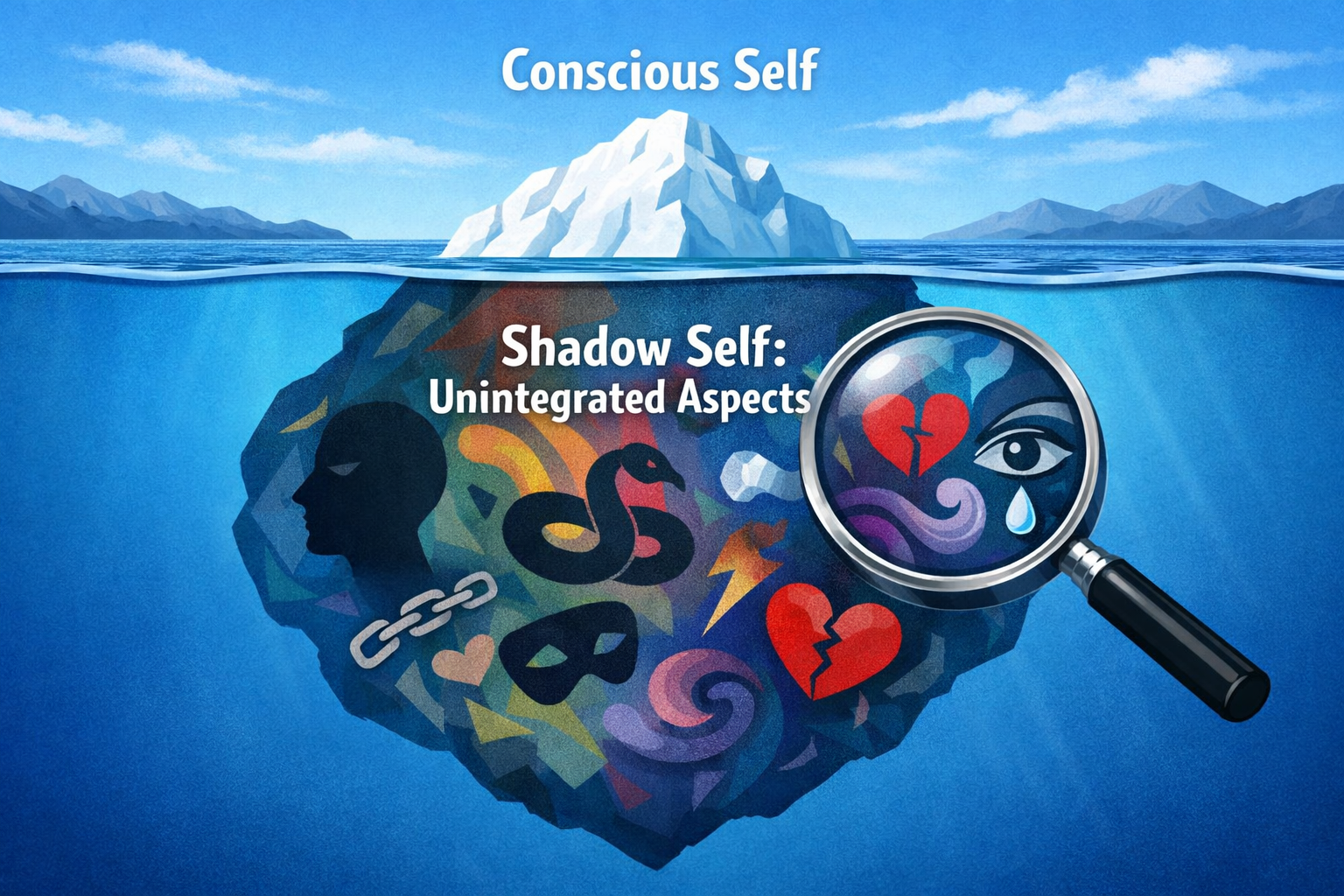
The “shadow self,” as coined by Swiss psychiatrist Carl Jung, refers to the unconscious aspects of our personality that the conscious ego does not identify with. This can include traits we perceive as negative (like anger or selfishness) and even positive qualities we’ve suppressed (like creativity or assertiveness) due to societal or personal conditioning.
Jung’s concept of the shadow is a fundamental part of his theory of the collective unconscious and individuation. It highlights that everyone possesses a shadow, and its contents are not inherently evil but rather simply unintegrated or unacknowledged. For example, someone who prides themselves on being consistently kind might project their anger onto others because they’ve denied their capacity for rage. Recognizing this projection is a step towards jungian shadow integration.
Misconceptions About the Shadow
- Not a Separate Evil Entity: The shadow is not a demonic force or an inherently malicious part of you. It’s a collection of disowned traits and experiences that exist within your psyche.
- Beyond “Dark” Traits: While often associated with negative attributes, the shadow also holds undeveloped or suppressed positive traits, such as assertiveness in someone who is overly passive or creativity in someone who feels stifled.
- Not a Quick Fix: Shadow work is a continuous process of self-exploration, not a one-time activity for immediate transformation. Social media often exaggerates its mystical or dramatic aspects, when in reality, it’s a grounded psychological practice.
Why is Shadow Work Important for Beginners?
Shadow work for beginners is important because it lays the foundation for profound psychological self-awareness, enabling individuals to understand the root causes of their emotional patterns and behaviors. By exploring the shadow, beginners can move beyond superficial self-improvement to address deeper internal conflicts, which often manifest as chronic self-judgment, emotional reactivity, or relationship struggles.
Integrating your shadow self leads to a more authentic and whole identity. When unacknowledged, these hidden aspects can drive unconscious behaviors, projections onto others, and self-sabotage. By understanding and embracing them, you gain more control over your life, reduce internal resistance, and can build stronger, more honest relationships. For instance, realizing you harbor a suppressed desire for control can help you understand why you get frustrated when plans change, leading to healthier responses. For broader personal development, such self-awareness is crucial; it helps in understanding how to find happiness in your life and building overall well-being.
Benefits of Integrating Your Shadow
- Increased Self-Understanding: Gain insight into your motivations, fears, and desires.
- Reduced Emotional Reactivity: Better manage triggers by understanding their source.
- Improved Relationships: Less projection, more authentic connection with others.
- Enhanced Creativity and Vitality: Reclaim suppressed energies and talents.
- Greater Authenticity: Live more aligned with your true self.
- Decreased Self-Judgment: Develop self-compassion by accepting all parts of yourself.
How to Do Shadow Work Safely: Beginner-Friendly Steps
To do shadow work safely, beginners should start with gentle, reflective practices that prioritize emotional well-being and gradual exploration, avoiding overwhelming oneself with intense introspection. This process focuses on observation rather than judgment, allowing for a steady unveiling of unconscious material.
Safety is paramount in shadow work. It is not about confronting your deepest fears all at once, but slowly peeling back layers. If you feel overwhelmed or highly distressed, pause the process. Consider engaging in calming activities like mindfulness, deep breathing, or connecting with a trusted friend. If persistent distress occurs, seeking guidance from a therapist or counselor specializing in Jungian psychology is recommended.
Practical Steps for Safe Shadow Exploration
- Start with Journaling and Self-Reflection:
- Emotional Trigger Tracking: Notice what situations, people, or comments consistently provoke strong emotional reactions in you (anger, envy, fear). Instead of reacting, pause and journal about why these triggers affect you deeply. What belief or experience might be activated?
- Dream Analysis (Simple): Keep a dream journal. Dreams are often messages from the unconscious. Look for recurring themes, symbols, or characters that evoke strong feelings. What aspects of yourself might they represent?
- Shadow Work Journal Prompts: Use guided questions to explore hidden parts. See the next section for specific prompts.
- Inner Child Reflection: Consider past experiences where you felt unloved, unheard, or afraid. What did your younger self need? How can you offer that care to yourself now? Inner child healing basics can be gently introduced here.
- Observe Projections:
- Identify Strong Dislikes/Admirations: Notice people you strongly dislike or find irritating, especially if their traits seem exaggerated. Often, what we judge most harshly in others is an unacknowledged part of our shadow.
- Acknowledge Strong Attractions/Admirations: Similarly, intense admiration for certain qualities in others might point to suppressed potentials within yourself. What qualities do you admire you feel you lack or aren’t allowed to express?
- Practice Self-Compassion:
- Non-Judgmental Curiosity: Approach your shadow with curiosity, not criticism. The goal is understanding, not condemnation.
- Mindful Acceptance: Acknowledge difficult emotions or traits without letting them define you. You can accept that a part of you feels envy without becoming an “envious person.” This is similar to strategies for how to make yourself happy.
- Breaks and Grounding: If you uncover something uncomfortable, take a break. Engage in activities that ground you and bring you joy.
Effective Shadow Work Journal Prompts for Beginners (2026)

Shadow work journal prompts serve as powerful psychological self-awareness tools, guiding beginners to explore their unconscious minds in a structured and safe way. By consistently engaging with these prompts, individuals can uncover suppressed emotions, memories, and personality traits that constitute their shadow self.
Journaling provides a private space for honest self-reflection, making it an ideal entry point for Jungian shadow integration. It allows you to externalize internal thoughts and feelings, observe them objectively, and understand patterns without immediate judgment.
Beginner-Friendly Journal Prompts
Here are some prompts to help you begin your shadow work journey in 2026:
- Emotional Triggers: “What situations or comments consistently make me feel angry, frustrated, or resentful? What core fear or insecurity might this reaction be protecting?”
- Projection Awareness: “Think of someone you strongly dislike or admire. What specific qualities in them bother you or inspire you? Could any of these qualities exist within me, perhaps suppressed or unexpressed?”
- Disowned Traits: “What qualities do I actively try to hide from others or even from myself? (e.g., vulnerability, ambition, laziness, need for control)”
- Past Mistakes & Shame: “Write about a mistake you made that still brings you shame. What did that experience teach you, and what part of yourself was active during that time?”
- Unmet Needs/Inner Child: “When I was a child, what did I most wish I had (emotionally, not materially)? How do I still seek or deny that need today? What would my inner child want me to know?” Inner child healing basics often connect here.
- “If I weren’t afraid of judgment or failure, what would I truly want to do, be, or say? What part of me is holding back?”
- Self-Sabotage Patterns: “Identify a recurring pattern of self-sabotage in your life. What belief about yourself might be driving this pattern?”
- Reclaiming Power: “Think of a time when you felt powerless. What unexpressed strength or assertiveness did you have in that moment, even if you didn’t use it?”
Integrating the Shadow: Moving Towards Wholeness
Integrating the shadow involves consciously acknowledging, understanding, and making peace with these hidden parts, rather than eliminating them. It is not about becoming “perfect” but about becoming “whole.” By shining the light of awareness on your shadow, you reduce its power to unconsciously control your actions and reactions, leading to a more integrated sense of self.
This process involves accepting that all facets of your personality — the “light” and the “dark” — are part of who you are. Instead of pushing away shame, anger, or envy, you learn to observe them, understand their origins, and consciously choose how to respond. For example, recognizing your capacity for anger allows you to use it constructively for setting boundaries, rather than letting it erupt impulsively. This acceptance contributes significantly to your overall mental well-being.
The Path to Integration
- Dialogue with the Shadow: Imagine having a conversation with a part of yourself you’ve disowned. What does it want to tell you? What does it need?
- Symbolic Expression: Use creative outlets like art, music, or storytelling to give form to your shadow aspects.
- Behavioral Adjustment: Once you understand a shadow trait (e.g., a tendency towards passive-aggressiveness), consciously practice new, healthier behaviors (e.g., direct communication).
- Empathy and Forgiveness: Extend empathy to the parts of yourself that acted from a place of wounding or fear, recognizing that these actions often stemmed from unmet needs or old defense mechanisms.
When to Seek Professional Support
While shadow work for beginners is a powerful self-help tool, it can sometimes uncover deeply suppressed trauma or intense emotional pain. If you experience overwhelming distress, anxiety, depression, or if you feel stuck, it is crucial to seek professional help. A therapist specializing in Jungian psychology or psychodynamic therapy can provide a safe, structured environment to navigate these complex inner landscapes. Self-reflection is valuable, but some paths require a guide.
Conclusion
Shadow work for beginners is a transformative journey into psychological self-awareness, allowing you to integrate the unacknowledged aspects of your personality—your “dark side”—into a more complete and authentic self. By employing tools like shadow work journal prompts, emotional trigger tracking, and projection awareness, individuals can safely begin the process of Jungian shadow integration. Remember that this is a gradual process requiring self-compassion and the willingness to pause if distress becomes overwhelming. Embrace the journey of understanding your complete self, and you will unlock profound personal growth, reduce emotional reactivity, and build a more integrated, confident, and harmonious life in 2026 and beyond.