Last updated: February 16, 2026
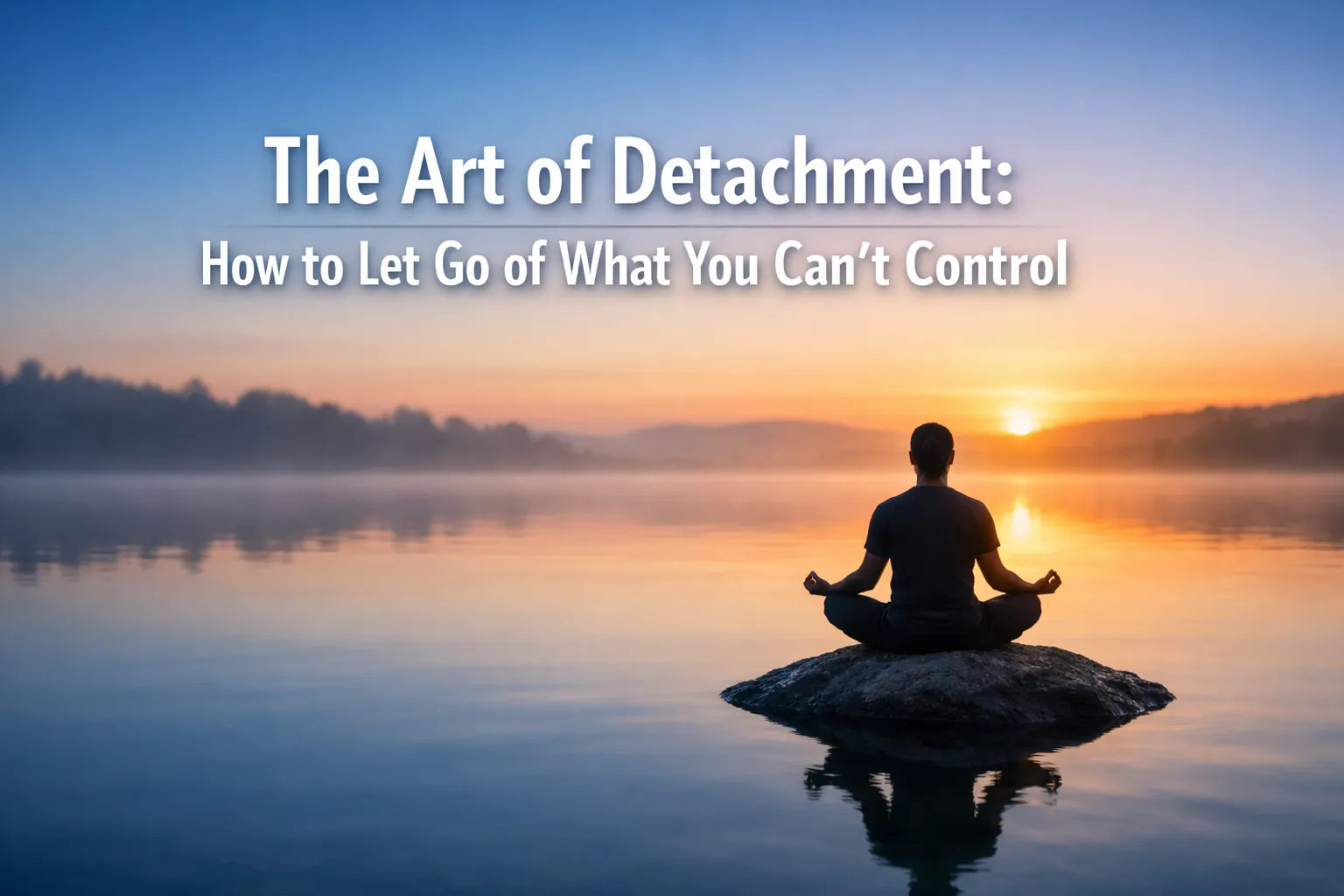
Do you often find yourself caught in a loop of worry, replaying past events, or constantly strategizing for future outcomes that are beyond your influence? In 2026, the constant barrage of information and rapid changes can amplify the human tendency to try to control the uncontrollable, leading to chronic stress, anxiety, and mental exhaustion. Learning the art of detachment is a powerful psychological skill that can liberate you from this cycle. This article will guide you through understanding how to let go emotionally, providing practical strategies to stop overthinking control, foster emotional independence habits, and truly accept what you can’t control to achieve lasting mental peace psychology. It’s not about becoming indifferent or uncaring, but rather about strategically reallocating your mental and emotional energy to what truly matters and what you can genuinely impact.

Key Takeaways
- Detachment is a psychological skill that distinguishes between what you can influence (responsibility) and what you cannot control (external outcomes).
- Chronic anxiety often stems from the futile attempt to control external events, other people’s opinions, or uncertain futures.
- Cultivating emotional independence involves shifting from outcome-dependent to effort-based goals.
- Practicing acceptance-based thinking and reducing mental rehearsal are crucial steps to finding mental peace.
- This approach reduces stress, improves focus, and enhances overall well-being by fostering a healthier relationship with uncertainty.
What is the Art of Detachment in Psychology, and Why Is It Important?
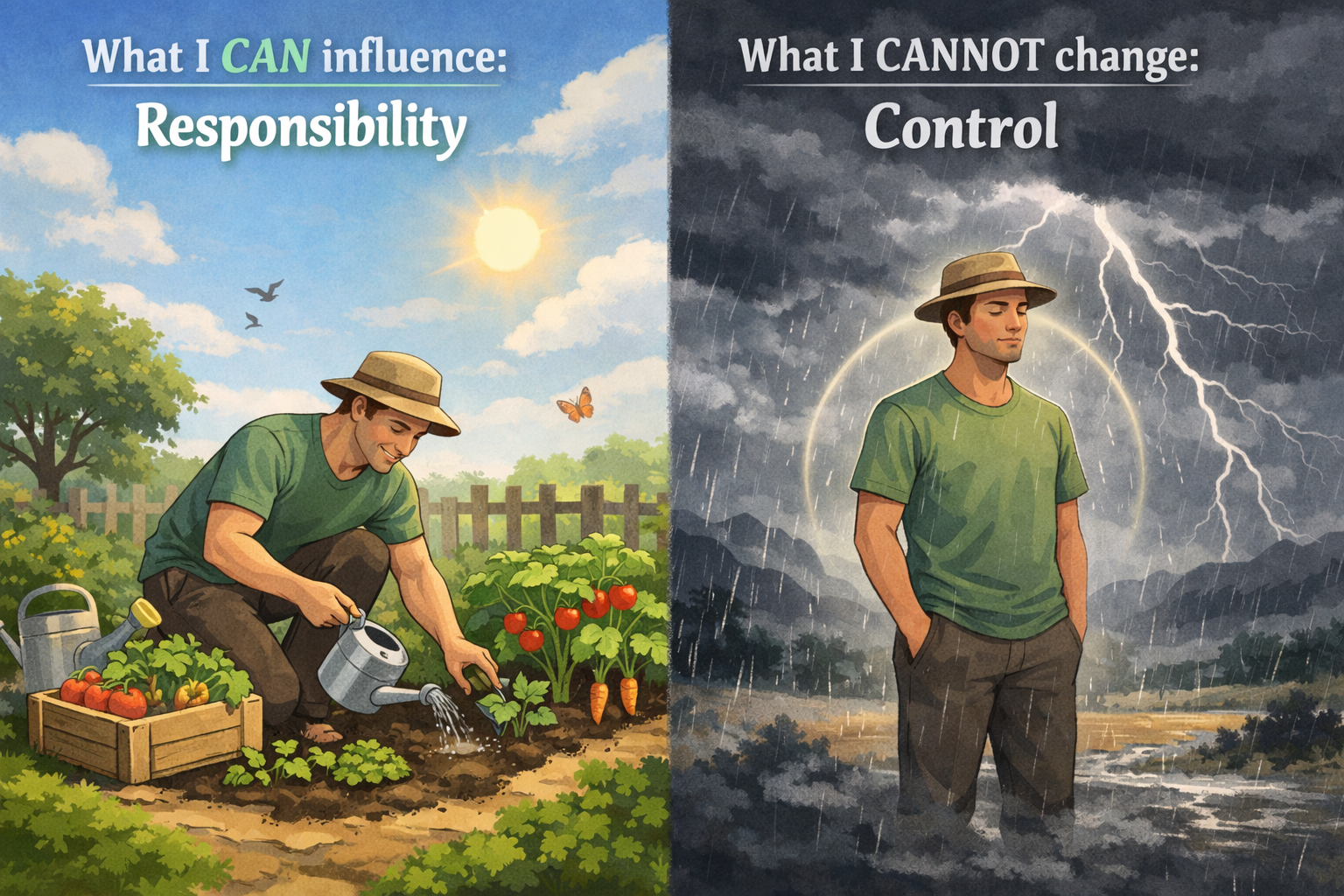
The art of detachment, in a psychological context, is the skill of separating your emotional well-being from outcomes, opinions, or events that are outside your sphere of influence. It is crucial because persistent attempts to stop overthinking control over uncontrollable elements often lead to chronic anxiety, rumination, and dissatisfaction, whereas true mental peace psychology emerges from this distinction.
Detachment, when viewed as a skill, is about recognizing the boundaries of personal power. It allows individuals to invest energy wisely, focusing on actions within their control rather than agonizing over external results. For instance, a student can control their study habits and preparation but not the specific exam questions or the curve of the grades set by the professor. Similarly, a professional can manage their project tasks and communication, but not a client’s final decision or market fluctuations. This practice helps build resilience and prevents emotional exhaustion, making it easier to navigate life’s inevitable uncertainties without being overwhelmed. It promotes a proactive mindset for what is actionable and a peaceful acceptance for what is not.
How Does Confusing Responsibility with Control Lead to Overthinking?
Confusing responsibility with control is a primary driver of chronic overthinking because it blurs the line between personal influence and external outcomes, leading to fruitless mental exertion. When individuals equate their responsibility for a task or situation with an expectation of controlling the result, they create a cognitive loop of excessive analysis and anxiety.
Responsibility refers to the actions, efforts, and choices an individual can make. For example, you are responsible for preparing a thorough presentation. Control, however, pertains to the external factors and outcomes that are beyond direct influence, such as how the audience reacts to the presentation, the boss’s mood, or the ultimate business decision made. When these two concepts are conflated, individuals may engage in cognitive loops like:
- Rumination: Repeatedly replaying past events or potential future scenarios, trying to find a “perfect” solution or prevent an undesired outcome, even when no further action is possible or necessary. This often happens after a decision is made, where one second-guesses endlessly.
- Anticipation Anxiety: Spending excessive mental energy forecasting all possible negative outcomes and trying to devise strategies for each, which generates significant stress without actual productivity. This is a common pitfall when trying to stop overthinking control over future events.
- Outcome-Dependency Motivation: Tying one’s self-worth and motivation primarily to the achievement of specific, often externally controlled, results. This can lead to severe disappointment and burnout when outcomes don’t align with expectations, regardless of the effort invested.
This confusion means that even when a person has diligently fulfilled their responsibilities, they continue to spend mental energy trying to manipulate or worry about the uncontrollable aspects, preventing emotional independence habits from forming. Recognizing this distinction is the foundational step in learning how to let go emotionally and achieve greater mental peace in psychology. Understanding this boundary allows for a strategic shift of focus from what might happen to what can be done. For insights into managing persistent negative thoughts, consider exploring why we overthink and how to overcome it: “Why We Overthink & How To Overcome It.”
How Can You Cultivate Emotional Independence Habits and Accept What You Can’t Control?
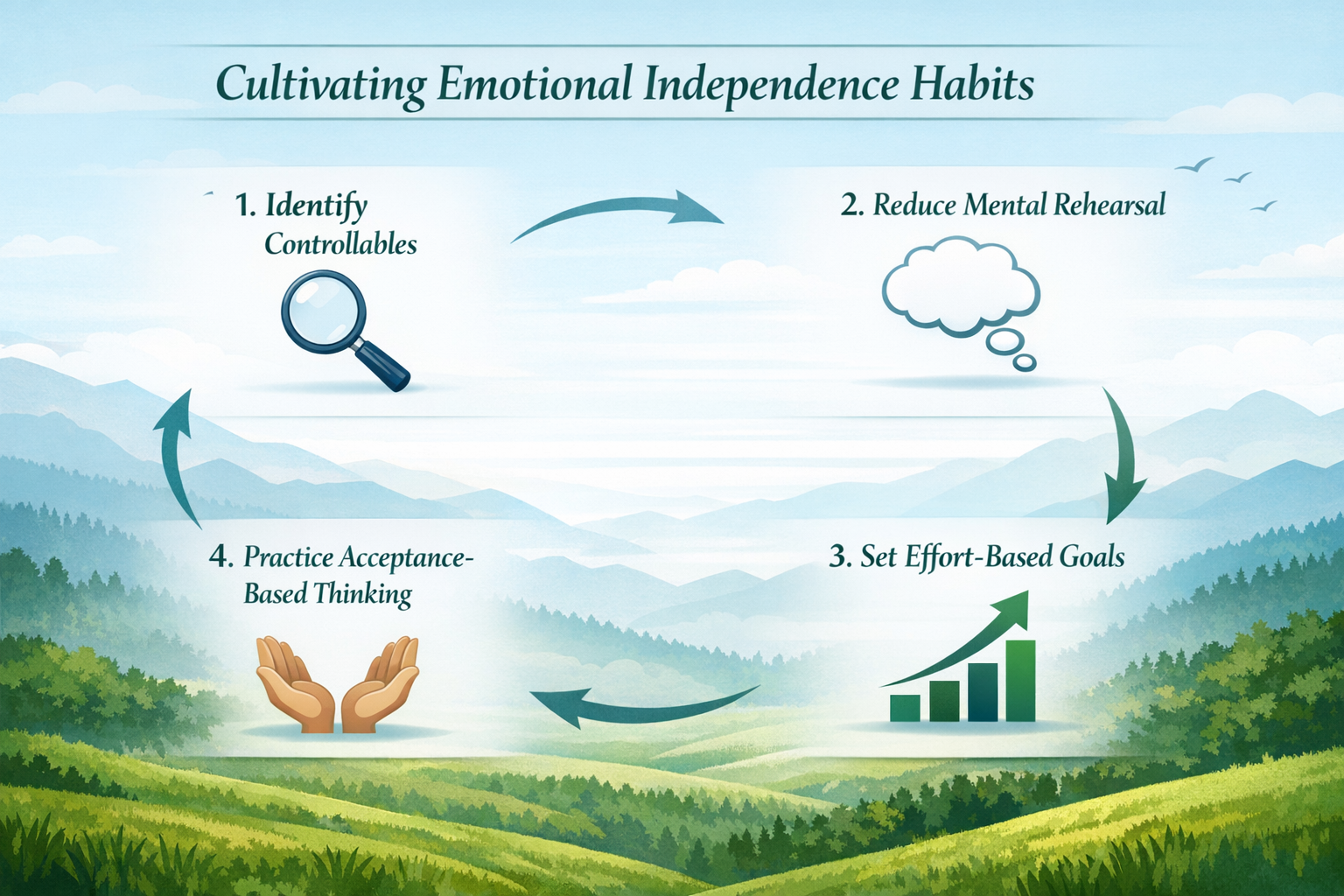
Cultivating emotional independence and learning to accept what you can’t control requires a structured approach that systematically reorients your thinking and behavioral patterns. This involves distinguishing between what is within your sphere of influence and what falls outside it, thereby fostering emotional independence habits that lead to lasting mental peace psychology.
Here’s a structured framework to apply:
-
Identify Your Sphere of Influence
The first step to building emotional independence habits is to clearly delineate what you can and cannot control. This involves actively assessing situations to separate your actions and efforts from external variables.
- Actionable vs. Unchangeable: Before engaging with any challenge, ask yourself, “What aspects of this situation can I directly influence through my actions, decisions, or efforts?” and “What aspects are entirely outside my direct control, such as other people’s reactions, past events, or unpredictable future occurrences?”
- Focus on Internal Locus of Control: Develop an internal locus of control, believing that your actions largely determine your outcomes, rather than external forces. This empowers you to focus on your inputs.
- Example: If you’re managing a team project, you can control your planning, communication, and support to your team members. You cannot control a team member’s personal emergency or a client’s last-minute change of mind. Your responsibility is your effort; the outcome has external factors.
-
Reduce Mental Rehearsal and Rumination
To stop overthinking control and diminish anxiety, consciously disrupt patterns of rumination and anticipatory worry. This is vital for developing mental peace psychology.
- Mindfulness Practices: Engage in mindfulness to bring your attention to the present moment. When you notice your mind drifting into unproductive “what if” scenarios or replaying past grievances, gently redirect it. Techniques like focused breathing or sensory awareness can be highly effective. Meditation In Depth can provide comprehensive guidance.
- Scheduled Worry Time: Allocate a specific, limited time each day (e.g., 15-20 minutes) for worrying or planning. Outside this window, if anxious thoughts arise, acknowledge them and tell yourself, “I will address this during my scheduled worry time.”
- Cognitive Defusion: Practice detaching from your thoughts by observing them rather than engaging with them. See thoughts as clouds passing in the sky or labels on items, rather than undeniable truths. This helps in how to let go emotionally of their grip.
-
Set Effort-Based Goals, Not Outcome-Based Goals
Shift your motivational framework from focusing on results (which are often uncontrollable) to emphasizing the effort and process (which are fully within your control).
- Process-Oriented Mindset: Define success by your commitment, consistency, and the quality of your input, rather than solely by the ultimate achievement.
- Example: Instead of “I will get a promotion this year” (outcome-based, largely external), aim for “I will consistently exceed expectations in my current role, take on new learning opportunities, and proactively communicate my value” (effort-based, internal). This empowers you and reduces dependency on external validation.
- Intrinsic Motivation: Foster intrinsic motivation, where satisfaction comes from the activity itself and the personal growth derived from it, rather than external rewards or recognition. This aligns with a deeper sense of emotional independence habits.
-
Practice Acceptance-Based Thinking
Acceptance is not resignation; it is an active choice to acknowledge reality as it is, without judgment or resistance, particularly regarding elements you cannot change. This is the cornerstone of learning to accept what you can’t control.
- Radical Acceptance: Fully acknowledge and validate your emotional responses to uncontrollable situations (e.g., sadness, frustration) without letting them dictate your actions or spiral into despair. This allows for processing rather than suppression.
- “Is This Fact or Opinion?” Test: When confronted with a distressing thought about an uncontrollable situation, challenge it. Is it a verifiable fact, or is it an interpretation, fear, or judgment? This helps in maintaining mental peace psychology.
- Develop a Growth Mindset: View setbacks or undesirable outcomes as opportunities for learning and adaptation rather than failures. This perspective makes it easier to let go of what went wrong and focus on future controllable actions.
By systematically applying these steps, individuals can transition from a state of chronic overthinking and anxiety to one of greater emotional independence and resilient mental peace psychology. This journey requires consistent practice, but the rewards of reduced stress and enhanced well-being are substantial. Further strategies for fostering positive emotional states can be found in “How Gratitude Makes Us Happier and Healthier?”.
What Are the Benefits of Practicing the Art of Detachment?
Practicing the art of detachment yields significant benefits, transforming mental, emotional, and even physical well-being by fostering emotional independence habits and a robust mental peace psychology. These advantages extend across personal and professional domains, making it a valuable skill for anyone seeking to stop overthinking control and improve their quality of life.
Here are the key benefits:
- Reduced Stress and Anxiety: By focusing energy on what is controllable and releasing attachment to outcomes, individuals experience a significant decrease in chronic stress and anxiety. The mental burden of constantly trying to manipulate external events is lifted.
- Enhanced Emotional Resilience: Detachment builds the capacity to bounce back from setbacks. When outcomes don’t meet expectations, the impact is less severe because self-worth is not tied to those external results. This directly supports how to let go emotionally.
- Improved Focus and Productivity: With less mental energy consumed by rumination and worry, cognitive resources are freed up, allowing for greater concentration on actionable tasks and more effective problem-solving. This leads to higher productivity and better decision-making.
- Greater Inner Peace and Calm: Learning to accept what you can’t control cultivates a profound sense of inner calm. This isn’t indifference but a stable peace derived from knowing one has done their best within their sphere of influence.
- Stronger Relationships: When less attached to specific outcomes or opinions from others, interactions become more genuine and less fraught with expectations. This allows for healthier boundaries and improved communication. For more on navigating relationships, refer to “Effective Communication in Relationships: Expressing & Listening Skills.”
- Increased Adaptability: Life is inherently uncertain. The ability to let go of fixed expectations makes individuals more flexible and adaptable to changing circumstances, viewing them as challenges rather than insurmountable obstacles.
- Better Physical Health: Chronic stress is linked to many physical health issues. Reducing mental strain through detachment can positively affect cardiovascular health, immune function, and sleep quality.
- Empowered Decision-Making: Detachment encourages decisions based on sound judgment and information, rather than being clouded by fear of uncontrollable outcomes. This leads to more rational and effective choices.
These benefits collectively contribute to a more fulfilling and less reactive life, demonstrating that the art of detachment is not about apathy but about intelligent emotional management and pursuiting genuine mental peace psychology.
Common Misconceptions About Detachment
Detachment is often misunderstood as emotional coldness, indifference, or a lack of caring, which can deter people from exploring this beneficial psychological skill. It is important to clarify these misconceptions to fully grasp what it means to practice the art of detachment and cultivate emotional independence habits.
Here are some common misconceptions:
- Detachment Means Not Caring: This is perhaps the most prevalent misconception. Psychological detachment does not imply apathy or an absence of empathy. Instead, it means caring deeply about what you can do while releasing emotional entanglement with outcomes or circumstances that are beyond your control. You can care about a friend’s struggle without taking on their emotional burden or trying to fix things for them.
- Detachment Means Avoiding Emotions: Detachment does not advocate for suppressing emotions. It encourages acknowledging and processing emotions without letting them overwhelm or dictate your actions in unproductive ways. It’s about feeling emotions fully, understanding their transient nature, and choosing not to be defined or paralyzed by them, especially those related to uncontrollable external factors. This is key for how to let go emotionally.
- Detachment is a Spiritual or Mystical Concept: While various spiritual traditions incorporate elements of non-attachment, psychological detachment is a practical, evidence-aligned skill rooted in cognitive behavioral principles. It focuses on rational thought, behavioral changes, and emotional regulation for real-world benefits, rather than abstract spiritual doctrines.
- Detachment Means Giving Up or Being Passive: This is incorrect. Detachment is about intelligent effort allocation. It means putting in your best effort (responsibility) and then releasing the need to control the outcome. It’s an active choice to focus on influence rather than control, distinguishing it sharply from passive resignation. An individual who practices detachment will actively work towards their goals but will not fall apart if those goals aren’t met because of external factors.
- Detachment Leads to Isolation: False. Healthy detachment often improves relationships by reducing needy or controlling behaviors driven by outcome dependency. It allows for healthier boundaries and more authentic connections.
- Detachment is Easy: Learning to accept what you can’t control is a skill that requires consistent practice and effort, especially for those accustomed to chronic overthinking. It challenges deeply ingrained cognitive patterns and emotional responses.
Understanding these distinctions helps to reframe the art of detachment as a pragmatic tool for mental well-being rather than a path to emotional void or disengagement. It is a sophisticated form of emotional intelligence that contributes significantly to mental peace psychology. For a more in-depth understanding of emotional intelligence, see “Emotional Intelligence—What It Is and Why It’s Important.”
Troubleshooting: What to Do When You Can’t Seem to Let Go?
Even with the best intentions, there will be moments when you can’t seem to know how to let go emotionally of a situation or outcome, continuing to stop overthinking control. This is a normal part of the learning process for the art of detachment. When facing such resistance, several strategies can help you regain footing and reaffirm your commitment to emotional independence, habits, and mental peace psychology.
Here’s what to do when you struggle:
- Re-Evaluate Your Controllables and Uncontrollables:
- Clarify Boundaries: Revisit the distinction between what you can influence and what you cannot. Sporadically, the inability to let go stems from an unclear understanding of these boundaries in a specific situation. Write two columns: “What I Can Do/Influence” and “What I Cannot Control.” Be ruthless in this assessment.
- Focus on the Next Action: If you’ve identified that you’ve done everything within your control, shift your focus to the very next small, actionable step in your life, unrelated to the problematic situation if necessary. This helps break the loop of mental rehearsal.
- Practice Self-Compassion:
- Acknowledge the Difficulty: Recognize that learning to let go is challenging and that it’s okay to struggle. Be kind to yourself rather than self-critical. Harsh self-judgment only adds another layer of suffering.
- Normalize the Experience: Understand that countless others struggle with similar patterns of trying to control the uncontrollable. Your experience is not unique.
- Engage in Distraction and Grounding Techniques:
- Active Diversion: Sometimes, a temporary mental break is needed. Engage in an activity that fully occupies your mind and body—exercise (18 Powerful Strategies to Motivate Yourself to Exercise), a hobby, reading a compelling book, or engaging in a conversation.
- Sensory Grounding: Use your five senses to anchor yourself in the present. Notice five things you can see, four things you can hear, three things you can feel, two things you can smell, and one thing you can taste. This pulls your mind away from abstract worries.
- Seek External Perspective or Support:
- Talk to a Trusted Friend/Mentor: Explain your struggle to someone you trust. Often, simply vocalizing the thoughts can provide clarity, and an external perspective can help you identify blind spots in your assessment of control.
- Consider Professional Guidance: If chronic overthinking and inability to let go significantly impair your daily functioning, a therapist or counselor specializing in cognitive behavioral therapy (CBT) or acceptance and commitment therapy (ACT) can provide tailored strategies and support.
- Sound Baths for Relaxation: Explore practices like sound baths, which can help calm the nervous system and promote a state of relaxation conducive to letting go. Learn more about “Sound Baths: What It Is, How It Helps, and More.
- Mini-Experiment with “Letting Go”:
- Small Steps: Choose a very minor, low-stakes situation where you usually try to control the outcome. Consciously decide to only focus on your effort and completely let go of the result. Observe what happens. This builds confidence and provides experiential learning.
- Time-Limited Release: Commit to letting go of a particular worry for a set period (e.g., one hour, one day). If the worry returns, gently remind yourself you’ve committed to releasing it for now.
By systematically applying these troubleshooting steps, individuals can navigate the natural difficulties of learning the art of detachment and continue to progress towards robust emotional independence habits and sustained mental peace psychology.
FAQs About Detachment and Letting Go
Q1: Is detachment the same as being indifferent or uncaring?
No, detachment is not indifference. It means caring deeply about what you can influence (your actions, efforts, and responses) while releasing emotional attachment to outcomes, people’s opinions, or external events that are beyond your control. It allows for genuine connection without unhealthy emotional entanglement.
Q2: How can I tell if I’m trying to control something I can’t?
You’re likely trying to control the uncontrollable if you find yourself constantly worrying about future events, replaying past conversations, trying to change another person’s mind, or feeling anxious about outcomes despite having done your part. Look for signs of rumination, anticipatory anxiety, and emotional exhaustion.
Q3: What is the first step to learning how to let go emotionally?
The first step is to clearly distinguish between your sphere of responsibility (what you can directly influence) and your sphere of control (what is external and often unpredictable). Focus your energy solely on your responsibilities.
Q4: Can practicing detachment elevate my relationships?
Yes, absolutely. By reducing your need to control others or specific relationship outcomes, you foster healthier boundaries, decrease expectations, and allow for more authentic and less anxious interactions, leading to stronger connections.
Q5: Will letting go make me less motivated or productive?
Quite the opposite. When you stop expending energy on what you can’t control, you free up mental and emotional resources to focus on actionable steps and effort-based goals. This often leads to increased motivation, improved focus, and greater productivity.
Q6: How long does it take to develop the art of detachment?
Developing the art of detachment is a psychological skill that takes consistent practice and time, much like any new habit. It’s not a one-time fix but an ongoing journey of mindful awareness and intentional redirection of focus. Progress can be noticed relatively quickly, but mastery is a lifelong endeavor.
Q7: Is it possible to be too detached?
Yes, extreme detachment, often bordering on emotional numbness or avoidance, can be unhealthy. Healthy detachment is about balanced emotional engagement, not suppression. If you consistently avoid emotions or meaningful connections, it’s worth seeking professional guidance to ensure a healthy approach.
Conclusion
Mastering the art of detachment is a powerful pathway to cultivating profound mental peace psychology in 2026 and beyond. By understanding that responsibility lies in our actions and effort, while control often pertains to external, unpredictable outcomes, we gain the clarity needed to stop overthinking control. This distinction enables us to let go emotionally of anxieties born from attempting the impossible.
The journey involves embracing emotional independence habits through identifying controllable factors , reducing mental rehearsal, setting effort-based goals, and practicing acceptance-based thinking. This strategic shift not only reduces stress and enhances resilience but also improves focus, relationships, and overall well-being. It is not about emotional coldness but about a wise allocation of personal energy, fostering an inner calm that remains unshaken by life’s inevitable uncertainties.
Key Takeaways
- Detachment is a critical psychological skill for distinguishing between influence and control.
- Overthinking stems from confusing personal responsibility with the ability to control external outcomes.
- To foster emotional independence, focus on effort-based goals rather than outcome-dependent ones.
- Mindfulness and cognitive restructuring help reduce rumination and anticipatory anxiety.
- Acceptance-based thinking is an active choice to acknowledge reality without judgment or resistance.
- Practicing detachment leads to reduced stress, improved focus, enhanced emotional resilience, and greater inner peace.
- Detachment is not indifference; it is intelligent emotional management.
- Troubleshooting involves self-compassion, re-evaluating what is controllable, and seeking external support when needed.
Actionable Next Steps:
- Start a “Control vs. Influence” Journal: For one week, observe situations that cause you stress or anxiety. For each, list “What I am doing/responsible for” and “What I am trying to control (that is external).” This builds awareness.
- Implement a “Worry Time” Block: Dedicate 15-20 minutes daily to process worries. Outside this time, gently redirect your thoughts back to the present or to actionable tasks.
- Choose One Small Situation to Practice Letting Go: Pick a low-stakes event (e.g., waiting for an email reply, a minor social interaction) where you usually overthink. Consciously focus on your actions, then actively release attachment to the outcome. Observe your feelings.
- Incorporate Daily Mindfulness: Spend 5-10 minutes each day on a simple mindfulness exercise, such as focusing on your breath, to train your mind to stay present and observe thoughts without getting entangled.
By consistently applying these principles, you can embark on a transformative journey towards a more peaceful, focused, and emotionally independent life in 2026.
References
- Hayes, S. C., Strosahl, K. D., & Wilson, K. G. (2012). Acceptance and Commitment Therapy: The Process and Practice of Mindful Change. Guilford Press.
- Segal, Z. V., Williams, J. M. G., & Teasdale, J. D. (2018). Mindfulness-Based Cognitive Therapy for Depression: A New Approach to Preventing Relapse. Guilford Press.