Last updated: February 17, 2026
TL;DR
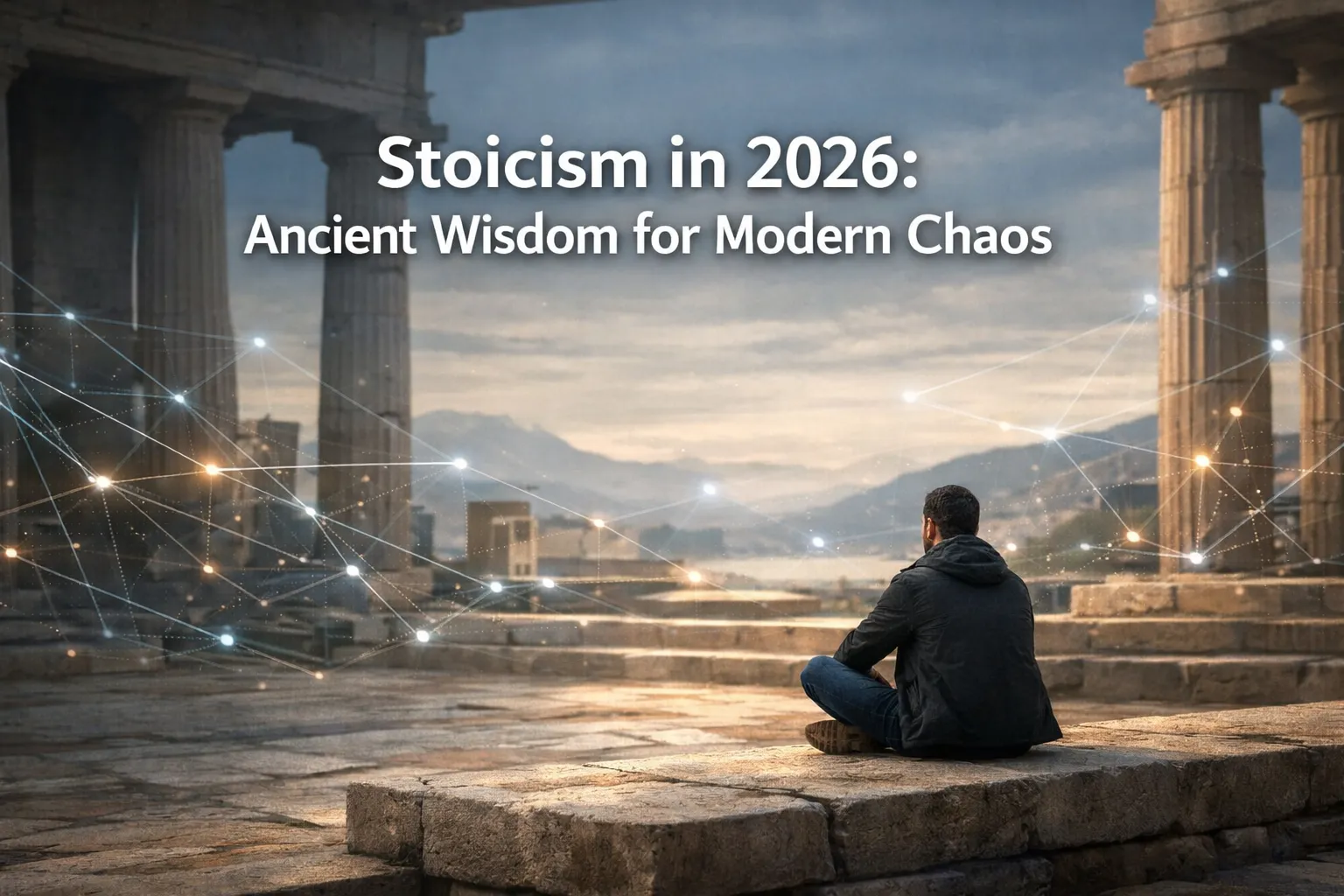
- Stoicism offers practical tools to navigate the complexities and chaos of 2026, from digital overload to career pressure.
- It teaches distinguishing between what we can control (our thoughts, actions) and what we cannot (external events).
- Core practices like reflecting on perceptions, practicing voluntary discomfort, and focusing on virtue build emotional resilience.
- By adopting a stoic mindset, individuals can achieve stress relief, mental clarity, and consistent focus in daily life.
- Stoicism is not emotional suppression but a cognitive framework for rational engagement with the world.
Quick Answer
Stoicism in modern life provides a powerful framework for navigating the inherent chaos and uncertainty of 2026 by focusing on internal control, rational thought, and virtue. It equips individuals with practical strategies to manage stress, reduce anxiety, and cultivate inner peace, offering timeless stoic philosophy benefits applicable to today’s challenges like information overload and comparison culture.
What is Stoicism, and Why Is It Resurging in 2026?
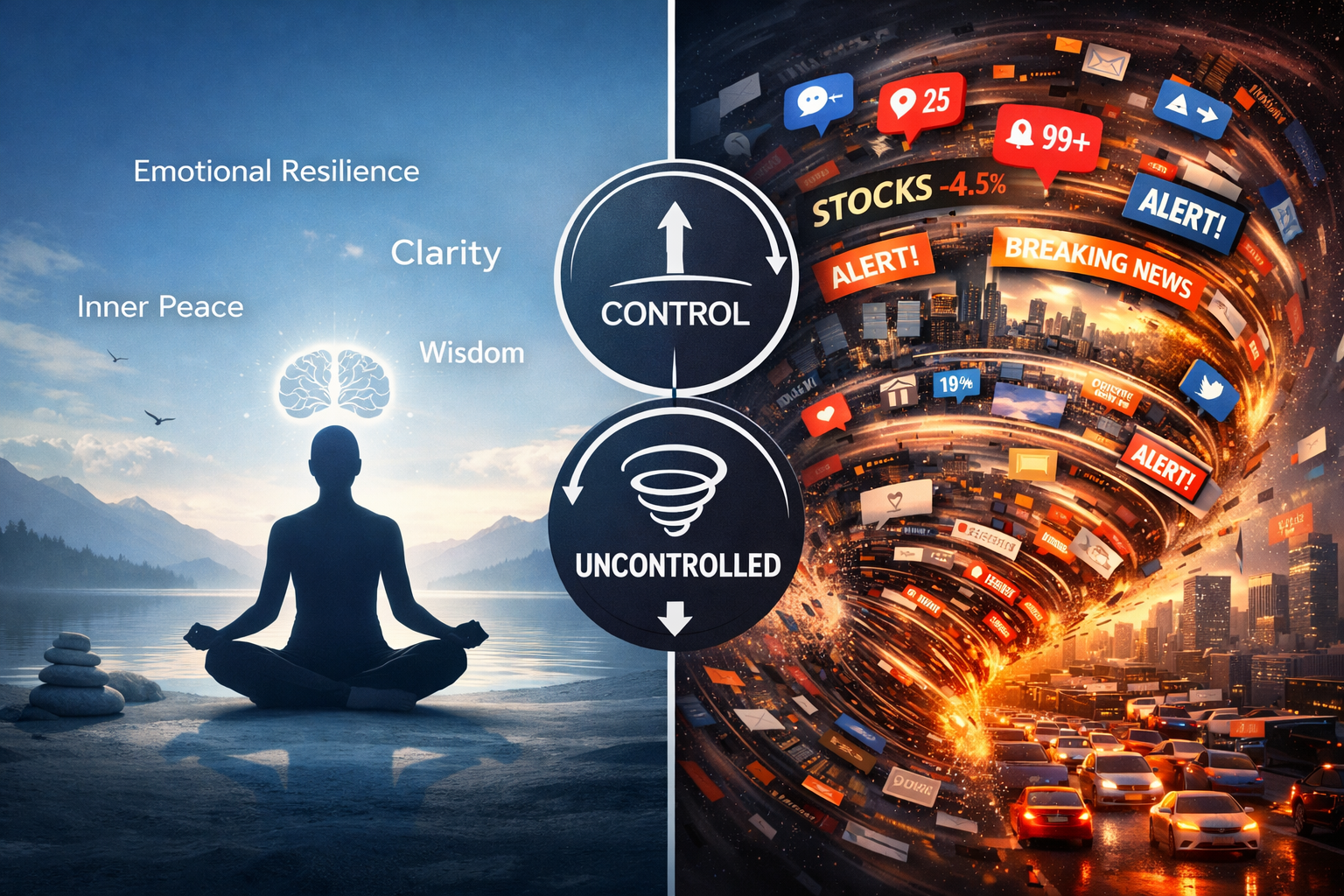
Stoicism is an ancient Greek philosophy that teaches how to live a good life by focusing on what is within our control and cultivating virtue, wisdom, justice, courage, and temperance. In 2026, it is experiencing a significant resurgence because its core tenets directly address many contemporary psychological and societal challenges, making it relevant for those seeking a stoic mindset, stress relief, and emotional resilience.
Unprecedented connectivity, rapid change, and often overwhelming information characterize the modern world, particularly in 2026. Young professionals, students, and self-improvement readers frequently grapple with:
- Information Overload: A constant stream of news, social media updates, and digital communications leading to decision fatigue and mental clutter.
- Uncertainty: Global events, economic shifts, and technological disruptions create a pervasive sense of unpredictability.
- Career Pressure: Intense competition, high expectations, and the demand for continuous upskilling contribute to significant workplace stress.
- Comparison Culture: Social media platforms foster an environment of constant comparison, leading to feelings of inadequacy, envy, and anxiety.
Stoicism provides a counterbalance to these external pressures by offering an internal anchor. It shifts the focus from external circumstances to our internal responses and interpretations. For example, rather than lamenting market volatility (uncontrollable), a Stoic would focus on how they prepare financially and manage their spending (controllable). This distinction is crucial for developing a robust stoic mindset stress relief strategy. The philosophy helps people not just react to chaos but thoughtfully engage with it, making it an essential ancient wisdom for modern problems.
Core Principles of Stoicism
- Dichotomy of Control: This foundational principle, articulated by Epictetus, states that some things are within our power (our opinions, impulses, desires, aversions) and others are not (our body, property, reputation, external events). Wisdom lies in recognizing the difference and focusing energy only on what is controllable.
- Virtue as the Highest Good: The Stoics believed that true happiness and a good life come from living under virtue: practical wisdom, courage, justice, and temperance. External goods like wealth or health are indifferent—they can be used virtuously or unvirtuously.
- Reason and Logic: Emotions are often seen by Stoics as a result of our judgments and beliefs, not merely external events. By applying reason, we can analyze and reframe our perceptions, reducing negative emotions like anger or fear.
- Acceptance of Fate (Amor Fati): This principle encourages us not just to accept but to actively embrace everything that happens, viewing it as a necessary part of the unfolding of events. This is not passive resignation but a powerful form of psychological resilience.
By embracing these principles, individuals can find profound stoic philosophy, transforming chaotic external environments into opportunities for internal growth and stability.
What Are the Key Stoic Philosophy Benefits for Modern Life?
The key stoic philosophy benefits for modern life include enhanced emotional resilience, clearer decision-making, reduced anxiety, and improved focus, all stemming from a systematic approach to managing one’s internal world. Applying ancient wisdom to modern problems helps individuals navigate the complexities of 2026 with greater equanimity.
Stoicism offers tangible advantages in a world often characterized by overwhelm:
- Emotional Resilience: Instead of being tossed about by every emotional wave, Stoicism trains the mind to observe emotions without immediate reactivity. This helps in developing resilience against setbacks, criticism, and unexpected challenges. When facing a professional setback, for instance, a Stoic might acknowledge the frustration but then reframe it as an opportunity to learn and adapt, rather than dwelling on self-blame.
- Stress and Anxiety Reduction: A significant stoic philosophy benefit is its direct impact on stress and anxiety. By consciously separating what is controllable from what is not, much of the worry associated with external outcomes diminishes. Focusing on one’s effort and actions, rather than the results, liberates mental energy. This is a powerful form of stoicism for anxiety, preventing the mind from spiraling into unproductive worry. For more on managing stress, consider exploring techniques to release stress, trauma, anxiety, and pain.
- Improved Focus and Productivity: In an age of constant distraction, Stoic practices cultivate deep concentration. By minimizing internal chatter and external anxieties, practitioners can dedicate their full attention to tasks at hand, leading to enhanced productivity and better quality work. This consistent focus directly results from managing the “noise” of the mind.
- Enhanced Decision-Making: Stoicism advocates for reason over impulsive emotion. When faced with complex choices, a Stoic will analyze the situation calmly, considering the virtues involved (e.g., what is just, what is wise), rather than being swayed by fear of failure or desire for immediate gratification.
- Stronger Relationships: By fostering self-awareness and emphasizing virtues like justice and empathy, Stoicism can lead to more stable and fulfilling relationships. It encourages understanding and accepting others, especially their behaviors, which are beyond our control. This is echoed in advice for effective communication in relationships.
| Benefit | Modern Challenge Addressed | Stoic Principle Applied |
|---|---|---|
| Emotional Resilience | Setbacks, criticism, unpredictability | Dichotomy of Control, Amor Fati |
| Stress/Anxiety Relief | Information overload, future uncertainty | Control vs. Uncontrol, Premeditatio Malorum |
| Improved Focus | Digital distractions, decision fatigue | Present Moment Awareness, Rationality |
| Better Decisions | Impulsive reactions, fear-driven choices | Virtue Ethics, Reason |
| Stronger Relationships | Conflict, unmet expectations, emotional reactivity | Justice, Empathy, Acceptance of Others’ Indifferents |
How to Practice Stoicism Daily in 2026
To practice stoicism daily in 2026, integrate simple, consistent habits that encourage self-awareness, rational thought, and a focus on what you can control, even amidst the modern world’s demands. This proactive approach helps build a robust, stoic mindset stress relief system.
Here are practical applications for how to practice Stoicism daily:
- Morning Reflection (Premeditatio Malorum):
- Action: Start your day by considering potential challenges or difficulties you might face. Mentally rehearse how you would respond virtuously—with patience, courage, or wisdom.
- Example: Before a demanding workday, think, “I might encounter difficult colleagues, project setbacks, or unexpected technical issues. If these happen, I will respond calmly, focus on my responsibilities, and seek solutions rather than complaining.”
- Benefit: This pre-paving technique reduces the shock of unexpected events and allows you to approach them with a prepared mindset, fostering stoicism for anxiety.
- Evening Review (Contemplation of the Day):
- Action: Before bed, reflect on your day. Ask, “What did I do well? Where did I fall short? How could I have responded more virtuously to challenges?”
- Example: If you became angry at traffic, reflect: “Traffic is external and uncontrollable. My anger was a judgment I made. Next time, I will accept the delay and perhaps listen to an audiobook.”
- Benefit: This self-assessment fosters continuous improvement and reinforces virtuous behavior, a key stoic philosophy benefit.
- Mindful Awareness of Perceptions:
- Action: When a potent emotion arises (e.g., frustration from social media, anger at a co-worker), pause. Ask, “Is this terrible, or am I perceiving it as bad? What is the objective reality of the situation?”
- Example: Seeing an old friend’s lavish vacation post on social media might trigger envy. A Stoic would recognize this as a personal judgment (“My life isn’t as good”). They would then reframe it: “Their life is their journey; my focus is on my path and values. This post is an external event, not a reflection of my worth.” This helps with handling social media stress.
- Benefit: Separating objective events from subjective interpretations is central to stoic mindset stress relief.
- Practice Voluntary Discomfort:
- Action: Occasionally and safely expose yourself to minor discomforts. This could take a cold shower, skipping a meal (intermittent fasting), walking instead of driving short distances, or using a less comfortable chair.
- Example: Choosing to walk to a nearby store instead of driving, even if it’s cold, reminds you that you can endure minor discomforts and that many perceived “needs” are actually preferences.
- Benefit: This practice builds resilience and reduces fear of future hardship, showing ancient wisdom for modern problems tangibly.
- Focus on Your Sphere of Control:
- Action: When faced with a problem, clearly distinguish what you can influence versus what you cannot. Direct your energy only towards the former.
- Example: If worried about a company layoff (uncontrollable outcome), focus on doing your best work, maintaining a strong professional network, and updating your resume (controllable actions).
- Benefit: This drastically reduces future anxiety and decision fatigue, channeling energy into productive efforts rather than unproductive worry.
By consistently applying these practices, you can cultivate a profound internal stability, regardless of external events, and reap the full range of stoic philosophy benefits in 2026.
How Can a Stoic Mindset Offer Stress Relief and Combat Future Anxiety?
A stoic mindset offers significant stress relief and combats future anxiety by teaching individuals to differentiate between what they can control and what they cannot, thereby channeling mental energy into productive action rather than unproductive worry. This cognitive framework provides a stable internal anchor against the unpredictable external world of 2026.
The core of stoic mindset stress relief lies in understanding that stress often arises from our interpretations and reactions to events, not the events themselves. When we internalize the Stoic distinction between what is up to us (our judgments, desires, aversions, and actions) and what is not up to us (our health, wealth, reputation, external events, and others’ opinions), we gain immense clarity.
For example, consider the widespread future anxiety many experience in 2026 regarding climate change, economic instability, or technological shifts. A Stoic approach would:
- Acknowledge the facts: Recognize the reality of these challenges without catastrophizing.
- Identify controllable actions: Focus on personal contributions (e.g., sustainable living choices, financial planning, advocating for change) rather than dwelling on the vast, uncontrollable global outcomes.
- Practice acceptance: Accept that certain outcomes are beyond individual control and let go of the emotional burden associated with trying to control the uncontrollable. This doesn’t mean apathy, but a rational reallocation of mental resources.
This perspective is effective against workplace pressure. Instead of agonizing over a demanding boss or an impossible deadline, a Stoic would focus on:
- Their effort: Doing their best work within their capabilities.
- Their attitude: Maintaining professionalism and a positive outlook.
- Their communication: Articulating boundaries or concerns where appropriate.
The outcome (the boss’s reaction, the project’s success) is then viewed as external, while the effort and attitude are internal and controllable. This significantly mitigates stress.
Practical Steps for Stress and Anxiety
- Journaling: Regularly write down your anxieties. Then, for each item, apply the “dichotomy of control.”
- Uncontrollable thought: “I’m worried about the upcoming recession.”
- Stoic reframe: “The economy is external. I will focus on managing my finances, developing new skills for career resilience, and saving prudently. The rest is not up to me.”
- Cognitive Distancing: When you feel overwhelmed, imagine you are an impartial observer. What advice would you give yourself? This detachment helps to analyze emotions more rationally.
- Mindful Breaks: Incorporate short periods of mindful awareness during the day. Observe your environment without judgment, bringing your focus to the present moment. This aligns with the benefits of taking a work break to boost productivity and relieve stress.
- Embrace Ephemerality: Reflect on the temporary nature of all things—both difficulties and joys. This perspective helps to put current struggles into context and reduces attachment to fleeting circumstances.
By consistently applying these methods, individuals can develop a stoic mindset that acts as a powerful shield against the modern world’s onslaught of stress and anxiety.
Ancient Wisdom for Modern Problems: Applying Stoicism to 2026 Challenges
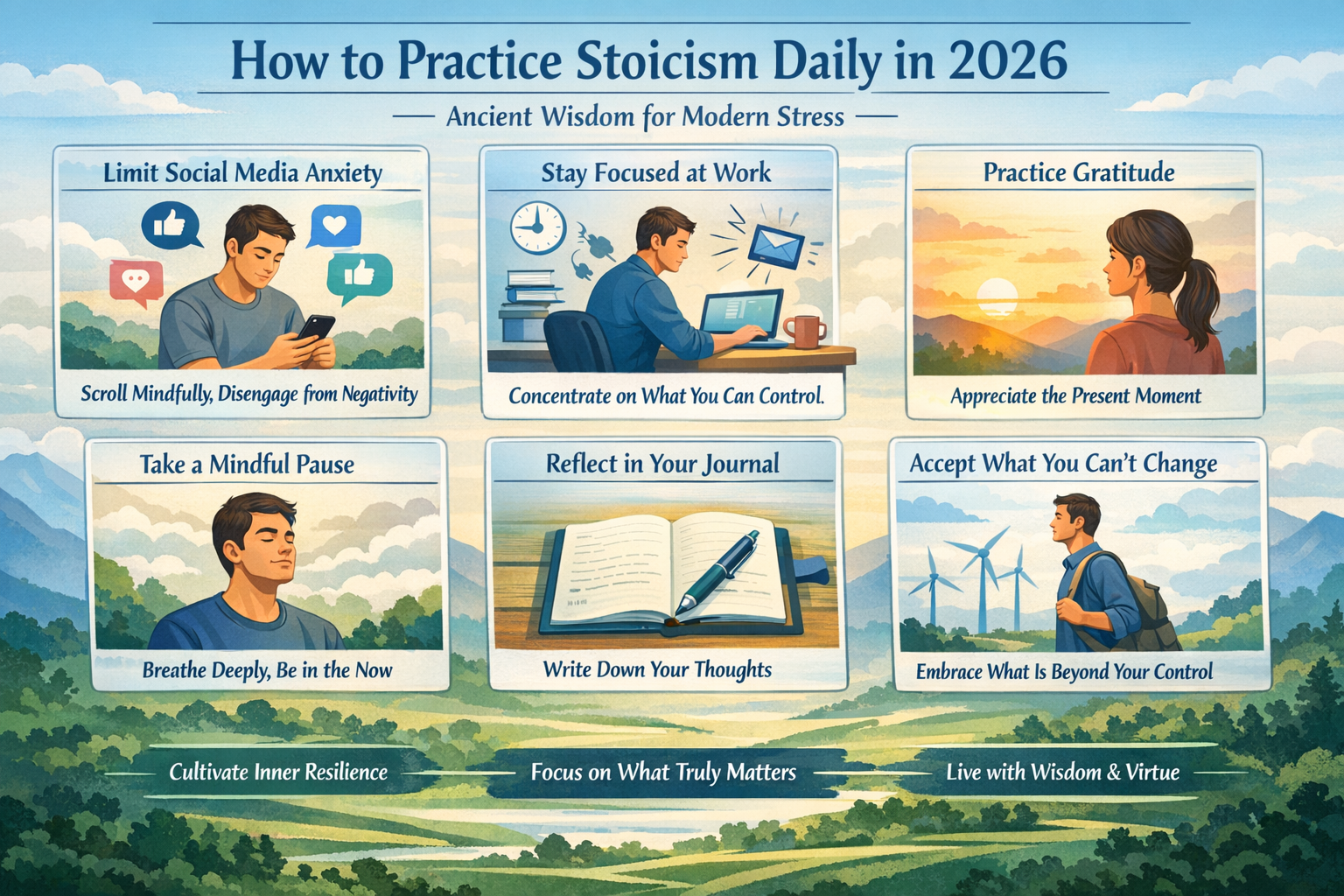
Applying ancient wisdom to modern problems through Stoicism means using its timeless principles to address current challenges like social media stress, career pressure, and decision fatigue in 2026. This philosophical framework offers practical strategies for maintaining internal calm amidst external chaos.
Stoicism provides a mental toolkit for navigating specific dilemmas prevalent in 2026:
Handling Social Media Stress
Social media in 2026 often presents curated realities, leading to feelings of inadequacy, envy, and constant comparison.
- Stoic Approach: Apply the Dichotomy of Control. You cannot control what others post or how they present their lives. You can control your exposure, your interpretation, and your reactions.
- Practical Application:
- Limit Exposure: Set boundaries on social media usage.
- Question Perceptions: When you feel envy, ask, “Am I truly lacking, or am I simply judging my internal experience against someone else’s highlight reel?” Remind yourself that external possessions or status are indifferent to your virtue.
- Focus on Your Path: Redirect attention to your own goals and values. The Stoics would emphasize that your happiness comes from within, not from external validation or comparison. Consider how gratitude makes us happier.
Navigating Workplace Pressure and Career Uncertainty
The modern workplace is dynamic and often demanding, leading to burnout and anxiety about career progression.
- Stoic Approach: Focus on Virtue in Action and the Dichotomy of Control. Your effort, integrity, and diligence are within your control; promotions, layoffs, or company performance are largely not.
- Practical Application:
- Do Your Best, Detach from Outcome: Perform your duties with excellence, but mentally detach from the results. If a project fails despite your best efforts, acknowledge the effort, learn, and move on.
- Embrace Challenges as Opportunities: View difficult tasks or demanding bosses as opportunities to practice patience, courage, and resilience. As Marcus Aurelius wrote, “The impediment to action advances action. What stands in the way becomes the way.”
- Financial Prudence: Acknowledge career uncertainty and prepare for it through saving and continuous skill development, which are controllable actions.
Combating Decision Fatigue and Information Overload
The sheer volume of choices and data in 2026 can lead to mental exhaustion and difficulty making effective decisions.
- Stoic Approach: Prioritize Clarity of Thought and Simplicity. Reduce unnecessary complexity and focus on core values.
- Practical Application:
- Define Your Values: Make decisions based on your core virtues and what truly matters, rather than being swayed by external pressures or fleeting desires. This simplifies choices.
- Mindful Information Consumption: Be selective about the news and information you consume. Ask, “Is this necessary? Does it help me live a more virtuous life?” This helps stop worrying about everything.
- Schedule Reflection: Dedicate specific times for important decisions, allowing for rational thought rather than rushed, reactive choices.
By weaving these Stoic practices into daily life, individuals can find profound Stoic philosophy benefits, transforming potential sources of chaos into opportunities for growth and tranquility.
Stoicism for Anxiety: A Cognitive Framework, Not Emotional Suppression
Stoicism for anxiety offers a powerful cognitive framework that helps individuals reframe their perceptions and manage their reactions to external events rather than demanding the suppression of emotions. It teaches a rational approach to understanding and processing feelings, leading to sustainable calm.
A common misconception about Stoicism is that it requires individuals to be emotionless or indifferent. This is incorrect. Stoics recognize the existence of emotions but argue that many negative emotions (passions) arise from faulty judgments about things outside our control. The goal is not to eliminate feelings but to prevent them from becoming destructive forces that dictate our actions.
For instance, when feeling anxiety about an interview:
- Non-Stoic Reaction: Panic, overthinking all negative outcomes, inability to focus, physical symptoms of stress.
- Stoic Approach:
- Acknowledge the feeling: “I feel anxious about this interview.” (No suppression).
- Examine the judgment: “Why am I anxious? Because I judge that getting this job is essential for my happiness, and not getting it would be a catastrophe.”
- Reframe the judgment: “Getting this job is desirable, but it is an external outcome, not entirely within my control. My happiness does not depend solely on this. What is within my control is preparing diligently, presenting myself professionally, and maintaining a calm demeanor. If I don’t get it, I will learn from the experience and pursue other opportunities.”
- Focus on controllable actions: Dedicate energy to preparation rather than worry.
This process transforms anxiety from an overwhelming force into a manageable signal, allowing for a rational response. Stoicism offers robust tools for managing anger and other strong emotions.
Techniques for Managing Anxiety with Stoicism
- Distinguish Impressions from Reality: When an anxious thought arises, challenge it. “Is this thought an accurate reflection of reality, or is it an ‘impression’ influenced by fear?”
- Voluntary Discomfort (as mentioned earlier): Facing small, self-imposed discomforts builds confidence in your ability to handle larger, unexpected anxieties. It shows you that you are more resilient than you think.
- Negative Visualization (Premeditatio Malorum): Regularly contemplate the worst-case scenarios, not to dwell on them, but to realize they are often survivable and to appreciate your current circumstances. This lessens their power if they occur and fosters gratitude.
- Focus on the Present Moment: Anxiety is often about the future. By intentionally bringing your attention to what you are doing right now—the sensations, the task—you anchor yourself in the present, where anxiety has less power. This can be enhanced by practices like meditation.
By applying this cognitive framework, individuals learn to develop calm thinking and emotional resilience, transforming anxiety from a paralyzing force into an opportunity for virtuous action and inner peace. This is a crucial element of how to practice stoicism daily for profound stoic philosophy benefits.
Cultivating Internal Stability Regardless of External Events
Cultivating internal stability regardless of external events is a cornerstone of Stoicism, enabling individuals in 2026 to maintain composure and clarity even amidst unpredictable circumstances. This internal fortress is built by consistently applying the dichotomy of control and focusing on one’s character and actions.
To be like a rock in the sea, unaffected by the crashing waves, is the Stoic ideal. The waves are the external events—the triumphs, the tragedies, the daily irritations—that are beyond our control. The rock is our inner self, our judgment, our reason, and our character, which remain stable and firm.
This internal stability is not a passive state but an active cultivation. It requires:
- Consistent Practice of the Dichotomy of Control: Regularly asking, “Is this within my control?” and releasing attachment to anything that isn’t. This mental discipline prevents external events from dictating your emotional state.
- Focus on Virtue: By prioritizing virtues like wisdom, courage, justice, and temperance, an internal compass that is independent of external rewards or recognition guides our actions. This creates a sense of purpose and integrity that fosters stability. For instance, being a nicer person is a virtuous action.
- Acceptance (Amor Fati): Embracing all events as part of the natural order of the universe and even loving them for their role in shaping our character. This profound acceptance removes resistance to reality, which is a major source of distress. When a plan goes awry, instead of lamenting, a Stoic might say, “This is happening now. How can I best respond to it?”
- Indifference to Indifferents: Recognizing that health, wealth, reputation, and comfort are “preferred Indifferent”—they are nice to have, but not essential for a good life or for our internal peace. Losing them is not a catastrophe; it is merely the loss of something external.
Building Your Internal Fortress
Think of cultivating internal stability as building a personal fortress against the chaos of the world:
| Foundation | Building Block | Protection Against |
|---|---|---|
| Dichotomy of Control | Clearly distinguishing what’s yours vs. not | Worry, anxiety about external outcomes |
| Virtue as Guide | Living with wisdom, courage, justice, and temperance | Moral compromises, regret, internal conflict |
| Amor Fati | Loving your fate, embracing all events | Resentment, bitterness, resistance to reality |
| Mindfulness | Focusing on the present, clear perception | Distraction, overthinking, emotional reactivity |
By consciously building these aspects, you establish a resilient inner state that is less susceptible to the turbulence of external life, providing profound stoic philosophy benefits and ancient wisdom for modern problems in 2026. This allows for a deeper level of self-leadership, enabling you to become a self-leader.
Conclusion
In a rapidly changing and often chaotic 2026, the ancient wisdom of Stoicism offers an invaluable roadmap for modern living. It is not a philosophy of emotional suppression but a practical cognitive framework designed to cultivate internal stability, foster emotional resilience, and promote rational thought amidst external pressures. By consistently applying core Stoic principles—such as the dichotomy of control, pursuing virtue, and the power of perception—individuals can effectively navigate information overload, career anxieties, social media stress, and future uncertainty. Embracing Stoicism provides tangible stoic philosophy benefits, transforming reactive emotional states into proactive, thoughtful responses, ultimately leading to greater peace of mind and sustained focus.
Actionable Next Steps:
- Start a Stoic Journal: Begin by writing down your anxieties and then applying the Dichotomy of Control to each. Distinguish what you can control from what you cannot.
- Practice Morning Reflection: Each morning, consider one challenge you might face and how you can respond to it with wisdom and patience.
- Mindfully Observe Emotions: When a strong negative emotion arises, pause and ask yourself, “What judgment am I making about this external event that is causing this emotion?”
- Read a Primary Stoic Text: Begin with Meditations by Marcus Aurelius, Letters from a Stoic by Seneca, or Discourses by Epictetus for more profound insight into how to practice stoicism daily.
- Seek Community: Join online forums or local groups dedicated to Stoicism to discuss practices and gain different perspectives.