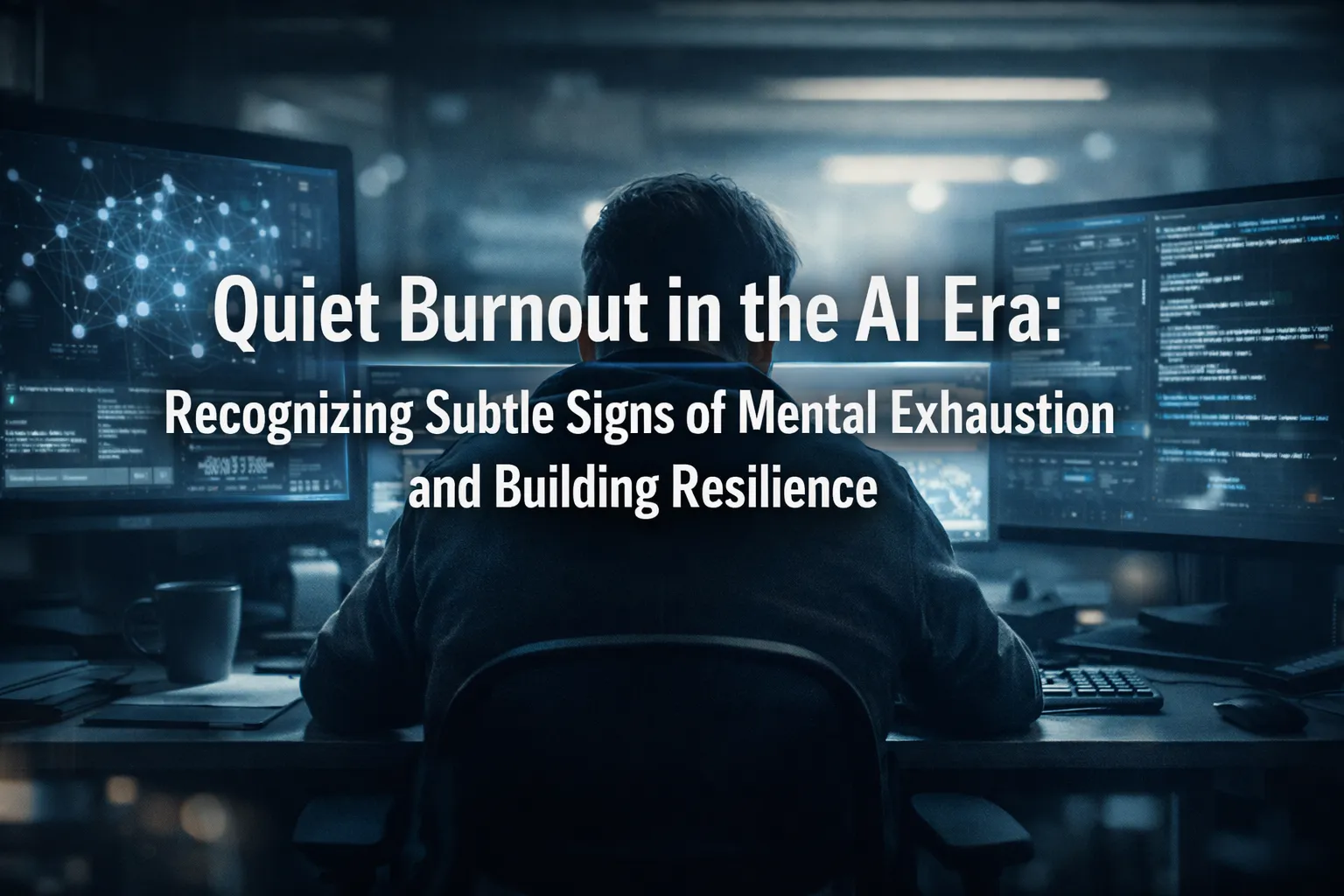
The silence in a conversation often speaks louder than words, much like the quiet struggles many individuals face in our rapidly evolving professional landscape. As we navigate 2026, integrating artificial intelligence (AI) into nearly every facet of our lives is undeniable. While AI promises unprecedented efficiency and innovation, it simultaneously introduces new stressors that contribute to a phenomenon we at AkReviews call Quiet Burnout in the AI Era: Recognizing Subtle Signs of Mental Exhaustion and Building Resilience. This isn’t the dramatic collapse often associated with traditional burnout; instead, it’s a pervasive, insidious depletion that often goes unnoticed until it’s deeply entrenched. It’s the silent erosion of enthusiasm, the dulling of cognitive vitality, and the slow fade of engagement that leave professionals feeling adrift, even amidst apparent success.
At AkReviews, we believe in providing a map, not just philosophy. We understand that life is messy, and the pressures of an AI-driven world can feel overwhelming. This deep dive aims to validate your experiences, help you recognize these subtle signs within yourself or others, and equip you with concrete steps to protect your peace and build profound resilience. We don’t just ask, “Why do we feel this way?”; we also guide you toward “Here is how to fix it.”


Key Takeaways
- Burnout is pervasive, especially with AI: A staggering 83% of workers experience some degree of burnout, with frequent AI users reporting 45% higher rates of exhaustion [1, 5].
- Engagement Is Plummeting: Overall employee engagement has sharply declined to 64% in 2026, down from 88% in 2025, largely due to burnout intensifying its grip [3].
- Anxiety Over AI Job Security is High: Despite stable employment, 75% of employees worry about AI-driven job obsolescence, and 65% fear AI will replace their specific role [2].
- The Skills Gap Fuels Stress: While 77% of employers plan to reskill workers for AI, only 13% have received actual training, creating widespread vulnerability and stress [2].
- Resilience is Achievable: Recognizing subtle signs and implementing proactive strategies, from digital boundaries to enhancing cognitive vitality, is crucial for navigating this new era.
The AI Age: A New Landscape for Mental Exhaustion
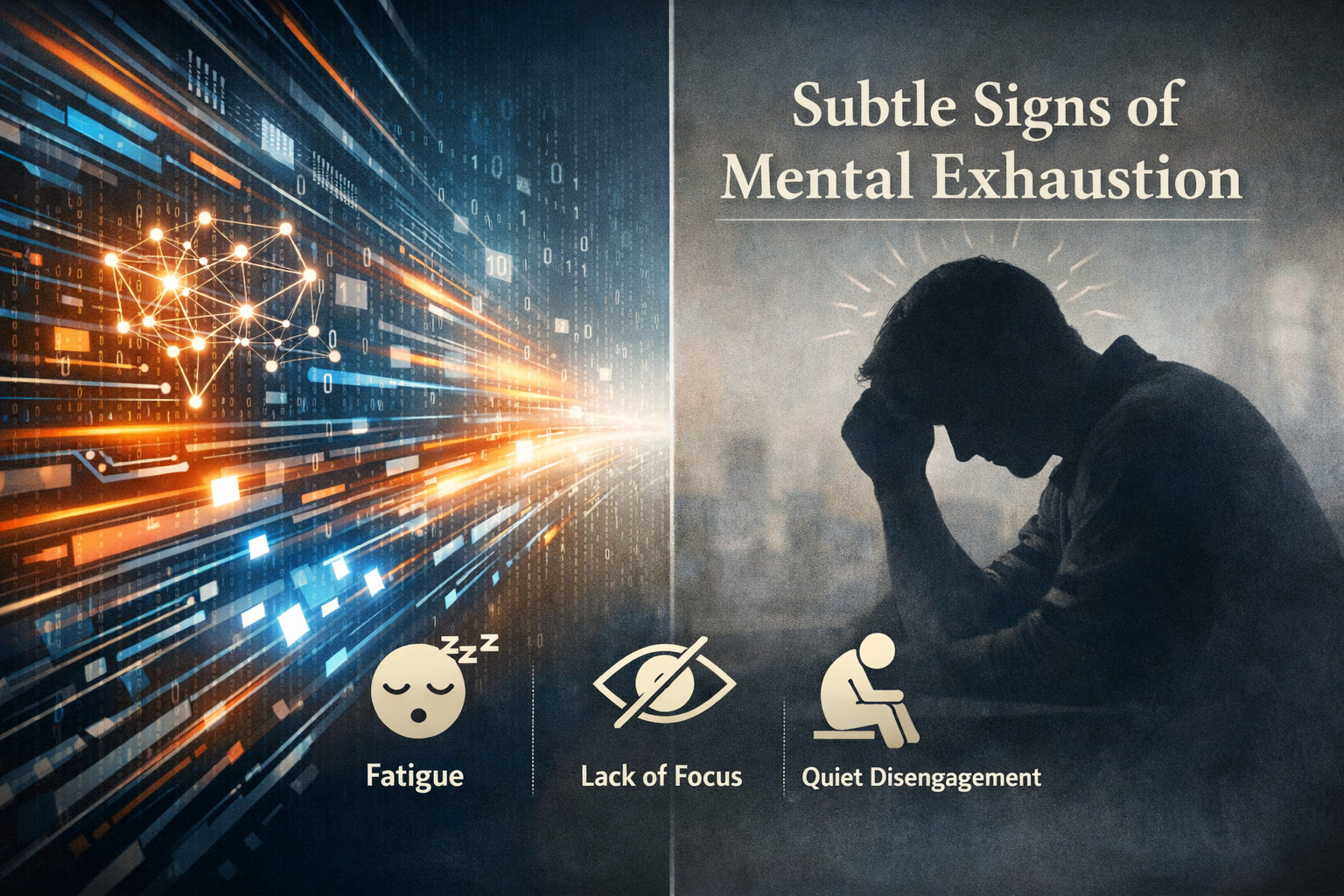
The year 2026 marks a pivotal point where AI is no longer just a futuristic concept but a daily reality in workplaces worldwide. This rapid integration has, however, created unique psychological pressures, leading to a rise in mental exhaustion that manifests as quiet burnout. It’s a subtle yet profound state of depletion that differs from the overt signs of traditional burnout. You might not feel completely overwhelmed or utterly collapsed, but a persistent dullness, a lack of former enthusiasm, and a subtle detachment.
The Alarming Statistics of an AI-Driven Workforce
The numbers paint a stark picture of the current mental health landscape:
- Near-Universal Burnout: A significant 83% of workers report experiencing some level of burnout [5]. For those who frequently interact with AI, this figure climbs dramatically, showing a 45% higher burnout rate compared to non-users [1, 2, 4].
- Declining Engagement: Employee engagement has seen a troubling decline, dropping to 64% in 2026 from 88% just the previous year [3]. This significant 24-percentage-point collapse is deeply intertwined with burnout, with 52% of workers directly linking their reduced engagement to mental exhaustion [3]. This compounding mental health crisis underscores the urgency of addressing quiet burnout.
- Generational Impact: Younger generations are feeling the brunt of this shift. In the UK, 83% of Gen Z frontline employees report burnout symptoms, a stark contrast to 66% among other age groups [7]. This highlights a particular vulnerability among those just starting their careers, perhaps facing unprecedented technological expectations without adequate support.
Unpacking the Subtle Stressors of the AI Era
Why is the AI era contributing to this quiet burnout? It’s a complex interplay of factors that slowly erode mental well-being:
- Job Security Anxiety: Despite stable employment figures, a pervasive sense of insecurity looms. A staggering 75% of employees worry AI will make certain jobs obsolete, and 65% specifically fear that AI will replace their role [2]. This constant underlying dread can create a low-grade, chronic stress that drains energy silently.
- The Skills Gap and Feeling Abandoned: While 77% of employers acknowledge the need to reskill their workforce for AI, a mere 13% of employees have actually received any AI training [2]. This gap leaves workers feeling ill-equipped, vulnerable, and potentially obsolete, contributing significantly to psychological stress. The pressure to master new tools without proper guidance can lead to a sense of inadequacy and quiet despair.
- Cognitive Overload and Constant Learning: AI tools are not static; they evolve at an incredibly fast pace. Each platform update often demands new workflows, revised duties, and, frequently, additional unpaid overtime to simply keep up [4]. This continuous demand for learning and adaptation creates an unrelenting cognitive load, making it difficult to ever truly disconnect or feel competent.
- Increased Workload Pressure: Counterintuitively, the promise of AI to reduce workload often results in the opposite. 64% of workers report a significantly increased workload because of the pressure to adopt and master AI tools [2]. This isn’t just about using AI; it’s about the expectation to integrate it flawlessly, optimize processes, and deliver more, faster.
- Workplace Surveillance: The rise of AI-driven workplace monitoring systems is a measurable stressor for 56% of workers, contributing to anxiety and a feeling of constant scrutiny [2]. This erosion of privacy and autonomy can lead to hyper-vigilance and a depleted sense of psychological safety.
- Leadership Communication Failures: A significant perception gap exists between leadership and employees regarding AI’s impact. While 69% of C-suite executives believe they communicate clearly about AI’s implications, only 12% of entry-level staff agree [3]. This disconnect directly correlates with a vast 47-percentage-point engagement difference (74% of C-suite vs. 27% of entry-level staff report AI benefits) [3]. When employees feel uninformed or unheard, uncertainty thrives, amplifying stress and quiet burnout.
The silent strivings of professionals to keep pace, the unacknowledged fears, and the persistent cognitive demands coalesce into this subtle yet profound form of exhaustion. It’s time to unlock your inner dialogue and recognize these quiet signals before they become deafening.
Recognizing the Subtle Signs of Mental Exhaustion in the AI Era
Unlike traditional burnout, which often presents as overt exhaustion, cynicism, and reduced efficacy, quiet burnout in the AI era is more insidious. It’s a slow leak of energy, a gradual dimming of motivation, and a pervasive sense of inadequacy even when performing well. Recognizing these subtle signs within yourself or others is the first critical step toward building resilience.
The Invisible Telltale Indicators
- Reduced Enthusiasm for Previously Enjoyed Tasks: You might dread projects that once excited you. The spark for innovation or creative problem-solving diminishes, replaced by a feeling of going through the motions. This isn’t active dislike but a quiet indifference.
- Difficulty Concentrating and Cognitive Fog: Despite working long hours, your mental focus might feel scattered. You need to reread emails, forget details, or struggle to follow complex discussions. This affects your cognitive vitality and overall mental sharpness.
- Increased Irritability and Short Temper: Small frustrations that you once handled with ease now trigger disproportionate reactions. This isn’t always overt anger but a simmering resentment or a quickness to snap at colleagues or loved ones. It’s a sign that your emotional reserves are depleted. For strategies to manage this, consider our Anger Management Guide for Better Mental Well-Being.
- Social Withdrawal, Even from Close Connections: You might start declining social invitations or find less joy in connecting with friends and family. This isn’t necessarily a desire to be alone but a lack of energy to engage, a feeling that social interaction is another demand on your limited resources.
- A Sense of Detachment or Apathy: You might feel a growing distance from your work, your colleagues, or even your personal goals. This isn’t cynical disengagement, but a quiet apathy, a feeling that nothing truly matters or excites you anymore. It’s a defense mechanism when constantly overwhelmed.
- Persistent Fatigue, Unrelieved by Rest: You sleep, but you don’t feel rested. The exhaustion isn’t just physical; it’s a deep mental weariness that permeates your days, making even simple tasks feel arduous.
- Procrastination and Indecision: Tasks that once felt routine now seem daunting, leading to delays and difficulty making even minor decisions. This isn’t laziness, but paralysis stemming from depleted mental resources.
- Increased Negative Self-Talk and Imposter Syndrome: Despite external successes, you question your capabilities, feeling like a fraud, or constantly fearing you’ll be “found out.” This is amplified by the pressure to keep up with rapidly evolving AI tools, making you feel perpetually behind. Our article on Why We Overthink & How To Overcome It offers insights into managing such thoughts.
- Physical Symptoms: Quiet burnout can manifest physically as headaches, digestive issues, muscle tension, or a weakened immune system. Your body is quietly signaling its distress.
🗣️ “The most exhausting thing in life, I have discovered, is being insincere.” — Anne Morrow Lindbergh
In the AI era, the pressure to conform, to adapt, and to always be ‘on’ can lead to a quiet insincerity with oneself, masked by external productivity. Recognizing this internal dissonance is key to reversing the slide into burnout.
Why These Signs Are So Easy to Miss
These signs are subtle precisely because they don’t scream for attention. They can be easily rationalized away as “just a busy week,” “a bit of stress,” or “getting older.” The pervasive culture of resilience, while positive can also inadvertently encourage individuals to suppress these early warnings, pushing through discomfort rather than addressing it. The constant demands of the AI era, with its blurred lines between work and life, continuous learning expectations, and the underlying anxiety of job security, make it challenging to discern normal stress from creeping mental exhaustion.
The crucial difference is that with quiet burnout, these feelings aren’t fleeting; they are persistent and slowly chipping away at your well-being. By learning to discern these quiet whispers of distress, you can intervene before they escalate into a full-blown crisis, allowing you to master the overwhelm and navigate the complexities of connection in this new age.
Building Resilience in the AI Era: Strategies for Mental Well-being
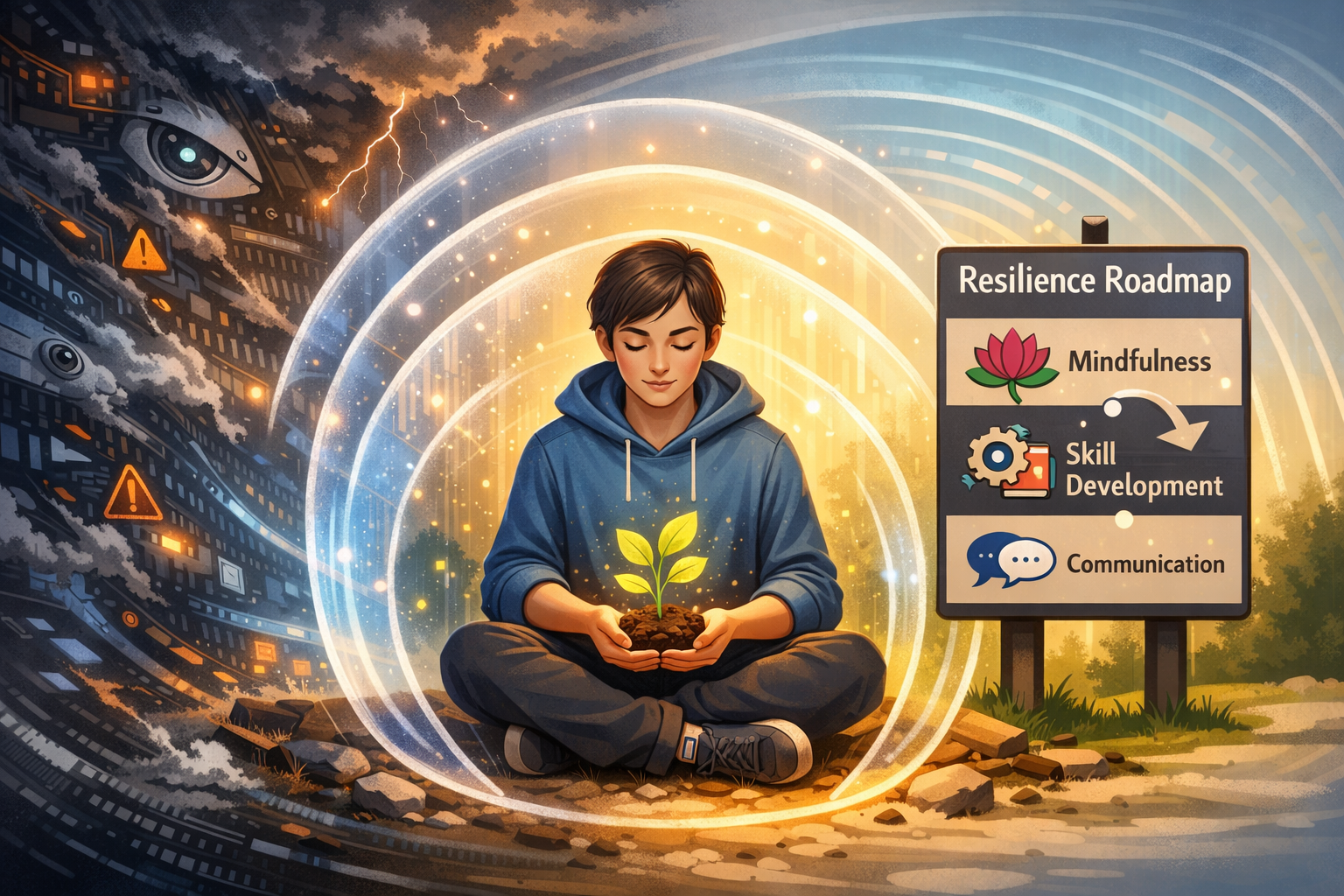
Recognizing the subtle signs of quiet burnout is only half the battle. The other, equally crucial half involves actively building resilience and implementing strategies that protect your mental well-being in an AI-driven world. This is about rewriting the scripts of life, creating a vision for change, and reclaiming your peace amidst the digital deluge.
1. Re-establishing Digital Boundaries 🌐
The AI era often blurs the lines between work and personal life, leading to constant connectivity and a feeling of being perpetually “on.” Setting clear digital boundaries is paramount.
- Designate “AI-Free” Zones and Times: Just as you might have “screen-free” bedrooms, consider designating specific times of the day or days of the week when you intentionally disengage from work-related AI tools. This allows your brain to truly rest and prevents continuous cognitive overload.
- Automate Notifications, Not Your Life: Leverage AI to manage notifications so you’re not constantly interrupted. However, ensure AI isn’t dictating your schedule or forcing you into a reactive mode. You control the technology, not the other way around.
- The “Digital Sunset”: Establish a consistent time each evening to log off from all work-related digital platforms. This creates a clear demarcation between work and rest, crucial for mental recovery. For more on the importance of breaks, read our article on The Benefits of Taking a Work Break: Boost Productivity and Relieve Stress!.
2. Prioritizing Skill Development & Future-Proofing Yourself 🧠
The anxiety surrounding AI replacing jobs is a significant contributor to quiet burnout. Proactively investing in your skills can transform this fear into empowerment.
- Strategic Upskilling: Instead of feeling overwhelmed by all AI tools, focus on developing skills that complement AI rather than compete with it. This includes critical thinking, emotional intelligence, creativity, and complex problem-solving. Seek the 13% of companies actually providing AI training, or self-initiate learning.
- Embrace “Human-Centric” Skills: AI excels at tasks that are repetitive and data-driven. Humans excel at empathy, nuanced communication, and innovation. Nurture these uniquely human capabilities. For insights into developing deeper interpersonal skills, explore Effective Communication in Relationships: Expressing & Listening Skills..
- Continuous Learning Mindset: The AI era demands a commitment to lifelong learning. View new AI tools not as threats, but as opportunities to enhance your capabilities. This shift in perspective can significantly reduce anxiety.
3. Fostering Human Connection and Communication 🤝
As AI tools mediate more interactions, the quality of human connection can suffer. Counteract this by intentionally deepening your bonds.
- Authentic Workplace Connections: Try to connect with colleagues beyond work-related tasks. Shared experiences and genuine conversations can build a sense of community and support, buffering against the isolation AI can sometimes foster.
- Strengthen Personal Relationships: In a world increasingly mediated by screens, prioritize face-to-face interactions with friends and family. Cultivate trust and understanding, as these relationships are vital anchors for your mental health. Our insights on The Importance of Trust in Relationships: Building and Maintaining Trust. can be a valuable resource.
- Transparent Leadership Communication: If you are in a leadership position, actively bridge the communication gap (where 69% of C-suite believe they communicate clearly, but only 12% of entry-level staff agree [3]). Transparently discuss AI’s impact, offer clear training paths, and solicit feedback to ease job security anxiety.
4. Cultivating Mindfulness and Emotional Regulation🧘
The constant stimulation and pressure of the AI era cause robust internal coping mechanisms.
- Mindfulness Practices: Even a few minutes of mindfulness or meditation daily can help you stay grounded, reduce anxiety, and improve focus. This can be a powerful tool to protect your peace amidst external chaos. Explore Meditation In Depth for guidance.
- Emotional Resonance and Processing: Learn to identify and process your emotions rather than suppressing them. Journaling, talking to a trusted friend, or seeking professional help can prevent emotional overload from contributing to quiet burnout.
- Nature Immersion: Spending time in nature has profound benefits for mental well-being, reducing stress and improving mood. Make it a regular part of your routine to disconnect from screens and reconnect with the natural world.
5. Prioritizing Physical Health and Cognitive Vitality 🏃♀️🍎
Your mental health is intrinsically linked to your physical health. Neglecting one affects the other.
- Regular Exercise: Physical activity is a powerful antidote to stress and can naturally boost your mood. Even short bursts of exercise can make a significant difference. Consider our 18 Powerful Strategies to Motivate Yourself to Exercise.
- Nutrient-Rich Diet: Fuel your brain with a balanced diet. Processed foods and excessive sugar can contribute to mood swings and fatigue. Focus on whole foods that support sustained energy and cognitive function.
- Adequate Sleep: Sleep deprivation is a direct pathway to burnout. Prioritize 7-9 hours of quality sleep each night. Create a calming bedtime routine to signal to your body that it’s time to rest. For tips, see 10 Simple Things That Will Make You Sleep like a Baby Tonight.
6. Embracing Self-Compassion and Setting Realistic Expectations ✨
In a world driven by AI efficiency, it’s easy to fall into the trap of perfectionism and relentless self-criticism.
- Challenge AI’s Efficiency Ideal: While AI is highly efficient, remember that humans are not machines. It’s okay to have off days, to need breaks, and to not constantly operate at peak performance.
- Practice Self-Compassion: Treat yourself with the same kindness and understanding you would offer a friend. Recognize that navigating the AI era is a new and challenging experience for everyone.
- Reframe Failure as Learning: In a rapidly changing landscape, mistakes are inevitable. View them as learning opportunities rather than personal failings. This resilience mindset is crucial for long-term growth.
By integrating these strategies into your daily life, you are not just surviving the AI era; you are thriving within it. You are building inner fortitude, mastering the overwhelm, and creating a vision for change that prioritizes your well-being. This journey toward self-mastery is at the heart of what AkReviews advocates—a holistic approach to living a rich, fulfilling life.
Conclusion
The quiet burnout of the AI era is a subtle but significant challenge facing many professionals in 2026. It’s not always a dramatic crash, but a gradual erosion of energy, engagement, and cognitive vitality, often exacerbated by the relentless pace of technological change, anxieties about job security, and the pervasive culture of ‘always on’ connectivity. The statistics are clear: burnout is widespread, especially among frequent AI users, and employee engagement is plummeting, creating a compounding mental health crisis.
However, recognizing these subtle signs is the first powerful step towards reclaiming your well-being. From persistent fatigue to diminished enthusiasm and a quiet sense of detachment, these are the whispers of your psyche signaling a need for intervention. At AkReviews, we champion an introspective yet actionable approach. We acknowledge the messiness of life in this new digital landscape, but we firmly believe in providing a clear map for navigating it.
Building resilience in this era means being intentional about your choices. It means setting clear digital boundaries to protect your peace, proactively gaining skills that complement AI, and strengthening the human connections that ground you. It also involves cultivating mindfulness, prioritizing physical health, and embracing self-compassion when faced with the inevitable pressures of a strengthening world.
Actionable Next Steps:
- Self-Assessment: Take a moment to honestly reflect on the subtle signs of quiet burnout discussed. Which ones resonate most with your current experience?
- Choose One Strategy: Don’t implement everything at once. Select one or two strategies from the “Building Resilience” section that feel most achievable right now—perhaps setting a “digital sunset” time or carving out 10 minutes for mindfulness.
- Seek Connection: Reach out to a trusted friend, family member, or colleague. Share your feelings and listen to theirs. Remember, you are not alone in this experience.
- Explore Resources: Dive deeper into related AkReviews articles that can further support your journey, such as those on mental focus, stress relief, or cultivating healthy relationships.
The journey to self-mastery in the AI era is ongoing. By consciously recognizing the nuanced challenges and actively building your resilience, you can protect your peace, deepen your bonds, and truly unlock your inner dialogue to thrive, not just survive, in this brave new world.
References
[1] The Ai Rush Is Burning Us Out And Freezing Our Leaders – https://www.psychologytoday.com/us/blog/understanding-suicide/202511/the-ai-rush-is-burning-us-out-and-freezing-our-leaders
[2] Ai In The Workplace Statistics – https://thenetworkinstallers.com/blog/ai-in-the-workplace-statistics/
[3] Workforce Trends 2026 Leaders Confront Burnout Disengagement And Ai Driven Change – https://huntscanlon.com/workforce-trends-2026-leaders-confront-burnout-disengagement-and-ai-driven-change/
[4] Ai Burnout – https://www.melissadoman.com/blog/ai-burnout
[5] Workforce Trends Report 2026 – https://www.dhrglobal.com/insights/workforce-trends-report-2026/
[6] 2026 Forecast – https://workplaceintelligence.com/wp-content/uploads/2025/10/2026-Forecast.pdf
[7] Employee Burnout Statistics – https://meditopia.com/en/forwork/articles/employee-burnout-statistics
[8] Pmc11344516 – https://pmc.ncbi.nlm.nih.gov/articles/PMC11344516/