The silence in a conversation often speaks louder than words, and in the bustling corridors of our modern workplaces, an unspoken tension is growing. As AI integration speeds up in 2026, employees are experiencing unprecedented anxiety about job security and relevance. The rapid evolution of artificial intelligence is no longer a distant future concept; it’s a present reality that is reshaping industries, roles, and the very fabric of our professional lives. For many, this technological shift brings a palpable sense of unease—a deep-seated apprehension known as AI anxiety in the workplace. How to manage fear of automation and career displacement is becoming a critical question.
This fear isn’t just about robots taking jobs; it’s about the unknown, the erosion of familiar skills, and the pressure to adapt at an unprecedented pace. It’s a profound emotional pain point that touches on our fundamental need for security and purpose. At AkReviews, we understand that life is messy, and these feelings are valid. This article will deep-dive into the psychological roots of AI anxiety, validating your struggles before offering concrete steps. We aim to provide a map for navigating these complexities, helping you build confidence and adaptability in an AI-driven world, and ultimately, protect your peace.


Key Takeaways
- Pervasive Anxiety: AI anxiety is widespread, with over half of U.S. workers worrying about AI’s impact, often exceeding optimism about new job opportunities [2]. This anxiety is not limited to entry-level positions but extends to senior leaders who fear their companies lagging in AI adoption [1].
- Skill Obsolescence & Training Gaps: Many workers, particularly Gen Z, are anxious about missing out on skill-building as AI handles cognitive tasks. A significant portion feel pressured to use AI without sufficient training, leading to potential negative impacts on customer experience and overall confidence [6, 4].
- Transparency is Key: Leadership and HR play a crucial role in mitigating AI anxiety. Transparent communication about AI’s role and investment in employee training are vital to win employee trust and prevent resistance to adoption [2].
- Proactive Adaptation: Managing AI anxiety involves a proactive approach to skill development, embracing AI as a tool, and focusing on uniquely human capabilities like emotional intelligence and creative problem-solving.
- Holistic Well-being: Addressing AI anxiety also requires a holistic approach to mental well-being, including stress management techniques and fostering a supportive work environment, helping individuals to master the overwhelm.
The Psychological Roots of AI Anxiety in the Workplace: How to Manage Fear of Automation and Career Displacement
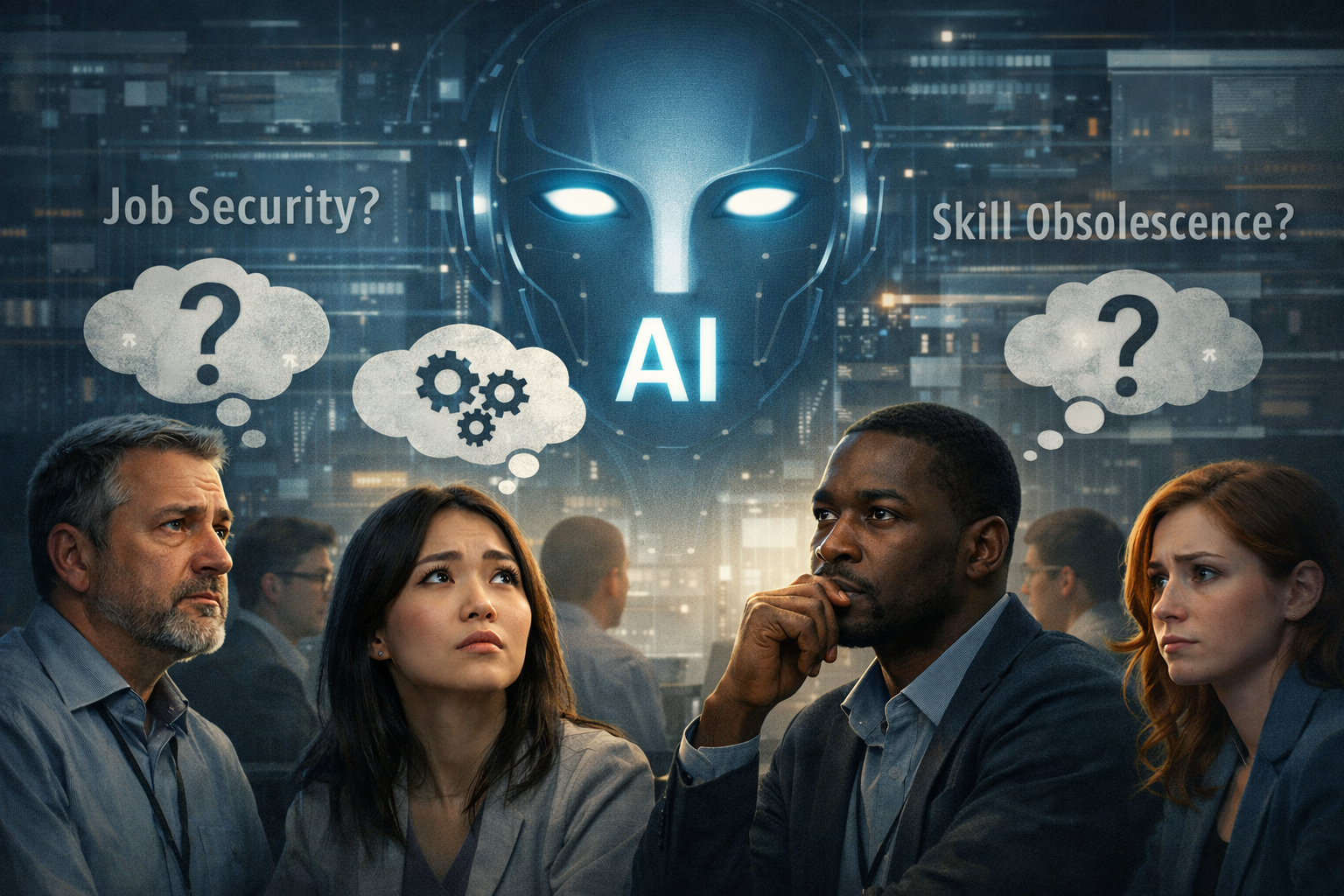
AI has introduced a new layer of complexity to the human psyche, particularly within our professional spheres. The feeling of AI anxiety in the workplace: how to manage fear of automation and career displacement isn’t merely a fleeting worry; it’s a profound emotional response rooted in several psychological factors. For many, the very essence of their self-worth is tied to their ability to contribute meaningfully through their work. When AI promises to automate tasks previously performed by humans, it can trigger deep-seated fears about relevance, control, and ultimately, survival.
Consider the sheer speed of change. In 2026, AI implementation has surpassed economic downturn as the top business risk, with 50 percent of senior decision-makers ranking it as their number-one concern [1]. This rapid shift isn’t just a corporate strategy; it’s a personal challenge for every employee.
Understanding the Fear: What Fuels AI Anxiety?
Fear of Job Displacement: This is perhaps the most immediate and visceral fear. McKinsey analysis estimates that 12 million U.S. workers may need to switch occupations by 2030, with office support and administrative roles facing significant losses [4]. This stark reality fuels a pervasive worry: “Will my job be next?” Pew Research Center data reveals that over half of U.S. workers worry about AI’s impact, with a mere 6 percent seeing it opening new job opportunities [2]. This imbalance between apprehension and optimism highlights a significant psychological burden.
“The fear of becoming obsolete is a primal one, tapping into our deepest insecurities about purpose and contribution.”
-
Concern for Skill Obsolescence: Beyond losing a job, there’s the anxiety that current skills will become irrelevant. Sixty-eight percent of Gen Z adults are anxious that offloading cognitive tasks to AI means missing out on the skill-building that comes with direct work experience [6]. This isn’t just a practical concern; it’s an identity crisis for those who have invested years in honing their expertise. The notion that a machine can perform tasks that once defined a career path can be incredibly unsettling.
-
Lack of Control and Understanding: The rapid pace of AI adoption often outstrips employees’ ability to understand its implications or how to use new tools effectively. A PwC study in 2025 found that 72 percent of workers felt pressured to use AI without sufficient training [4]. This forced adoption creates a sense of helplessness and frustration, as employees feel ill-equipped to meet evolving demands. When you don’t understand the “how” or “why,” anxiety flourishes.
-
Distrust of AI Systems: The impersonal nature of AI can also be a source of anxiety. For instance, a Glassdoor survey strongly suggested that 48 percent of job seekers distrust AI-driven hiring, fearing it overlooks nuance and important factors in candidate evaluation [4]. This distrust extends to how AI might evaluate performance, manage tasks, or even determine career trajectories, fostering a sense of being judged by an inscrutable, non-human entity.
-
Executive-Level Anxiety: It’s not just front-line employees who are feeling the pressure. Forty-five percent of senior leaders admit they would leave their company if it significantly lagged in AI adoption, and 30 percent say lagging would weaken their loyalty [1]. This executive-level anxiety cascades down, creating a top-down pressure to implement AI rapidly, sometimes at the expense of employee readiness and psychological well-being. This paradox—leaders speeding up AI investment (66 percent say market volatility increased their speed of AI investment decisions [1]) despite rising anxiety—further exacerbates overall workplace stress.
The human psyche craves stability and a sense of mastery. When these are threatened by an omnipresent, rapidly evolving technology, it’s natural to experience fear, uncertainty, and doubt. Acknowledging these feelings is the first step towards managing them. We understand that these anxieties are not irrational but are legitimate responses to significant shifts in our professional landscape. This understanding is crucial for any organization hoping to successfully navigate the complexities of the connection between humans and AI.
Practical Strategies to Manage AI Anxiety in the Workplace and Build Career Resilience
Understanding the roots of AI anxiety is crucial, but knowing how to manage fear of automation and career displacement requires concrete, actionable strategies. At AkReviews, our approach is introspective yet actionable; we don’t just ask, “Why do we feel this way?” but also provide a map: “Here is how to fix it.” Building resilience in an AI-driven world isn’t about resisting change but about intelligently adapting to it, mastering the overwhelm, and leveraging uniquely human strengths.
1. Embrace Continuous Learning and Skill Development 📚
The most potent antidote to skill obsolescence is proactive learning. Instead of viewing AI as a competitor, see it as a catalyst for acquiring new, complementary skills.
-
Identify AI-Proof Skills: Focus on developing skills that AI struggles with, such as creativity, critical thinking, emotional intelligence, complex problem-solving, and interpersonal communication. These are the cornerstones of human contribution. Consider courses or workshops that enhance your emotional intelligence.
-
Become AI-Literate: Understand how AI works in your industry and how to use AI tools effectively. Learning to prompt AI, interpret its outputs, and integrate it into your workflow transforms you from a potential victim of automation to a skilled collaborator with it. This doesn’t mean becoming a data scientist, but rather gaining a functional understanding.
-
Upskill and Reskill: Many companies are now offering AI training programs. If your employer doesn’t, seek online courses (e.g., Coursera, LinkedIn Learning) or workshops. This dedication to lifelong learning is a cornerstone of cognitive vitality and career longevity. The good news is 84 percent of leaders rank technology and digital transformation as their top investment priority, indicating a potential for more training resources [1].
“Invest in yourself. Your future resilience depends on your present commitment to learning.”
2. Advocate for Transparency and Support from Leadership 🗣️
A significant driver of AI anxiety is a lack of clear communication from employers. Transparency and support from leadership are critical for successful AI adoption.
- Open Dialogue: Encourage your leaders to openly discuss AI’s strategic role, its impact on different roles, and the support mechanisms available. Donna Morris, Walmart’s chief people officer, emphasizes that HR must “get out ahead of” employee fear through transparency and communication [2].
- Demand Training: If you feel pressured to use AI without sufficient training, voice your need. Organizations that provide adequate training foster trust and reduce anxiety. Remember, a 2025 PwC study revealed 72 percent of workers felt pressured to use AI without proper training [4]. This statistic highlights a systemic issue that requires addressing from both employees and leadership.
- Seek Clarity on Career Paths: Ask about how your role might evolve and what new opportunities AI might create. A vision for change, even if it involves adaptation, is less anxiety-inducing than an ambiguous future.
3. Reframe Your Relationship with AI: From Threat to Tool 🛠️
The narrative surrounding AI often paints it as a job-stealing monster. Shifting this perspective is vital for managing AI anxiety.
- Focus on Augmentation, Not Replacement: Many AI applications augment human capabilities, not replace them entirely. AI can handle repetitive, data-heavy, or analytical tasks, freeing you to focus on higher-value, creative, and strategic work. Think of it as a powerful assistant.
- Identify Synergies: Explore how AI can make your job easier, more efficient, or even more enjoyable. Can it automate mundane tasks, allowing you more time for meaningful interactions or innovative projects?
- Practice Mindful Use: Understand that AI is a tool, and like any tool, its impact depends on how it’s used. For workers worried about missing out on skill-building due to AI offloading cognitive tasks, mindful engagement can ensure you remain an active learner [6].
4. Prioritize Mental and Emotional Well-being 🧘♀️
The stress of technological change can take a toll on your mental health. Actively protecting your peace is non-negotiable.
- Stress Management Techniques: Incorporate practices like mindfulness, meditation, or regular exercise to manage stress. AkReviews offers simple techniques to release stress, trauma, anxiety, and pain that can be incredibly beneficial.
- Build a Strong Support Network: Connect with colleagues, friends, or mentors who understand your concerns. Sharing experiences can reduce feelings of isolation and provide new perspectives. Deepen the bond with your professional network to foster a sense of collective resilience.
- Set Boundaries: It’s easy to feel overwhelmed by the constant influx of new information about AI. Set aside specific times for learning and professional development, but also ensure you disconnect to recharge. Consider the benefits of taking a work break to maintain balance.
- Limit Overthinking: While it’s important to be informed, dwelling excessively on potential negative outcomes can exacerbate anxiety. If you find yourself caught in a loop of worry, explore strategies to understand why we overthink and how to overcome it.
5. Cultivate Adaptability and a Growth Mindset 🌱
The only constant in an AI-driven world is change itself. Embracing this reality with a growth mindset is paramount.
- View Challenges as Opportunities: Each new AI integration presents an opportunity to learn, grow, and redefine your contribution.
- Be Proactive, Not Reactive: Instead of waiting for changes to be imposed, actively seek how you can adapt your role or skills to align with emerging trends.
- Network and Explore: Engage with professionals in your field who are successfully integrating AI. Explore new roles or industries that might align with an AI-augmented future. This proactivity can unlock your inner dialogue about future possibilities.
By adopting these strategies, individuals can transform their relationship with AI, moving from a place of fear to one of empowered collaboration. It’s about recognizing that while AI may change how we work, it also opens new avenues for what we can achieve, making the journey to self-mastery a truly exciting one.
Conclusion
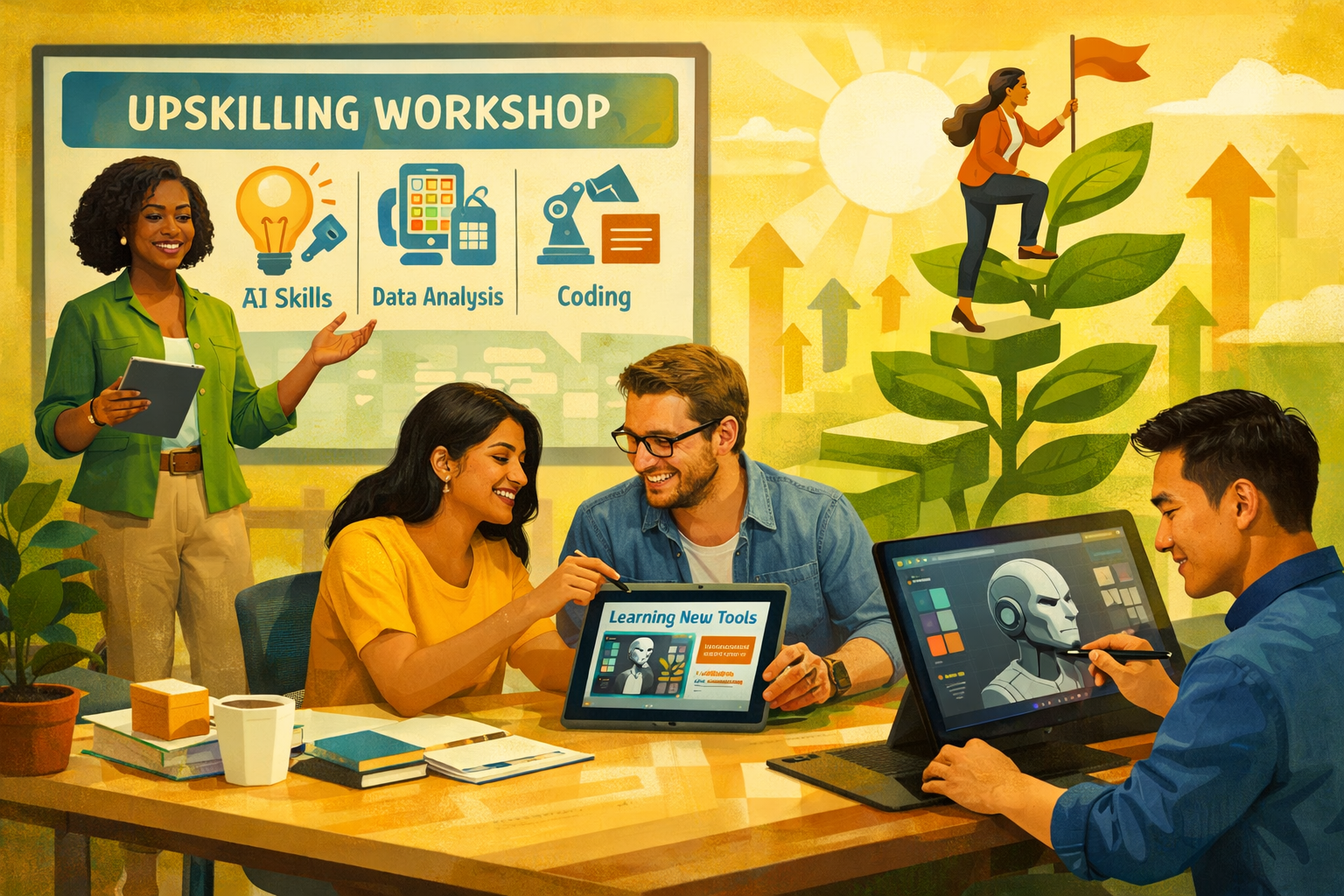
The rising tide of AI in 2026 presents a significant challenge to the modern workforce, sparking widespread AI anxiety regarding job security and career displacement. The fear of automation is a legitimate concern, affecting individuals at every level, from front-line employees to senior executives. However, this period of unprecedented change is also an invitation for profound personal and professional growth.
As we’ve explored, understanding the psychological roots of this anxiety—be it the fear of job loss, skill obsolescence, or a lack of control—is the crucial first step. From there, the path forward is illuminated by proactive engagement and a commitment to resilience. Managing AI anxiety in the workplace: how to manage fear of automation and career displacement is not about resisting the inevitable, but about consciously choosing to evolve.
By embracing continuous learning, advocating for transparency, reframing AI from a threat to a powerful tool, prioritizing mental well-being, and cultivating a robust growth mindset, you can navigate this complex landscape with confidence. AkReviews is dedicated to helping you unlock your inner dialogue, strengthen your cognitive vitality, and protect your peace through life’s most challenging transitions. The future of work is not just about technology; it’s about the human capacity for adaptation, learning, and finding new avenues for purpose and contribution.
Actionable Next Steps:
- Assess Your Skills: Take an inventory of your current skills and identify areas where AI could augment your work, as well as uniquely human skills that AI cannot replicate.
- Commit to Learning: Dedicate 1-2 hours per week to learning about AI in your field or acquiring new, AI-complementary skills. Utilize online platforms or company training resources.
- Initiate Dialogue: Speak with your manager or HR about your concerns and express interest in training or evolving your role in an AI-integrated environment.
- Practice Self-Care: Integrate stress-reducing activities into your daily routine. Prioritize adequate rest, healthy eating, and physical activity to maintain your mental and emotional resilience.
- Network Proactively: Connect with peers and mentors to share experiences and learn about how others are adapting to AI.
By taking these steps, you manage your personal anxiety and contribute to a more resilient, human-centered future of work.
References
[1] Ai Anxiety Takes Centre Stage What Vistras New Research Reveals About The Future Of Workforce Strategy In 2026 – https://www.hrdconnect.com/2025/12/11/ai-anxiety-takes-centre-stage-what-vistras-new-research-reveals-about-the-future-of-workforce-strategy-in-2026/
[2] 2026 Imperative Win Employee Trust Or Risk Stalling Ai Adoption – https://hrexecutive.com/2026-imperative-win-employee-trust-or-risk-stalling-ai-adoption/
[3] Ai Anxiety Widespread Panic Attack Microsoft Researcher Dario Amodei – https://fortune.com/2026/01/23/ai-anxiety-widespread-panic-attack-microsoft-researcher-dario-amodei/
[4] 2026 Forecast – https://workplaceintelligence.com/wp-content/uploads/2025/10/2026-Forecast.pdf
[5] Trends Work Uncertainty – https://www.apa.org/monitor/2026/01-02/trends-work-uncertainty
[6] How Gen Z Uses Gen Ai And Why It Worries Them – https://hbr.org/2026/01/how-gen-z-uses-gen-ai-and-why-it-worries-them
[7] Mental Health Impact Of Ai – https://www.alight.com/blog/mental-health-impact-of-ai