Last updated: October 26, 2026
TL;DR

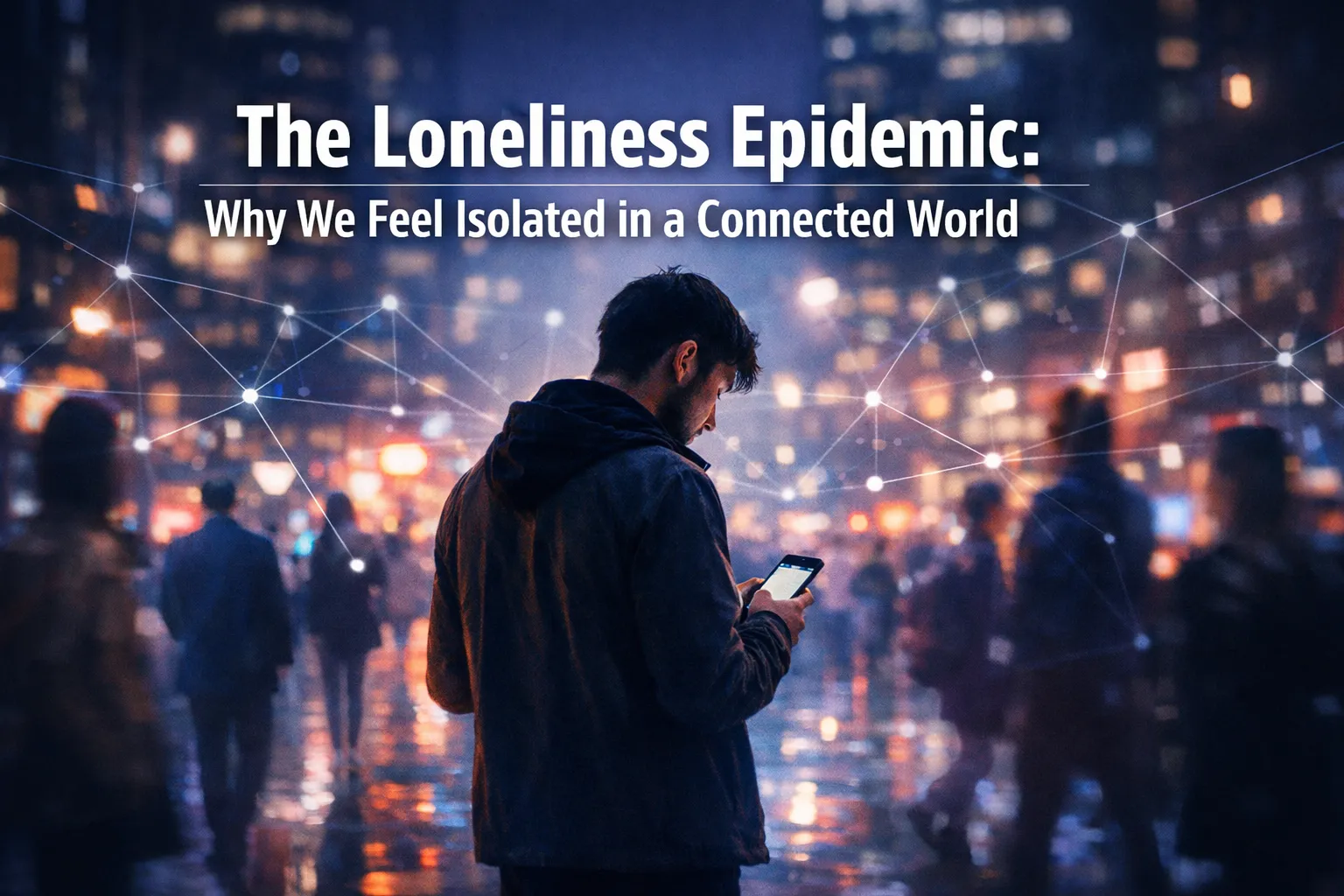
- The loneliness epidemic is a growing challenge in 2026, marked by increased feelings of isolation despite widespread digital connectivity.
- Modern social isolation stems from a shift from in-depth bonds to frequent, shallow online interactions.
- Digital behaviors like dopamine-driven scrolling and comparison loops contribute to digital age loneliness.
- Emotional disconnection arises from a lack of shared presence and meaningful conversations, even when surrounded by others.
- Realistic solutions involve intentional efforts to rebuild slow, authentic friendships and prioritize offline interactions.
Quick Answer

The loneliness epidemic in 2026 refers to the pervasive and increasing sensation of feeling isolated and emotionally disconnected, even as digital tools provide unprecedented levels of communication and perceived connection. This paradoxical situation arises because much of our modern social interaction is characterized by frequent but shallow digital exchanges, replacing the deep, meaningful, and physically present connections essential for true emotional well-being. This creates a state of modern social isolation where individuals may have numerous online contacts but lack profound, supportive relationships.
What is the Loneliness Epidemic, and Why Is It Growing in 2026?
The loneliness epidemic is a widespread societal phenomenon describing the significant rise in reported feelings of loneliness and social isolation among individuals, particularly evident in 2026. This trend is growing not due to a lack of communication channels, but rather from a fundamental shift in the quality of human interaction, driven by pervasive digital technologies and evolving lifestyle patterns.
The primary reason for its growth is the disparity between digital connectivity and genuine emotional connection. While platforms like social media, messaging apps, and video conferencing offer constant ways to “connect,” these interactions often lack the depth, shared presence, and emotional safety found in face-to-face relationships. This leads many people to feel an emotional disconnection society has inadvertently fostered.
Consider these factors contributing to the rise:
- Prevalence of Digital Over Real-World Interaction: In 2026, many interactions occur through screens. A casual “like” or comment replaces a deep conversation, and scrolling through curated feeds often substitutes for spending quality time with friends. This frequent, low-effort digital communication can create an illusion of social engagement without fulfilling the innate human need for belonging.
- Impact of Remote Work and Study: The rise of remote work and online learning, accelerated by recent global events, means fewer opportunities for spontaneous social interactions that once formed the bedrock of community and friendship. Lunch breaks, hallway chats, and after-class discussions are largely absent, contributing to digital age loneliness. Individuals working or studying from home often report feeling disconnected from their colleagues or peers.
- Urbanization and Mobility: Increasing numbers of people live in urban centers, often far from extended family and childhood friends. High mobility for career opportunities means people frequently relocate, making it harder to establish and maintain deep, long-term relationships in any single community. This can leave individuals feeling like transient members of a bustling, indifferent crowd.
- Shift in Social Norms: There’s a growing emphasis on independence and self-sufficiency, often at the expense of community interdependence. While valuable, an extreme focus on individual achievement and productivity can inadvertently deprioritize relationship building and maintenance, making it seem less “productive” to invest time in cultivating slow, deep friendships.
For young adults and remote workers, recognizing that the feeling of loneliness is a structural issue, not a personal failing, is a crucial first step toward addressing it. Understanding these broader societal shifts can help frame personal experiences within a larger context.
How Does Digital Connectivity Contribute to Modern Social Isolation?
Digital connectivity, paradoxically, often contributes to modern social isolation by changing the nature of human relationships from deep, sustained bonding to frequent, often superficial communication. While intended to bring people together, platforms designed for constant online interaction can create barriers to genuine connection.
The core issue lies in the quality of interaction. Digital platforms, by their very design, can foster behaviors that detract from meaningful engagement:
- Dopamine-Driven Scrolling and Instant Gratification: Social media platforms are engineered to deliver intermittent rewards (likes, comments, notifications) that trigger dopamine release, creating addictive behavioral loops. This constant pursuit of digital validation can lead to endless scrolling, often at the expense of engaging in real-world activities or conversations that require sustained attention and effort. This cycle encourages a preference for quick, shallow digital hits over the slower, more demanding process of building deep human bonds. For tips on managing these impulses, consider exploring natural ways to increase your dopamine levels without relying solely on digital stimuli.
- Comparison Loops and Performance Culture: Social media feeds are often curated highlights reels, presenting idealized versions of others’ lives. This constant exposure fuels comparison loops, where individuals measure their realities against unattainable digital perfections. This can lead to feelings of inadequacy, envy, and social anxiety, making people less likely to initiate or engage in real-world interactions for fear of not measuring up. It fosters a performance culture where authentic vulnerability is often hidden.
- Parasocial Relationships: Digital platforms allow users to feel a sense of intimacy with influencers, celebrities, or online personalities they admire, without any reciprocal interaction. These parasocial relationships, while offering comfort and a sense of belonging to a community, are one-sided. They can fulfill some social needs superficially, potentially reducing the motivation to invest in challenging, reciprocal real-world friendships.
- Reduced Real-World Interaction: The convenience of digital communication can lead to a reduction in face-to-face meetings. Planning a video call might seem easier than meeting for coffee, but it often lacks the nuances of body language, shared physical space, and spontaneous moments that deepen bonds. Over time, this reduction in real-world interaction can diminish social skills and increase discomfort with in-person engagement, further exacerbating feelings of digital-age loneliness.
- Algorithmic Echo Chambers: Content algorithms, while designed to personalize user experience, often trap individuals in echo chambers that reinforce existing beliefs and limit exposure to diverse perspectives. This can inadvertently narrow social circles, making it harder to connect with people outside one’s immediate digital bubble and fostering a sense of intellectual and social isolation from broader society.
The result is a societal landscape where people are technically connected to more individuals than ever, yet often feel a profound sense of emotional disconnection society has collectively created through its digital habits. It highlights that the mere presence of communication tools does not guarantee meaningful human connection.
Why Do People Feel Lonely Even When Surrounded by Contacts?
Feeling lonely even when surrounded by contacts stems from a fundamental disconnect between the quantity of social interactions and their quality, meaning the presence of emotional safety, shared presence, and meaningful conversation. It’s not about how many people you know, but how deeply you connect with them.
Here’s why this paradox is so common in 2026:
- Lack of Emotional Safety and Vulnerability: True connection requires vulnerability—the willingness to share fears, hopes, and authentic selves without judgment. Many social environments, especially online or in superficial in-person settings, do not offer this emotional safety. Without it, individuals maintain emotional walls, leading to interactions that feel superficial and unfulfilling, even if frequent. This absence of deep trust leaves people feeling isolated even within a crowd. Building trust is crucial for overcoming this; consider reading about unlocking secrets to building trust in relationships for more insights.
- Absence of Shared Presence: In an age of constant digital distractions, even when physically together, people are often not truly present with each other. Phones buzz, attention is divided, and conversations lack depth because focus is elsewhere. Shared presence involves undistracted, mindful engagement with another person, creating moments of genuine connection and mutual understanding. Without this, interactions become transactional rather than relational.
- Superficial vs. Meaningful Conversation: Many daily interactions consist of small talk, logistics, or fleeting digital exchanges. These are necessary, but they don’t fulfill the human need for deep, meaningful conversation where thoughts, feelings, and experiences are genuinely shared and explored. When conversations lack substance, people can feel unheard and misunderstood, leading to emotional disconnection society has normalized. Mastering “the art of conversation” can help bridge this gap; explore resources like The Art Of Conversation- How To Start One?
- Mismatch in Expectations: One might have many “friends” on social media or numerous professional contacts, but these connections often serve different purposes than intimate friendships. Expecting deep emotional support from casual acquaintances or digital-only relationships can lead to disappointment and a heightened sense of digital-age loneliness. The perception of abundant contacts can mask a deficit in close, confiding relationships.
- Fear of Burdening Others: In a culture that often glorifies self-reliance, many people internalize their struggles rather than reaching out. There can be a fear of burdening friends or appearing needy, preventing individuals from seeking the deep emotional support they require. This self-imposed isolation further compounds feelings of loneliness, even when potential sources of support are available.
The result is that even with a packed calendar or a bustling digital life, the absence of profound, emotionally resonant interactions leaves a void, illustrating why people feel lonely today regardless of their social calendar.
What Are the Psychological Mechanisms Behind Modern Social Isolation?
The psychological mechanisms behind modern social isolation are complex, often rooted in how our brains respond to digital stimuli and the fundamental human need for authentic connection. These mechanisms contribute to digital-age loneliness by altering our social habits and perceptions.
Here are some key psychological underpinnings:
- Reward System Manipulation (Dopamine Loops): As mentioned, social media platforms are expertly designed to exploit the brain’s reward system. Each like, notification, or message triggers a small dopamine release, creating a positive feedback loop that encourages compulsive checking and engagement. This constant, intermittent reinforcement can lead to an addiction to digital validation, displacing the slower, less predictable rewards of real-world interactions. The brain begins to prioritize quick digital hits over the effort required for deeper emotional bonds.
- Cognitive Biases and Comparison Theory:
- Confirmation Bias: Algorithms feed us content that aligns with our existing beliefs, creating echo chambers that limit exposure to diverse viewpoints and people, making real-world interactions with differing opinions potentially more challenging or anxiety-inducing.
- Social Comparison Theory: Humans inherently compare themselves to others. Social media exacerbates this by presenting an often-unrealistic, curated highlight reel of others’ lives. This upward social comparison—constantly seeing others’ perceived successes, happiness, or ideal lifestyles—can lead to feelings of inadequacy, envy, and low self-esteem. This can make individuals withdraw or feel unworthy of genuine connection, contributing to why people feel lonely today.
- Fear of Missing Out (FOMO): The constant stream of friends’ activities and experiences online can trigger FOMO, creating anxiety about being excluded. This can push people to prioritize digital presence over deep, in-person engagement, or conversely, make them feel more isolated when they see others seemingly having fun without them.
- Reduced Empathy and Emotional Intelligence: Over-reliance on digital communication, which often lacks non-verbal cues (tone, body language, facial expressions), can hinder the development of empathy and emotional intelligence. Interpreting complex emotions from text or emojis is challenging, potentially leading to misunderstandings and a decreased ability to connect authentically in person. Developing emotional intelligence is crucial for fostering more profound bonds.
- Shift from “Being” to “Performing”: Digital platforms often encourage a performance-oriented approach to identity, where individuals curate an online persona rather than simply being themselves. This constant self-monitoring and impression management can be exhausting and prevent genuine self-expression. When people feel they must always “perform,” authentic vulnerability—a cornerstone of deep connection—becomes difficult. This contributes to the emotional disconnection society experiences.
- Anxiety and Avoidance Behaviors: The pressure to maintain an online presence, coupled with the potential for negative feedback or online bullying, can increase anxiety around social interactions, both online and offline. Some individuals may develop avoidance behaviors, opting for solitary digital consumption rather than risking potentially uncomfortable or challenging real-world engagements, thereby deepening their loneliness epidemic experience.
These psychological mechanisms work in tandem, creating a feedback loop where digital interactions offer quick, superficial rewards while simultaneously eroding the capacity and desire for the deeper, more effortful connections that truly combat modern social isolation.
What Cultural Factors Contribute to Digital Age Loneliness?

Several pervasive cultural factors in 2026 significantly contribute to digital age loneliness, influencing how we live, interact, and prioritize our lives. These societal norms and values shape our relationships and often inadvertently foster modern social isolation.
Key cultural factors include:
- Urban Living and Anonymity: The increasing global trend of urbanization means more people live in densely populated cities. While offering numerous amenities and opportunities, urban environments can paradoxically foster anonymity. Neighbors may not know each other, public spaces are often transactional, and the sheer volume of people can make it harder to form close-knit communities. The fast pace of city life can also reduce the time and inclination for spontaneous social interactions.
- Independence and Self-Reliance Culture: Western cultures, in particular, highly value independence, individualism, and self-reliance. While promoting personal autonomy, an extreme focus on these traits can sometimes discourage seeking or accepting help or even acknowledging a need for deep social connection. The implicit message can be that needing others is a weakness, which clashes with our inherent social nature and contributes to feelings of emotional disconnection society may inadvertently encourage.
- Career Prioritization and Productivity Culture: In many modern societies, career success and constant productivity are paramount. This often leads to long working hours, high-stress environments, and a mindset where personal time is viewed as an opportunity for “self-optimization” rather than genuine leisure or relationship building. Investing time in “slow friendships”—which require unstructured time and emotional labor—can feel less valuable or productive than career advancement or personal goal achievement. This emphasis on constant doing over meaningful being can leave little room for deep connection, contributing to why people feel lonely today.
- Declining Traditional Community Structures: Traditional community structures like religious institutions, local clubs, and extended family networks have seen declines in participation for various reasons. These institutions historically provided ready-made social networks and opportunities for regular, low-stakes interaction. As these structures wane, individuals are left to build their social circles from scratch, which can be challenging and time-consuming.
- Consumerism and Materialism: A culture focused on consumerism often promotes individual acquisition and personal entertainment over communal experiences. The pursuit of material goods or isolated entertainment (e.g., streaming services, gaming) can become a substitute for social engagement, further separating individuals.
- Erosion of Third Places: “Third places” are public spaces distinct from home (first place) and work (second place) where people can gather informally and build community (e.g., cafes, parks, community centers, libraries). Many of these spaces have declined or become more transactional, reducing opportunities for serendipitous social encounters that often spark friendships.
These cultural currents combine to create an environment where the foundations for deep social bonding are weakened, making individuals more susceptible to digital-age loneliness despite an abundance of superficial connections.
How Do Social Media Isolation Effects Manifest in Daily Life?
Social media isolation effects manifest in daily life through a range of subtle yet significant changes in behavior, mood, and relationship quality, contributing directly to the loneliness epidemic. These effects often lead individuals to feel more alone despite being constantly “connected.”
Here are common manifestations:
- Decreased Motivation for Real-World Interaction: After hours of scrolling and digital “connecting,” many people feel a reduced urge to engage in actual face-to-face interactions. The brain’s reward system has been satisfied by the digital feedback, making the effort required for real-world social plans seem less appealing. This can lead to a cycle of preferring screen time over social outings.
- Increased Feelings of Envy and Inadequacy: Consuming a constant stream of highly curated, often unrealistic content from others’ lives can trigger intense feelings of envy, inadequacy, and low self-esteem. Seeing friends’ perfect vacations, career successes, or relationship milestones can make one’s own life feel less fulfilling, even if it’s perfectly normal. This comparison can lead to social withdrawal and feelings of modern social isolation.
- Phantom Vibrations and Constant Distraction: The constant expectation of notifications can lead to “phantom vibrations” (feeling your phone buzz when it hasn’t) or an inability to focus fully on present-moment interactions. This pervasive distraction makes it difficult to engage deeply in conversations, undermining shared presence and making others feel unheard or unimportant. For tips on improving focus, see our guide on 16 Useful Tips for Improving Your Mental Focus.
- Anxiety Around Authenticity and Vulnerability: The pressure to present a perfect online persona can seep into offline interactions. People may become more self-conscious, fearing judgment or rejection if they reveal their true selves. This reluctance to be vulnerable prevents the formation of deep, emotionally safe connections, which is a cornerstone of combating emotional disconnection in society.
- Erosion of Attention Span and Deep Listening Skills: The rapid-fire nature of digital content can shorten attention spans, making it harder to engage in sustained, deep conversations. Active listening—a vital component of meaningful connection—requires focus that can be difficult to maintain when accustomed to quick content consumption. This impacts the quality of relationships and can make individuals feel unheard, exacerbating why people feel lonely today.
- Sleep Disturbances and Mental Health Impacts: Excessive social media use, particularly before bedtime, can disrupt sleep patterns due to blue light exposure and mental overstimulation. Poor sleep is linked to increased anxiety, depression, and irritability, all of which can negatively impact social interactions and worsen feelings of digital age loneliness.
- Misinterpretation of Cues and Escalation of Conflict: Text-based communication lacks the nuances of non-verbal cues, leading to frequent misinterpretations. This can escalate minor disagreements into major conflicts or cause misunderstandings that damage relationships. The absence of immediate feedback and context makes digital conflict resolution particularly challenging.
These everyday manifestations illustrate how social media, while providing avenues for communication, can actively undermine the conditions necessary for genuine human connection, pushing individuals further into modern social isolation.
Practical Solutions for Combating the Loneliness Epidemic in 2026
Combating the loneliness epidemic in 2026 requires intentional and sustained effort, shifting focus from superficial connections to building deeper, more authentic relationships. It’s about recognizing that this is a societal challenge, not a personal failing, and actively pursuing strategies to foster genuine human connection.
Here are realistic solutions for individuals:
- Prioritize Rebuilding “Slow Friendships”:
- Invest Time Intentionally: Understand that deep friendships require time and consistent effort. Schedule regular, in-person meetups (coffee, meals, walks) rather than just quick digital exchanges.
- Focus on Shared Activities: Engage in activities you genuinely enjoy with others. Join clubs, volunteer groups, sports teams, or classes (e.g., cooking, art, hiking). Shared experiences naturally foster bonding.
- Be a “Connector”: Introduce friends from different social circles to each other. Building a network of mutual friendships strengthens your own social fabric.
- Practice Intentional Presence and Active Listening:
- Put Devices Away: When interacting with others, physically put your phone away and out of sight. Give your full, undivided attention.
- Engage Actively: Practice active listening. Ask open-ended questions, make eye contact, and genuinely try to understand what the other person is saying, both verbally and non-verbally. This is key to effective communication in relationships.
- Mindfulness: Cultivate mindfulness in daily life to improve your ability to be present. This helps reduce distractions and enhances the quality of your interactions.
- Cultivate Offline Rituals and Community:
- Establish Regular Gatherings: Start a weekly or monthly ritual with friends or family—a board game night, a book club (linking to most powerful benefits of reading books can add value here), or a potluck dinner. Consistency is crucial for building bonds.
- Engage with Local Community: Explore local community centers, libraries, parks, or volunteer opportunities. These “third places” offer low-pressure environments for meeting new people and forming casual connections that can evolve into deeper friendships.
- Support Local Businesses: Frequenting local cafes, shops, or restaurants can lead to familiar faces and friendly interactions, slowly building a sense of belonging in your neighborhood.
- Practice Emotional Openness and Vulnerability (Wisely):
- Start Small: Begin by sharing slightly more personal thoughts or feelings with trusted individuals. Observe their response.
- Seek Reciprocity: Look for relationships where there’s a balance of sharing and listening. True connection is a two-way street.
- Acknowledge Your Needs: It’s okay to feel lonely and to need connection. Acknowledging this helps you to actively seek meaningful interactions. Understanding how to make yourself happy often involves addressing these core needs.
- Re-evaluate Digital Habits:
- Set Boundaries: Establish specific times for checking social media and stick to them. Avoid mindless scrolling.
- Curate Your Feed: Unfollow accounts that trigger comparison or feelings of inadequacy. Follow those that inspire genuine connection or provide valuable information.
- Use Digital Tools Intentionally: Use video calls for distant loved ones, but prioritize in-person meetups for those nearby. Use messaging for logistics, but plan for deep conversations face-to-face.
By focusing on these practical steps, individuals can actively work against the tide of modern social isolation and foster the deep, meaningful connections that are essential for well-being and combating the pervasive loneliness epidemic. It’s a journey of re-learning how to connect in a world saturated with superficial communication.
FAQ on the Loneliness Epidemic
Q1: Is the loneliness epidemic a new phenomenon?
No, while loneliness has always existed, its widespread prevalence and specific drivers in the digital age loneliness context, linked to digital connectivity, make the current loneliness epidemic a distinct and growing phenomenon in 2026.
Q2: How is loneliness different from being alone?
Being alone is a physical state, often chosen and enjoyed, whereas loneliness is an unwelcome emotional state of perceived social isolation or a lack of meaningful connection, regardless of how many people are around.
Q3: Can social media actually make you feel more lonely?
Yes, social media can exacerbate feelings of loneliness due to comparison culture, the superficiality of interactions, and the substitution of real-world connections with digital ones, contributing to social media isolation effects.
Q4: Who is most affected by the loneliness epidemic?
While it affects all demographics, young adults, remote workers, and the elderly are often cited as particularly vulnerable groups in the 2026 loneliness epidemic.
Q5: What are the health impacts of chronic loneliness?
Chronic loneliness is linked to various negative health impacts, including increased risk of heart disease, stroke, dementia, depression, anxiety, and a weakened immune system.
Q6: How can I tell if my friends are just ‘contacts’ or real connections?
Real connections involve emotional safety, vulnerability, reciprocity, shared presence, and meaningful conversations where you feel truly seen and heard, unlike mere transactional or superficial contact.
Q7: Are there specific psychological reasons why people feel lonely today?
Yes, psychological mechanisms include dopamine-driven scrolling, cognitive biases like social comparison, reduced empathy from digital communication, and a shift from authentic being to online performing.
Q8: What role does urban living play in modern social isolation?
Urban living can contribute to isolation through increased anonymity, reduced opportunities for spontaneous interaction, and the weakening of traditional community structures.
Q9: Can remote work contribute to the loneliness epidemic?
Yes, remote work can limit organic social interactions with colleagues, blur work-life boundaries, and reduce daily face-to-face engagements, potentially increasing feelings of digital-age loneliness.
Q10: What is the most important step to combat loneliness?
The most important step is intentional action: prioritizing quality over quantity in interactions, fostering genuine presence, and actively investing time in building and nurturing deep, authentic relationships.
Key Takeaways
- The loneliness epidemic in 2026 is a significant societal challenge, characterized by feelings of isolation despite unprecedented digital connectivity.
- Modern social isolation is largely driven by a shift from deep, emotionally resonant relationships to frequent, but often superficial, digital interactions.
- Digital platforms contribute to digital age loneliness through dopamine-driven scrolling, comparison traps, parasocial relationships, and a reduction in real-world engagement.
- Individuals often feel lonely even when surrounded by contacts due to a lack of emotional safety, genuine shared presence, and meaningful, vulnerable conversations.
- Psychological mechanisms, including reward system manipulation and social comparison biases, further entrench these feelings of emotional disconnection society experiences.
- Cultural factors like urban living, an emphasis on independence, and productivity culture also play a significant role in fostering this isolation.
- Social media isolation effects manifest as decreased motivation for in-person interactions, increased envy, constant distraction, and anxiety around authenticity.
- Combating the loneliness epidemic requires proactive solutions: rebuilding slow friendships, practicing intentional presence, cultivating offline rituals, fostering emotional openness, and re-evaluating digital habits.
- Recognizing loneliness as a structural lifestyle issue, rather than a personal failing, is crucial for fostering effective individual and societal responses.
References
- Cacioppo, J. T., & Cacioppo, S. (2018). Loneliness in the modern age: An evolutionary theory of loneliness (ETL). Advances in experimental social psychology, 58, 127-197.
- Pew Research Center. (2020). Social Media and Well-Being.
- Holt-Lunstad, J. (2017). The potential public health relevance of social isolation and loneliness: Prevalence, epidemiology, and health outcomes. Public Policy & Aging Report, 27(4), 127-130.