
Last updated: February 18, 2026
Feeling guilty after saying “no” or asserting your needs is a common struggle, often leading to people-pleasing habits and emotional exhaustion. Learning how to set boundaries effectively is a crucial communication skill that empowers you to prioritize your well-being, establish healthy relationship boundaries, and communicate your limits clearly, without succumbing to the urge to over-explain or apologize. This guide provides a practical framework, including boundary-setting scripts, to help you say no without guilt and build more respectful connections in 2026.


TL;DR
- Understand that guilt from boundary setting typically stems from people-pleasing and fear of disapproval.
- Recognize your personal limits and communicate them clearly and respectfully.
- Use direct, concise language for boundary setting, avoiding over-explanation.
- Practice ready-to-use scripts for common scenarios (work, family, friends).
- Embrace the short-term discomfort for the long-term benefit of healthier relationships.
Quick Answer
Setting boundaries without guilt involves understanding the psychological roots of people-pleasing, clearly identifying your personal limits, and communicating these limits assertively and respectfully using direct language. The goal is to manage your emotional responsibility, foster healthy relationships, and reduce internal conflict by prioritizing your needs without becoming aggressive or detached, recognizing that your time, energy, and emotional capacity are finite resources.
Why Do We Struggle to Say No Without Guilt?
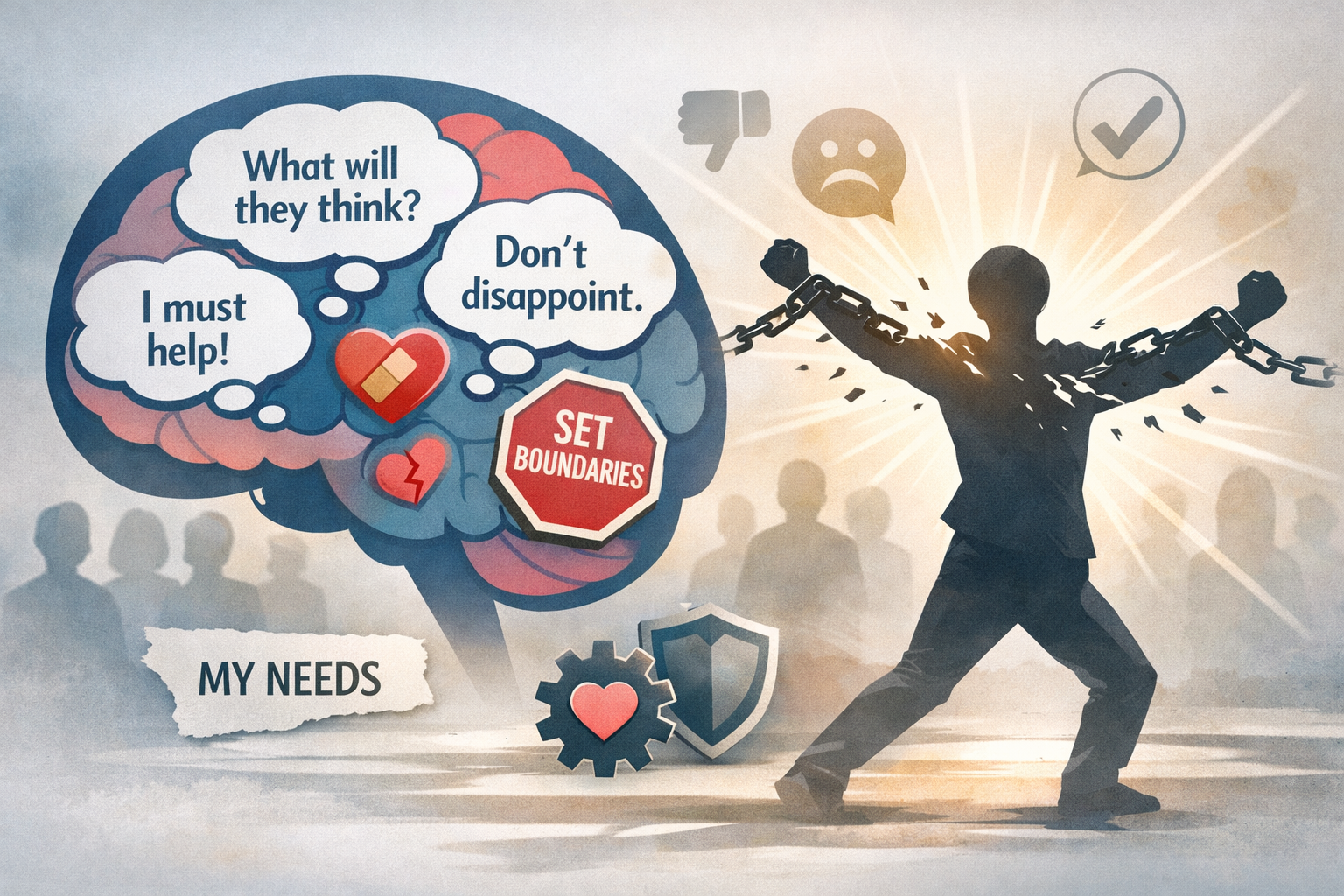
Many individuals struggle to say no without guilt because of deep-seated psychological patterns like people-pleasing, approval dependency, and a misunderstanding of emotional responsibility. Social conditioning often teaches that saying “no” is rude or selfish, leading to an unconscious belief that fulfilling others’ requests is a prerequisite for being liked or accepted. This can manifest as an intense fear of disappointing others, causing individuals to override their needs and limits.
The Psychology Behind People-Pleasing Habits
People-pleasing stems from a desire for external validation and a fear of negative consequences, such as rejection, conflict, or criticism. Individuals with strong people-pleasing habits typically base their self-worth on how others perceive them. This can originate from childhood experiences where approval was conditional or from societal pressures to always be accommodating. When a request is made, the people-pleaser’s immediate internal response is to avoid potential disappointment in the other person, often at their expense. This constant deferral to others’ needs depletes personal energy and can lead to resentment and burnout, paradoxically damaging the very relationships they seek to protect. Understanding these underlying motivations is the first step toward breaking the cycle. For more on developing self-awareness and healthy habits, explore our content on Self-Improvement Archives.
Distinguishing Emotional Responsibility
A key component of how to set boundaries effectively is understanding the concept of emotional responsibility. This means recognizing that you are responsible for your feelings and actions, and others are responsible for theirs. You are not responsible for another person’s reaction to your boundaries. Often, people-pleasers take on the emotional burden of others, believing they must manage everyone’s happiness. Setting a boundary can trigger guilt because it feels like you are causing someone discomfort, but this discomfort is their emotional response, not your burden to fix. Asserting a boundary clarifies where one person’s responsibilities end and another’s begin, leading to clearer, healthier relationship boundaries.
How to Identify Your Personal Limits and Emotional Boundaries Examples
Identifying your personal limits and emotional boundaries examples is the foundational step in learning how to set boundaries. This involves self-reflection to understand what you can realistically offer and what crosses into self-neglect, both emotionally and practically. Clear boundaries define where you end and another person begins, protecting your energy, time, and mental well-being.
Self-Reflection: What Are Your Non-Negotiables?
To define your limits, consider which activities or requests consistently drain your energy, provoke resentment, or make you feel taken advantage of. Your non-negotiables are the areas where you absolutely cannot compromise without significant personal cost. These might include:
- Time: How much spare time do you need each day/week? When are you unavailable for work or social obligations?
- Energy: What activities energize you versus those that deplete you? How much emotional support can you realistically offer?
- Physical Space: Do you need certain times alone or a designated personal space?
- Financial Resources: Are you comfortable lending money, and if so, under what conditions?
- Values: What core beliefs or principles are you unwilling to compromise on?
For example, if you consistently feel exhausted after volunteering for every school event, a new boundary might be to commit to only one event per semester. If a friend frequently calls late at night to vent, an emotional boundary example could be stating that you are not available after 9 PM unless it’s an emergency. This proactive identification makes it easier to implement healthy relationship boundaries.
The Art of Communicating Boundaries Clearly and Respectfully
Communicating boundaries effectively is a skill that blends directness with respect, allowing you to say no without guilt while maintaining positive relationships. The key is to be clear, concise, and consistent, avoiding justifications that can weaken your stance.
Crafting Effective Boundary-Setting Scripts
When formulating boundary setting scripts, aim for clarity and brevity. Over-explaining or apologizing can signal that your boundary is negotiable, inviting others to push back. A simple, direct statement is often the most powerful.
Consider these components for your scripts:
- Acknowledge (Optional): Briefly acknowledge the request or situation.
- State Your Boundary: Clearly and concisely articulate what you can or cannot do.
- Offer an Alternative (Optional): If appropriate, suggest a different solution or time.
| Scenario | Ineffective Script (Over-explaining/Apologetic) | Effective Boundary Setting Script (Clear & Concise) |
|---|---|---|
| Work Request | “Oh, I apologize, but I’m really swamped right now, and I just don’t think I can fit that in. I’d love to help, but I’ve got this considerable deadline, and I feel bad saying no, but it’s just too much, maybe next time?” | “I appreciate you thinking of me, but I can’t take on that additional task this week. My current focus is the X project. Perhaps Sarah has capacity?” |
| Family Expectation | “Mom, I know you really want me to come over every Sunday, and I feel terrible, but I’m just so tired from the week, and I need some downtime. It’s not that I don’t want to see you; it’s just too much right now. I hope you understand.” | “I love our time together, but Sundays are my designated day for rest and personal errands. I can visit on Saturday afternoons instead, or we can plan a call.” |
| Friendship Favor | “Hey, I’d really love to help you move, but my back has been acting up, and I promised myself I wouldn’t lift heavy things this month, and I also have that thing, so I really can’t. I’m so sorry.” | “Thanks for asking, but I’m not available to help with the move. I hope you find the support you need.” |
| Digital Communication | “I saw your message, and I know it’s time-sensitive, but I’m just trying to disconnect after work, and my phone was on silent, and then I got busy, so I couldn’t reply right away. I really should check my messages more often, I guess.” | “I respond to messages during business hours. For urgent matters outside those times, please call. Otherwise, I’ll get back to you then.” |
The Importance of Tone and Body Language
Your tone and body language are powerful tools when setting boundaries. A calm, respectful, and direct tone conveys confidence and seriousness, while an aggressive or overly apologetic tone can undermine your message. Maintain open body language – stand tall, make eye contact, and avoid fidgeting. This non-verbal communication reinforces your verbal message, making it clear that your boundary is firm but not hostile. This approach helps in establishing healthy relationship boundaries and preventing misunderstandings. For more on improving communication, see our guide on Effective Communication in Relationships: Expressing & Listening Skills.
Tolerating Short-Term Discomfort for Long-Term Respect

Setting boundaries can initially feel uncomfortable, both for you and for the person receiving the boundary. This short-term discomfort is a natural part of the process and a sign that you are challenging old patterns. Embracing this feeling is essential for building long-term respect and fostering healthier, more authentic relationships.
Managing Guilt and Others’ Reactions
The feeling of guilt often arises because we anticipate negative reactions from others. When you set a boundary, others may react with surprise, disappointment, or even anger, especially if they are accustomed to your people-pleasing habits. It is crucial to remember that their reaction is their emotional responsibility, not yours. You are not responsible for managing their feelings.
Strategies for managing guilt:
- Reframe Guilt: View guilt not as a sign you’ve done something wrong, but as a habit you’re breaking. It’s a signal of growth.
- Affirm Your Right: Remind yourself that you have a right to your time, energy, and personal space.
- Focus on Long-Term Benefits: Consider the positive impact on your well-being and the health of the relationship eventually.
- Practice Self-Compassion: Be kind to yourself as you navigate this new skill. It takes time and practice to feel comfortable.
By tolerating this initial discomfort, you teach others how to treat you, and you reinforce your self-worth. This process is vital for reducing resentment and cultivating relationships built on mutual respect. Learning to prioritize your needs without feeling guilty is a powerful step towards how to make yourself happy.
Developing Assertive Communication, Not Aggression
Developing assertive communication is central to how to set boundaries effectively. Assertiveness means expressing your needs and opinions clearly and respectfully, without being aggressive or passive. It focuses on your rights while respecting the rights of others, ensuring you can say no without guilt and maintain positive interactions.
The Spectrum of Communication Styles
Understanding the differences between passive, aggressive, and assertive communication helps clarify the goal.
- Passive: You put others’ needs before your own, often leading to resentment. (e.g., “I guess I can help, even though I’m really busy.”)
- Aggressive: You express your needs in a way that is hostile or dismissive of others’ rights. (e.g., “I’m too busy for your nonsense; figure it out yourself!”)
- Assertive: You clearly state your needs and limits respectfully, taking responsibility for your choices. (e.g., “I appreciate you asking, but I cannot take on that task right now.”)
Assertive communication empowers you to advocate for yourself, clarify your emotional boundaries, and engage in honest dialogue without resorting to conflict or becoming detached. It fosters genuine connections where everyone’s needs are considered. For further insights into effective relationship dynamics, consider reading about Understanding Love Languages: Connecting with Your Partner.
FAQ
What are some common emotional boundary examples?
Common emotional boundary examples include limiting discussions about sensitive topics, not accepting blame for someone else’s feelings, declining to be a constant confidant, and not allowing others to dump their emotional baggage on you.
Why do I feel guilty when I say no?
You likely feel guilty when you say no without guilt due to ingrained people-pleasing habits, a fear of disapproval or rejection, and a tendency to take on excessive emotional responsibility for others’ reactions.
How do I start setting boundaries if I’ve never done it before?
Start small with low-stakes situations, such as declining an invitation or a minor request, and gradually work towards more challenging boundaries. Practice using boundary setting scripts in your head before saying them aloud.
What if someone gets angry when I set a boundary?
Someone getting angry is their reaction, and you are not responsible for it. Remain calm, reiterate your boundary respectfully, and allow them to process their feelings. Do not engage in arguments or over-explain.
Can setting boundaries ruin relationships?
No, setting healthy relationship boundaries actually strengthens relationships by fostering mutual respect and clear expectations. While there might be initial discomfort, truly healthy relationships adapt and thrive when boundaries are established.
How can I make my boundaries clear in digital communication?
In digital communication, be direct and concise. State your availability (e.g., “I check emails twice a day”) and preferred communication methods. Use clear language like “I’m unable to respond to texts after 8 PM” to establish emotional boundary examples.
Key Takeaways
- Boundary setting is a skill, not a personality trait, and it can be learned and improved.
- Understand the root of guilt in people-pleasing habits and approval dependency.
- Identify your personal limits and non-negotiables to define your boundaries clearly.
- Communicate assertively, using direct and concise language without over-explaining or apologizing.
- Use boundary-setting scripts as practical tools for various scenarios (work, family, friends).
- Tolerate the initial discomfort of setting boundaries, recognizing it leads to long-term respect.
- Distinguish your emotional responsibility from others’ reactions to your boundaries.
- Focus on assertive communication to express your needs respectfully, not aggressively.
- Prioritize your well-being to cultivate healthy relationship boundaries and reduce resentment.
Conclusion
Learning how to set boundaries without feeling guilty is a transformative skill that empowers you to reclaim your time, energy, and emotional well-being. By understanding the psychology behind people pleasing habits, identifying your personal limits, and utilizing clear boundary setting scripts, you can communicate your needs effectively and respectfully. Embrace the initial discomfort as a sign of growth, knowing that you are fostering healthy relationship boundaries built on mutual respect rather than resentment. This journey cultivates self-respect, reduces stress, and ultimately leads to more authentic and fulfilling connections in all areas of your life in 2026. Start practicing these techniques today to build a foundation for a more assertive and balanced future.
References
- Cloud, H., & Townsend, J. (1992). Boundaries: When to Say Yes, When to Say No, and Take Control of Your Life. Zondervan.
- Friel, J. C., & Friel, L. D. (1990). Adult Children: The Emotional Trap of Perfectionism. Health Communications, Inc.