
Last updated: March 4, 2026
Struggling to achieve truly restorative sleep in 2026? This comprehensive sleep hygiene checklist is your essential deep sleep guide for 2026, offering practical, science-backed strategies to help you improve sleep quality naturally. By understanding and implementing healthy night routine habits, you can effectively apply insomnia prevention tips and harness better sleep science for enhanced well-being.


Key Takeaways
- Sleep hygiene refers to habits and environmental factors that promote consistent, uninterrupted sleep.
- Consistency in sleep schedule, even on weekends, is paramount for regulating your circadian rhythm.
- Optimizing your bedroom environment for darkness, quiet, and a cool temperature significantly boosts sleep quality.
- Strategic light exposure—bright light in the morning, dim light in the evening—helps balance melatonin production naturally.
- Avoiding caffeine and heavy meals late in the day prevents sleep disruption.
- Implementing a relaxing wind-down routine signals to your body that it’s time to rest, aiding mental decompression.
- Addressing stress and anxiety through mindfulness or journaling is crucial for preventing sleep-onset insomnia.
- Limit screen time before bed to avoid blue light exposure, which interferes with natural melatonin release.
Quick Answer
A sleep hygiene checklist is a set of behavioral and environmental practices designed to promote high-quality, restorative sleep by aligning with your body’s natural sleep-wake cycle. Implementing these healthy night routine habits, such as maintaining a consistent schedule, optimizing your sleep environment, and practicing mental decompression, is a proven method to improve sleep quality naturally and serve as a vital insomnia prevention tip in 2026.
What is Sleep Hygiene, and Why Does it Matter in 2026?
Sleep hygiene refers to the practices and habits necessary for good nighttime sleep quality and full daytime alertness. It matters profoundly in 2026 because modern lifestyles, dominated by late-night screen exposure, inconsistent schedules, and chronic stress, actively disrupt our natural sleep architecture. Understanding and applying better sleep science principles through a robust sleep hygiene checklist helps regulate your circadian rhythm and supports nervous system recovery, which is critical for maintaining focus, mood stability, and overall physical health.
Poor sleep impacts more than just energy levels; it affects cognitive function, metabolic health, and emotional resilience. For working professionals and students especially, inconsistent sleep can directly hinder productivity and learning, making proactive sleep management essential.
How Can a Consistent Sleep Schedule Improve Sleep Quality Naturally?
Maintaining a consistent sleep schedule is one of the most powerful ways to improve sleep quality naturally because it reinforces your body’s natural circadian rhythm, making it easier to fall asleep and wake up feeling refreshed. Your circadian rhythm is a 24-hour internal clock that dictates sleep and wakefulness, and keeping a regular schedule, even on weekends, helps to keep this clock precisely timed.
To establish consistency:
- Set a fixed bedtime and wake-up time: Aim to go to bed and wake up at the same time every day, including weekends. Even a small deviation, known as “social jet lag,” can disrupt your internal clock.
- Gradual adjustments: If your current schedule is far from ideal, shift your bedtime and wake-up time by 15-30 minutes earlier each night until you reach your target.
- Listen to your body: While consistency is key, aim for 7-9 hours of sleep per night for most adults, adjusting based on individual needs.
Consistency helps prime your body for sleep, making bedtime a more natural and less forced transition.
What are the Best Healthy Night Routine Habits for Deep Sleep in 2026?
The best healthy night routine habits create a calm transition from the day’s activities to restful sleep, signaling to your body that it’s time to wind down and prepare for deep rest. This involves activities that reduce mental and physical stimulation, helping to lower stress hormones and promote relaxation.
Consider these habits for your deep sleep guide 2026:
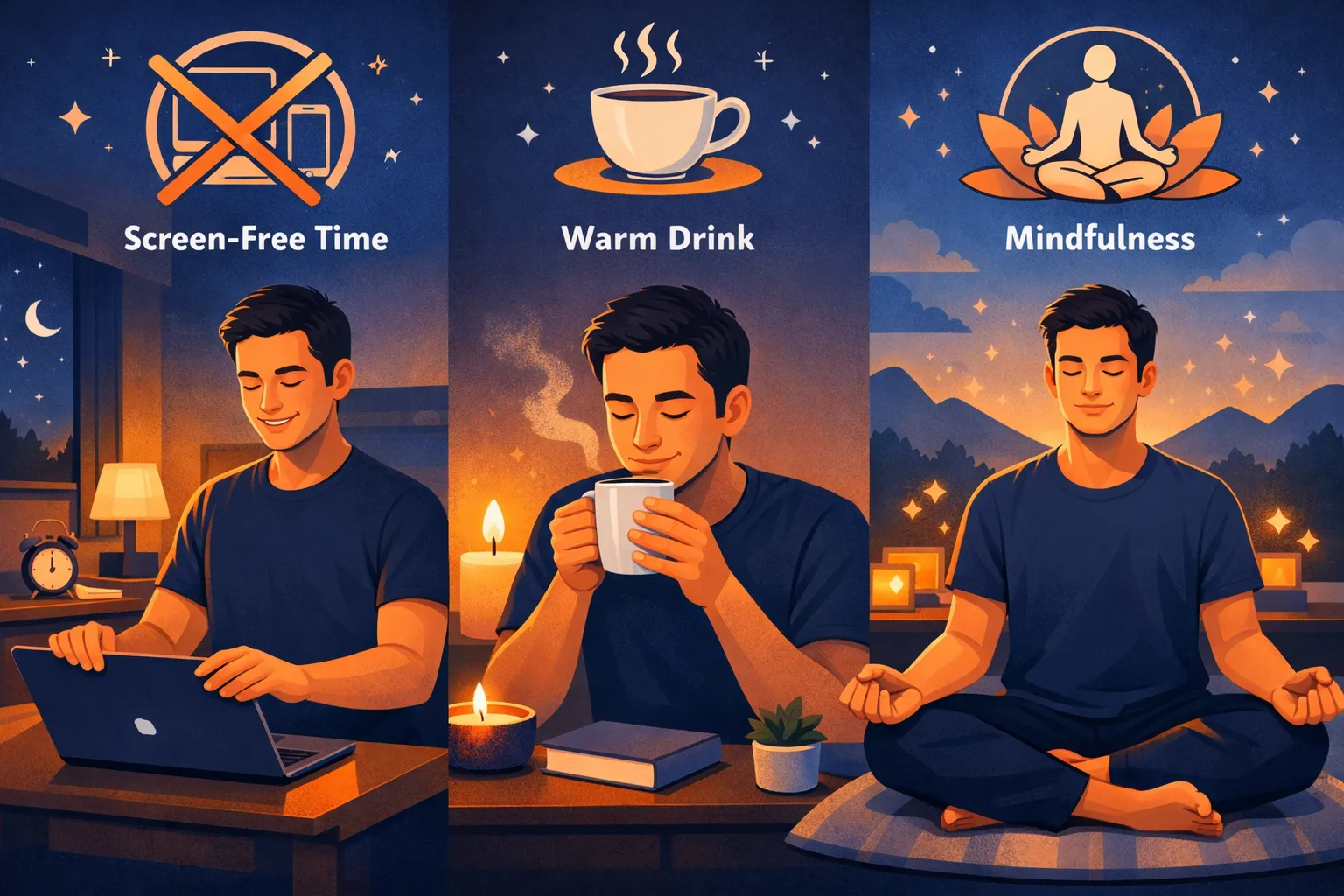
- Implement a “Digital Sunset”: Stop using all electronic devices (phones, tablets, computers, TVs) at least 60-90 minutes before your target bedtime. Blue light emitted from screens suppresses melatonin production, interfering with sleep onset.
- Engage in relaxing activities: Read a physical book, listen to calming music, take a warm bath or shower, or practice gentle stretching or yoga. These activities naturally lower heart rate and calm the mind.
- Avoid heavy meals and excessive liquids: Finish eating enormous meals at least 2-3 hours before bed to prevent digestive discomfort. Limit fluid intake closer to bedtime to reduce nighttime bathroom trips.
- Consider a warm drink: A cup of herbal tea (e.g., chamomile, valerian root) can be a soothing ritual, but avoid caffeinated beverages. For other natural ways to enhance well-being, explore “Natural Ways to Increase Your Dopamine Levels”.
How Can Bedroom Environment Optimization Boost Sleep Quality Naturally?
Bedroom environment optimization plays a crucial role in helping you improve sleep quality naturally by creating a sanctuary conducive to rest, free from disturbances that can hinder deep sleep. A well-optimized bedroom minimizes sensory input that signals wakefulness, allowing your body to fully relax and transition into restorative sleep cycles.
Key elements for optimization:
- Darkness is paramount: Use blackout curtains or blinds to block out all external light. Even small amounts of light can disrupt melatonin production. Consider a comfortable eye mask if complete darkness isn’t achievable.
- Keep it quiet: Minimize noise pollution with earplugs, a white noise machine, or even a fan to create a consistent, soothing background hum.
- Cool temperature: The ideal sleep temperature is typically between 60-67°F (15-19°C). A slightly cool room signals to your body that it’s time for rest.
- Comfortable mattress and pillows: Invest in bedding that supports your body and is comfortable for you. Replace mattresses every 7-10 years and pillows every 1-2 years.
- Declutter and clean: A tidy bedroom promotes a calm mind. Remove work-related items and excessive clutter from your sleep space.
- Scent and Air Quality: Use an essential oil diffuser with calming scents like lavender, or ensure good ventilation.
A dedicated sleep space free from distractions significantly enhances your chances of achieving consistent, deep sleep.
What Role Does Light Exposure Timing Play in Better Sleep Science?
Light exposure timing is a fundamental component of better sleep science because light, particularly bright light, is the primary cue for regulating your body’s circadian rhythm and melatonin production. Strategic exposure to natural light at specific times can help calibrate your internal clock, while avoiding certain light exposures can prevent sleep disruption.
To leverage light for better sleep:
- Morning light exposure: Get 15-30 minutes of natural light exposure within an hour of waking up. Step outside, open curtains, or sit by a bright window. This signals to your brain that it’s daytime, boosting alertness and setting your internal clock.
- Daytime brightness: Maximize natural light exposure throughout the day, especially if working indoors. Bright environments help reinforce your circadian rhythm.
- Evening dimness: As part of your healthy night routine habits, significantly dim lights in your home 2-3 hours before bedtime. Use warm, low-wattage bulbs.
- Red light alternatives: If you must use a screen in the evening, use blue-light filtering glasses or activate “night mode” settings on devices, which shift light towards warmer, less hues.
This deliberate management of light signals helps your body produce melatonin at the right time, facilitating sleep.
How Can Mental Decompression Strategies Serve as Insomnia Prevention Tips?
Mental decompression strategies are powerful insomnia prevention tips because they address the common root cause of sleep difficulties: an overactive, stressed mind. By actively unwinding and processing the day’s thoughts and emotions before bed, you can reduce anxiety and rumination, which often prevent sleep onset. For more on managing stress, consider our “Anger Management Guide for Better Mental WellBeing”.
Effective mental decompression techniques:
- Journaling: Spend 10-15 minutes writing down thoughts, worries, or plans for the next day. This “brain dump” can clear your mind and prevent racing thoughts once you’re in bed.
- Mindfulness Meditation: Practice a guided meditation or simple deep breathing exercises. Focus on your breath to bring your attention to the present moment, reducing mental chatter.
- Progressive Muscle Relaxation (PMR): Tense and then relax different muscle groups throughout your body. This technique helps release physical tension and promotes a sense of calm.
- Gratitude Practice: Reflect on things you are grateful for. This positive mental shift can reduce negative thinking patterns.
- Deep Breathing: Engage in slow, deep belly breathing. Inhale for a count of four, hold for seven, and exhale for eight. Repeat several times to activate the parasympathetic nervous system, signaling relaxation. For more on managing stress, see our guide on “Simple Techniques to Release Stress, Trauma, Anxiety, and Pain”.
These strategies are not just about relaxation; they are deliberate actions to quiet the mind and prepare it for restful sleep, acting as crucial steps in your sleep hygiene checklist.
Printable Sleep Hygiene Checklist for Deep Rest in 2026
Here is your actionable sleep hygiene checklist to help you achieve profound, deep rest throughout 2026. Consistent application of these habits will improve sleep quality naturally.
Evening Wind-Down Routine (60-90 minutes before bed)
- ✅ Set a consistent bedtime.
- ✅ Stop all screen use (Digital Sunset).
- ✅ Engage in relaxing activities (reading, bath, music).
- ✅ Avoid heavy meals and sugary snacks.
- ✅ Limit fluid intake before bed.
- ✅ Practice mental decompression (journaling, meditation).
Bedroom Environment Optimization
- ✅ Ensure the room is completely dark (blackout curtains/eye mask).
- ✅ Keep the room quiet (earplugs, white noise).
- ✅ Maintain a cool temperature (60-67°F or 15-19°C).
- ✅ Ensure a comfortable mattress and pillows.
- ✅ Keep the bedroom clean and clutter-free.
- ✅ Remove all work-related items from the bedroom.
Daily Habits for Better Sleep
- ✅ Wake up at the same time daily, even on weekends.
- ✅ Get 15-30 minutes of natural light in the morning.
- ✅ Maximize bright light exposure during the day.
- ✅ Avoid caffeine after noon.
- ✅ Limit alcohol, especially close to bedtime.
- ✅ Incorporate regular physical activity (but not too close to bedtime).
- ✅ Eat a balanced diet. For tips on a healthier lifestyle, refer to “The Ultimate Guide to Staying Healthy”.
“Consistent sleep isn’t a luxury; it’s a foundational pillar of health, productivity, and emotional well-being. Prioritizing your sleep hygiene is one of the most effective investments you can make in your daily life.”
FAQ
Q: How long does it take for sleep hygiene to work?
A: You may notice improvements in sleep quality within a few days to a week, but consistent practice over several weeks (2-4 weeks) is often needed to establish new habits and see significant, lasting benefits.
Q: Can napping affect my sleep hygiene?
A: Napping can be beneficial, but long or late-afternoon naps can disrupt nighttime sleep. If you need to nap, keep it short (20-30 minutes) and early in the afternoon.
Q: Is it okay to exercise before bed?
A: Vigorous exercise too close to bedtime can be stimulating and interfere with sleep. Aim to finish intense workouts at least 2-3 hours before your planned bedtime.
Q: What if I can’t fall asleep after 20 minutes?
A: If you can’t fall asleep, get out of bed and do a quiet, relaxing activity in dim light until you feel sleepy. Avoid checking the time or engaging with screens.
Q: Does alcohol help with sleep?
A: While alcohol may make you feel drowsy, it disrupts sleep quality, particularly in the second half of the night, leading to fragmented and less restorative sleep.
Q: How does blue light affect sleep?
A: Blue light emitted from electronic screens suppresses melatonin, the hormone that signals to your body that it’s time to sleep, making it harder to fall asleep and reducing sleep quality.
Q: Should I eat a snack before bed?
A: A light, easily digestible snack (e.g., a banana, a small bowl of oatmeal) a couple of hours before bed can be acceptable for some, but avoid heavy, fatty, or spicy foods.
Conclusion
Mastering your sleep hygiene checklist is not just about getting more sleep; it’s about optimizing the quality of your rest to unlock enhanced focus, improved mood, balanced metabolism, and overall resilience in 2026. By consciously adopting healthy night routine habits and applying the principles of better sleep science, you gain powerful insomnia prevention tips that contribute to a healthier, more productive life. Start by implementing a few changes from this deep sleep guide 2026 today, prioritize consistency, and observe the transformative impact on your well-being. Your commitment to restorative sleep is an investment in every aspect of your life.