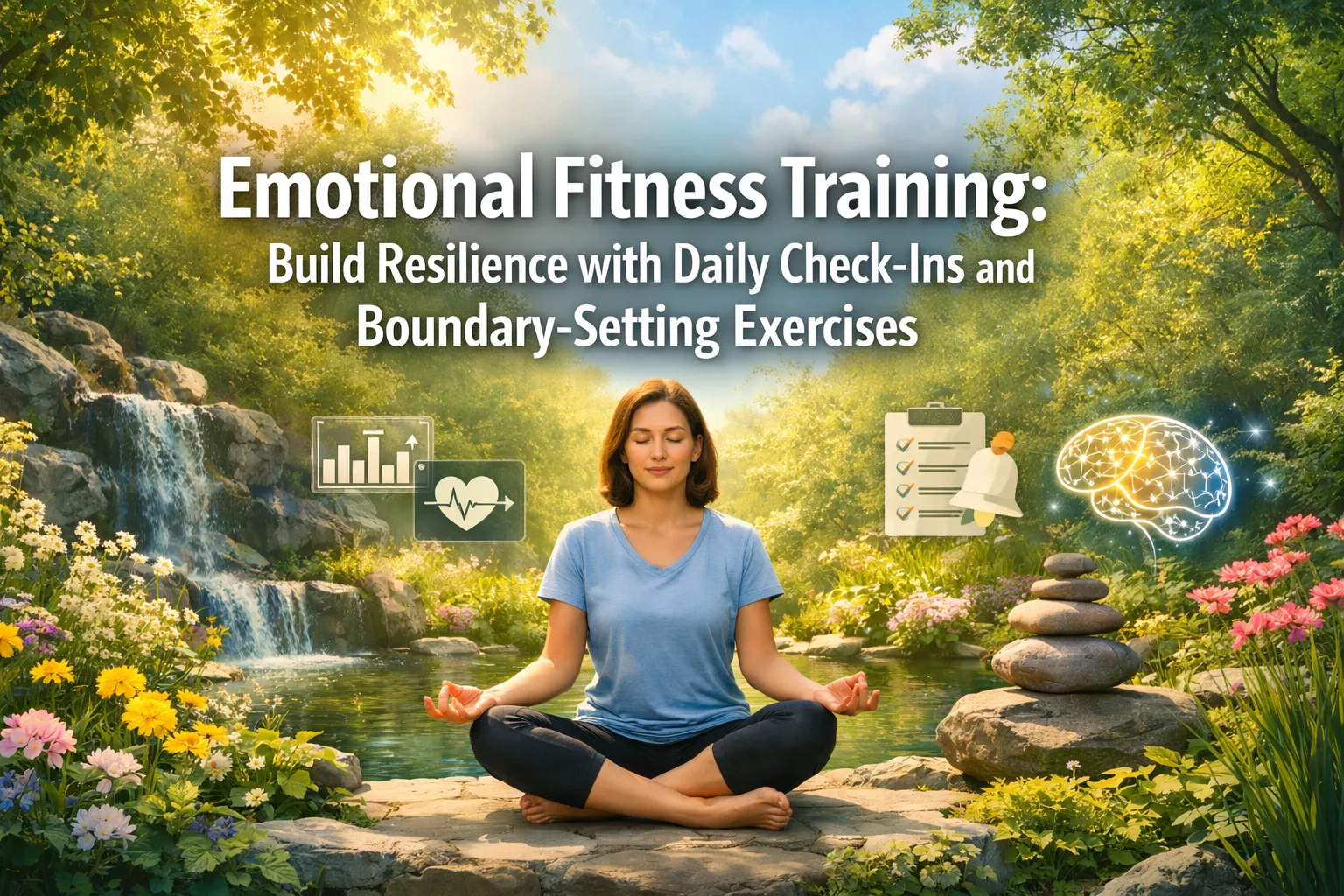
As emotional strength increasingly rivals physical fitness in 2026, understanding and implementing therapy-inspired tools like reflective journaling and compassion practices are no longer optional but essential. In today’s fast-paced world, where stress and complex relationships are common, cultivating robust emotional resilience is paramount. This comprehensive guide delves into Emotional Fitness Training: Build Resilience with Daily Check-Ins and Boundary-Setting Exercises, offering actionable strategies to navigate life’s challenges with greater ease and confidence. Just as a physical workout strengthens the body, consistent emotional training fortifies the mind, helping individuals respond to adversity, maintain well-being, and foster healthier connections. This article will provide a structured approach to enhance your emotional landscape, equipping you with practical techniques to improve self-awareness, manage stress, and protect your personal energy.
Key Takeaways
- Emotional Fitness is a Skill, Not a Trait: Emotional resilience can be developed and strengthened through consistent practice, much like physical fitness.
- Daily Check-Ins Boost Self-Awareness: Regular introspection helps identify emotional patterns, triggers, and underlying needs, leading to better emotional regulation.
- Boundary-Setting Protects Energy and Well-being: Clearly defined personal boundaries are crucial for maintaining mental health, preventing burnout, and fostering respectful relationships.
- Integrating Practices for Holistic Growth: Combining daily self-reflection with intentional boundary-setting creates a powerful framework for lasting emotional resilience.
- Consistency is Key: Like any training, the benefits of emotional fitness are cumulative, requiring sustained effort and commitment.
Understanding Emotional Fitness: The Foundation of Resilience


In 2026, the concept of “fitness” has expanded far beyond physical prowess. We now recognize that a truly healthy individual possesses not only a strong body but also a robust emotional core. Emotional fitness refers to one’s capacity to understand, manage, and express emotions effectively; adapt to change; and cope with life’s stressors without being overwhelmed. It’s the inner strength that allows individuals to bounce back from setbacks, maintain a positive outlook, and engage meaningfully with the world. Think of it as your mind’s immune system—the stronger it is, the better equipped you are to ward off emotional “illnesses” and recover quickly from challenges.
The demands of modern life, from constant digital connectivity to societal pressures, can place an immense strain on our emotional reserves. Without intentional practice, these reserves can deplete, leading to increased stress, anxiety, and even physical health issues. This is where Emotional Fitness Training: Build Resilience with Daily Check-Ins and Boundary-Setting Exercises comes into play. It provides a structured, proactive approach to cultivate inner strength, rather than waiting for crises to force adaptation.
The Pillars of Emotional Fitness
Several key components contribute to a high level of emotional fitness:
- Self-Awareness: Understanding your emotions, thoughts, and values, and how they influence your behavior. This is the starting point for all emotional growth.
- Emotional Regulation: The ability to manage and respond to emotional experiences appropriately, rather than being controlled by them.
- Empathy: The capacity to understand and share the feelings of another.
- Motivation: The drive to pursue goals and overcome obstacles, even in the face of adversity.
- Social Skills: The ability to build and maintain healthy relationships, communicate effectively, and navigate social situations.
These pillars are not static; they are dynamic and can be strengthened through consistent effort and specific practices. Just as someone wanting to improve their physical fitness might focus on cardio, strength, and flexibility, someone pursuing emotional fitness will concentrate on practices that enhance these core emotional abilities. For a deeper dive into understanding and managing emotions in social contexts, consider exploring the importance of Emotional Intelligence.
Why Emotional Fitness Matters in 2026
The world is constantly evolving, presenting new challenges and uncertainties. In 2026, the ability to maintain emotional equilibrium is more critical than ever. Here’s why:
- Stress Management: High levels of chronic stress are detrimental to both mental and physical health. Emotional fitness provides tools to process stress effectively, preventing burnout.
- Improved Relationships: Emotionally fit individuals are better communicators, more empathetic, and more capable of setting healthy boundaries, leading to stronger, more fulfilling personal and professional relationships. Learning how to become a nicer person often starts with better emotional self-awareness.
- Enhanced Decision-Making: When emotions are well-managed, individuals can think more clearly and make more rational decisions, even under pressure.
- Increased Productivity: A calm and focused mind is a productive mind. Emotional fitness reduces distractions caused by internal turmoil.
- Greater Life Satisfaction: Ultimately, being emotionally fit contributes significantly to overall happiness and a sense of purpose. For ideas on how to find happiness in your life, consider linking emotional fitness to personal well-being.
“Emotional fitness is not about eliminating negative emotions; it’s about developing the wisdom and tools to navigate them without losing your way.”
Daily Check-Ins: Your Compass for Emotional Well-being
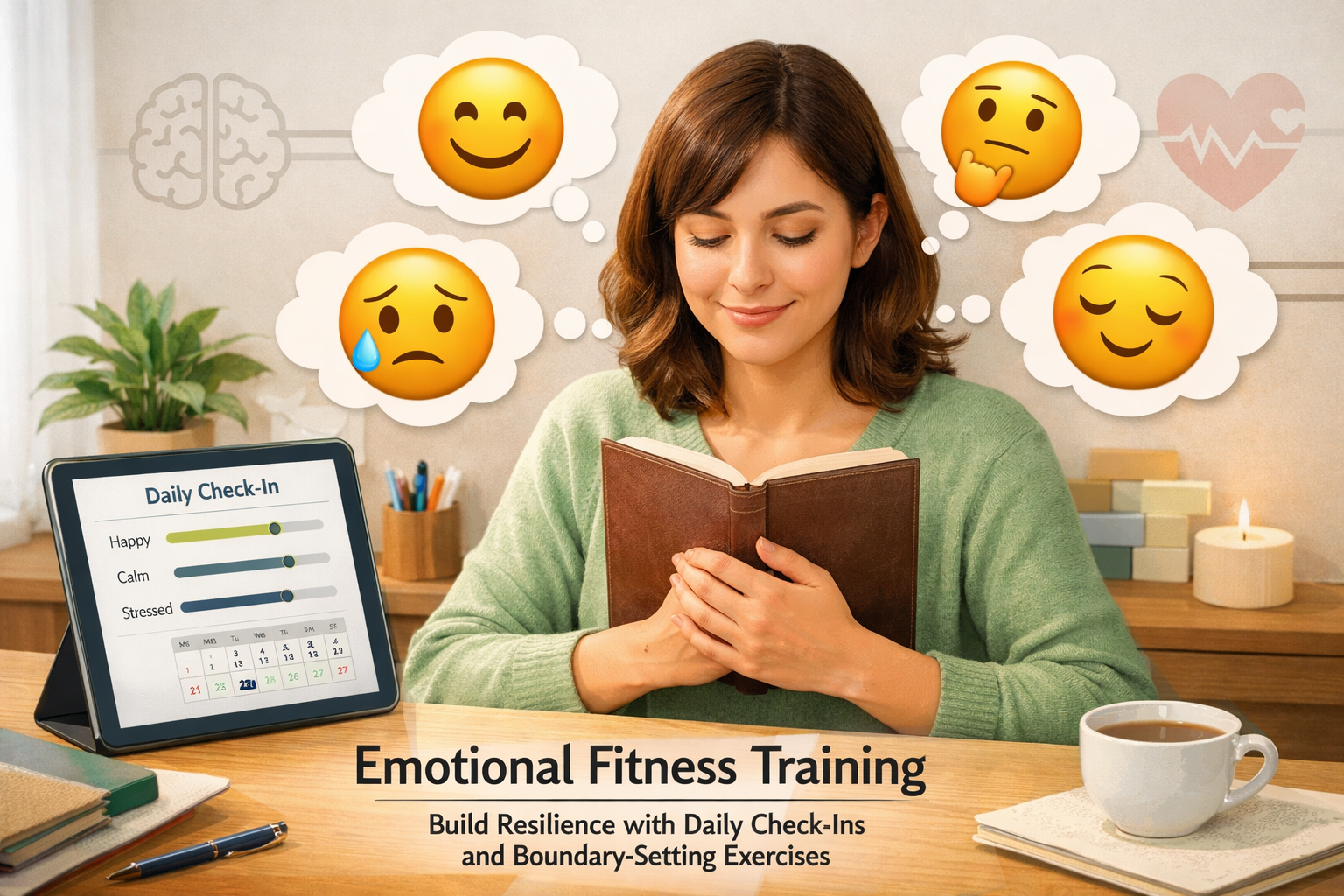
One of the most powerful tools in Emotional Fitness Training: Build Resilience with Daily Check-Ins and Boundary-Setting Exercises is the daily check-in. This practice involves taking dedicated time each day to pause, reflect, and tune into your internal emotional state. It’s like taking your emotional pulse, allowing you to identify what you’re feeling, why you might felt it, and what needs might be arising.
The Purpose of Daily Check-Ins
Daily check-ins serve several vital functions:
- Increased Self-Awareness: They help you become more attuned to your emotional landscape, recognizing subtle shifts and patterns you might otherwise miss. This understanding is foundational to emotional regulation.
- Early Detection of stressors: By regularly scanning your emotional state, you can identify rising stress or anxiety before it escalates, allowing for proactive intervention.
- Validation of Feelings: Acknowledging your emotions without judgment is a crucial step towards processing them healthily.
- Connection to Core Needs: Often, emotions signal unmet needs. A daily check-in can help you pinpoint these needs, whether they are for rest, connection, safety, or understanding.
- Cultivating Mindfulness: The practice encourages presence and attention to the present moment, a cornerstone of mindfulness.
How to Conduct a Daily Emotional Check-In
There’s no single “right” way to perform a daily check-in; the key is consistency and personalization. Here’s a structured approach you can adapt:
Step 1: Find Your Moment ⏰
Choose a consistent time each day. This could be the first thing in the morning, during a lunch break, or before bed. The consistency helps build a habit. Many find that morning check-ins set a positive tone for the day, while evening check-ins help process daily events.
Step 2: Create a Calm Space 🧘♀️
Minimize distractions. Find a quiet spot where you won’t be interrupted. This could be a comfortable chair, a meditation cushion, or even just a few minutes alone in your car.
Step 3: Tune In to Your Body 🌬️
Start with a few deep breaths. Close your eyes if comfortable. Notice any physical sensations in your body. Are your shoulders tense? Is there a knot in your stomach? Physical sensations are often early indicators of emotional states.
Step 4: Ask Yourself Key Questions 🤔
Gently bring your attention to your emotional state. Consider these questions:
- “What am I feeling right now?” (e.g., happy, anxious, tired, excited, frustrated, calm)
- “Where do I feel this emotion in my body?”
- “What might have caused this feeling?”
- “What do I need right now?” (e.g., rest, connection, a break, to express something, self-compassion)
- “What thoughts are running through my mind?”
- “What am I grateful for today?” (This can help shift perspective, even in difficult moments.)
Step 5: Document Your Findings (Optional but Recommended) ✍️
Journaling is an incredibly effective way to enhance daily check-ins. Writing your answers to the questions above provides a tangible record of your emotional journey. Over time, you’ll see patterns, triggers, and progress.
Journaling Prompts for Daily Check-Ins:
- Morning: “As I start my day, I feel… I expect… One intention for today is…”
- Midday: “Right now, my energy levels are… I’m noticing… A quick change I can make is…”
- Evening: “Looking back on my day, the strongest emotion I felt was… It taught me… Tomorrow, I will focus on…”
Consider using a mood tracker app or a simple bullet journal system to log your emotions. Seeing your emotional data visually can provide powerful insights into your well-being trends. This practice is also a great way to stop worrying about everything and live today to the fullest.
Benefits of Consistent Daily Check-Ins
| Benefit | Description |
|---|---|
| Enhanced Emotional Literacy | You learn to identify and label your emotions more accurately, moving beyond “fine” or “bad.” |
| Improved Stress Resilience | By catching stress early, you can implement coping strategies before becoming overwhelmed, increasing your ability to handle future stress. |
| Stronger Self-Compassion | Regular introspection fosters a kinder, more understanding relationship with yourself. |
| Better Decision-Making | Understanding your emotional state helps you avoid making impulsive decisions driven by intense feelings. |
| Greater Sense of Control | Knowing what’s happening internally empowers you to respond consciously rather than reactively. |
Boundary-Setting Exercises: Protecting Your Emotional Landscape
While daily check-ins help you understand your internal world, boundary-setting is about managing your interactions with the external world. Boundaries are the limits and rules we establish for ourselves in relationships and situations, defining what is acceptable and unacceptable behavior from others. They are crucial for maintaining emotional health, preserving personal energy, and fostering respectful connections. Without clear boundaries, individuals can feel overwhelmed, resentful, and depleted. This component of Emotional Fitness Training, Build Resilience with Daily Check-Ins and Boundary-Setting Exercises, is about asserting your needs and protecting your inner peace.
Why Boundaries Are Essential for Emotional Fitness
- Preserves Energy: Healthy boundaries prevent others from unknowingly or knowingly draining your emotional, mental, and physical resources.
- Reduces Resentment: When boundaries are respected, it prevents feelings of being taken advantage of or undervalued.
- Enhances Self-Respect: Setting boundaries is an act of self-care and self-worth. It communicates that your needs matter.
- Improves Relationships: Counterintuitively, clear boundaries often strengthen relationships by fostering mutual respect, trust, and understanding. For more on building trust, see Unlock Secrets to Building Trust in Relationships.
- Prevents Burnout: By defining your limits, you protect your time, energy, and capacity to handle demands, preventing mental and emotional exhaustion.
Types of Boundaries
Boundaries aren’t just about saying “no.” They encompass various aspects of your life:
- Physical Boundaries: Personal space, touch, and physical belongings. (e.g., “Please don’t touch my hair.”)
- Time Boundaries: How you allocate your time and energy. (e.g., “I’m not available for work calls after 6 PM.”)
- Emotional Boundaries: Protecting your feelings from being invalidated, manipulated, or used by others. (e.g., “I can’t take responsibility for your feelings.”)
- Mental Boundaries: Protecting your thoughts, beliefs, and values. (e.g., “I’m not comfortable discussing politics at the dinner table.”)
- Financial Boundaries: Limits regarding money, lending, and borrowing. (e.g., “I’m unable to lend money right now.”)
Practical Boundary-Setting Exercises
Setting boundaries can feel challenging, especially if you’re not used to it. These exercises can help you develop this crucial skill:
Exercise 1: Identify Your Boundary Hotspots 🔥
- Step A: Reflect: Think about situations, people, or topics that frequently leave you feeling drained, angry, resentful, or disrespected.
- Step B: Pinpoint the Feeling: What emotion arises most strongly in these situations?
- Step C: Identify the Violation: What specific action or request from another person crosses a line for you?
- Step D: Articulate Your Need: What would you prefer to happen instead? What limit do you need to set?
Example:
- Hotspot: Colleagues asking you to take on extra tasks at the last minute.
- Feeling: Overwhelmed, resentful.
- Violation: Others encroaching on your planned work/personal time.
- Need/Boundary: “I need to protect my schedule to complete my tasks effectively.”
Exercise 2: Practice “No” and “Yes, And…” Statements 🗣️
Many people struggle with saying “no.” These techniques help you assert yourself gracefully.
- The Direct “No”: Simple, clear, and direct. “No, I can’t do that right now.” No need for elaborate explanations (though a brief one is fine if you choose).
- The “No, But”: Offers an alternative or explanation without changing your “no.” “No, I can’t help with that today, but I might be able to next week.”
- The “Yes, And”: This is for when you can help but need to set conditions. “Yes, I can do that, and I’ll need until Friday to complete it,” or “Yes, I can listen, and I only have 15 minutes right now.”
- The “Let Me Think About It” buys you time to assess your capacity and emotional energy before committing. “That’s an interesting request; let me check my schedule and get back to you.”
Exercise 3: Visualize and Rehearse 💪
Imagine a specific scenario where you need to set a boundary. Mentally rehearse what you will say and how you will say it. This builds confidence and helps you feel more prepared when the situation arises in real life. You can even practice in front of a mirror or with a trusted friend.
Exercise 4: Start Small and Build Momentum 🚀
Begin with low-stakes boundaries. Perhaps setting a time limit for social media use, declining a non-essential social invitation, or asking a friend to return something they borrowed. Each successful boundary-setting experience builds confidence for more significant ones.
Exercise 5: Communicate Your Boundaries Clearly and Calmly 💬
When setting a boundary, choose a calm moment. Use “I” statements to express your needs and feelings without blaming the other person.
- Instead of: “You always dump your problems on me.”
- Try: “I care about you, and I find it overwhelming when we only discuss problems. I need to balance our conversations with more positive topics.”
- Instead of: “You never respect my time.”
- Try: “I value my evenings for personal time. I won’t be checking work emails after 6 PM.”
Remember that others might initially resist your new boundaries, especially if they are used to your previous patterns. Be prepared to calmly reiterate your limits. Your commitment to Emotional Fitness Training: Build Resilience with Daily Check-Ins and Boundary-Setting Exercises is an investment in your well-being. This is also a crucial aspect of effective communication in relationships.
Integrating Daily Check-Ins and Boundary-Setting for Holistic Resilience

The true power of Emotional Fitness Training: Build Resilience with Daily Check-Ins and Boundary-Setting Exercises comes from integrating these two practices. Daily check-ins provide the self-awareness needed to identify when and where boundaries are needed, and boundary-setting then provides the proactive tools to protect that well-being.
Consider this synergistic relationship:
- A daily check-in reveals, “I’m feeling very drained and resentful after spending time with [Person X].”
- This awareness then prompts, “I need to set a boundary around how much time I spend with [Person X] or the conversations we have.”
- Or, a check-in shows, “I’m overwhelmed by my to-do list and feel stretched thin.”
- This leads to: “I need to set a boundary by saying ‘no’ to additional requests and prioritizing existing commitments.”
Without the daily check-in, you might not even recognize the subtle cues that show a boundary is being crossed or that your emotional reserves are low. Without boundary-setting, even if you are aware of your emotions, you lack the tools to effectively manage external demands and protect your inner peace.
Creating a Personalized Emotional Fitness Routine
Building a sustainable routine involves incorporating these practices into your daily life in a way that feels natural and manageable.
- Start Small: Don’t try to overhaul everything at once. Begin with one daily check-in and practice one small boundary-setting exercise each week.
- Schedule It: Treat your emotional fitness like any other important appointment. Block out 5-10 minutes each day for your check-in.
- Use Reminders: Set a gentle alarm on your phone to prompt your daily check-in.
- Track Your Progress: Just like tracking physical workouts, noting your emotional insights and boundary successes can be motivating. A simple journal or an app can be incredibly helpful.
- Be Patient and Kind to Yourself: There will be days when you forget or when boundary-setting feels difficult. That’s okay. Emotional fitness is a journey, not a destination. Practice self-compassion.
- Seek Support if Needed: If you consistently struggle with emotional regulation or boundary-setting, consider speaking with a therapist or counselor. They can provide personalized guidance and strategies. For more general self-improvement, consider our resources on how to become a self-leader.
Long-Term Benefits of Consistent Practice
Consistent engagement with Emotional Fitness Training: Build Resilience with Daily Check-Ins and Boundary-Setting Exercises yields profound long-term benefits:
- Enhanced Emotional Resilience: The ability to withstand and recover from emotional challenges becomes second nature.
- Authentic Relationships: You’ll build relationships based on mutual respect and genuine connection, free from resentment and obligation.
- Reduced Stress and Anxiety: Proactive management of your emotional state leads to a calmer, more centered existence.
- Greater Self-Confidence: Knowing you can manage your emotions and protect your well-being builds a strong sense of self-worth.
- Increased Life Satisfaction: Living in alignment with your needs and values naturally leads to a more fulfilling life.
This journey is about creating a deliberate, conscious relationship with your inner world and your interactions with others. In 2026, where mental well-being is increasingly prioritized, investing in your emotional fitness is one of the most significant investments you can make. The skills you develop through daily check-ins and boundary-setting will serve as a robust foundation for navigating the complexities of life with grace and strength. For further development in building healthy relationships, one might explore the topic of understanding love languages.
Conclusion
In 2026, embracing Emotional Fitness Training: Build Resilience with Daily Check-Ins and Boundary-Setting Exercises is not merely a trend; it’s a vital component of holistic well-being. This journey empowers individuals to navigate life’s inevitable trials with greater strength, clarity, and peace. By consistently engaging in daily emotional check-ins, you cultivate a profound self-awareness, learning to recognize and understand your internal landscape. This introspection serves as the compass guiding your emotional health, allowing for proactive responses rather than reactive struggles.
Hand-in-hand with self-awareness, the practice of boundary-setting provides the essential tools to protect your energy, honor your needs, and foster respectful relationships. Establishing clear limits—whether they are physical, emotional, mental, or time-based—is an act of self-care that prevents depletion and nurtures your sense of self-worth.
The synergy between these two practices creates a powerful framework for building enduring emotional resilience. You become adept at identifying emotional triggers from within and establishing firm, yet compassionate, boundaries externally. This deliberate approach transforms potential stressors into opportunities for growth, allowing you to maintain equilibrium even amidst chaos.
Actionable Next Steps:
- Commit to a Daily Check-In: Choose a consistent time each day (e.g., 5-10 minutes in the morning or evening) to ask yourself, “What am I feeling right now? What do I need?”
- Start a Simple Emotional Journal: Even a few sentences written daily can dramatically increase your self-awareness.
- Identify One Boundary Hotspot: Pinpoint one recurring situation that drains you emotionally or mentally.
- Practice One Small Boundary: This week, choose one low-stakes boundary to implement. It could say “no” to an extra commitment, setting a limit on screen time, or politely ending a conversation that feels draining.
- Rehearse Your Boundaries: Mentally or verbally practice what you will say when setting your chosen boundary. This builds confidence.
- Review and Adjust: At the end of the week, reflect on your check-ins and boundary attempts. What went well? What could be improved? Be kind to yourself through the process.
Embrace this journey of emotional fitness training: build resilience with Daily Check-Ins and Boundary-Setting Exercises. Your emotional well-being is a priceless asset, and by dedicating time and effort to its cultivation, you are investing in a healthier, happier, and more resilient future.
References
- Goleman, D. (1995). Emotional Intelligence: Why It Can Matter More Than IQ. Bantam Books.
- Brown, B. (2012). Daring Greatly: How the Courage to Be Vulnerable Transforms the Way We Live, Love, Parent, and Lead. Gotham Books.
- Neff, K. (2011). Self-Compassion: The Proven Power of Being Kind to Yourself. William Morrow.
- Siegel, D. J. (2010). Mindsight: The New Science of Personal Transformation. Bantam Books.