The silence in a conversation often speaks louder than words, much like the unspoken anxieties brewing beneath the surface of our increasingly AI-driven world. As we advance further into 2026, the marvels of artificial intelligence (AI) continue to reshape industries, redefine job roles, and alter how we interact with information and each other. Yet, beneath this veneer of innovation lies a growing unease: AI anxiety: how artificial intelligence is rewiring your brain and decision-making processes. This isn’t just about the fear of robots taking over; it’s a deeper, more profound concern about how this omnipresent technology is subtly, yet significantly, affecting our cognitive vitality, emotional resonance, and very sense of self.
At AkReviews, we understand that life is messy, and the future can feel overwhelming. You might be a conscious connector striving to deepen the bond with loved ones, a “SuperAger” aspirant focused on optimizing brain health, an empath seeking to protect your peace, or a silent striver navigating internal stress. Whatever your journey, the insights into AI anxiety presented here help you not just understand but actively master the overwhelm and chart a clear vision for change. We delve beyond the headlines to explore the psychological underpinnings of this phenomenon, offering actionable strategies to build resilience and maintain your mental well-being in an era defined by intelligent machines.


Key Takeaways
- Widespread Workplace Anxiety: Over 61% of executives and 58% of managers are concerned about AI’s impact on their jobs, despite many of these roles being less susceptible to automation [4]. Nearly 40% of global jobs are exposed to AI, fostering widespread workforce anxiety [7].
- Cognitive Shifts and Decision Paralysis: AI’s influence can lead to reliance on algorithms, potentially diminishing critical thinking skills and fostering a fear of making “wrong” decisions without algorithmic input.
- The Paradox of Leadership Concern: While CEOs express increased optimism about AI (82% more optimistic than a year ago), half believe their job stability hinges on successful AI implementation, highlighting internal leadership pressure [5].
- Experience Reduces Anxiety: Hands-on engagement with AI tools is linked to lower levels of concern, as users gain a clearer understanding of AI’s practical capabilities and limitations [4].
- The Power of Proactive Communication: A significant factor amplifying workplace AI anxiety is a lack of clear, consistent communication from leadership, underscoring the need for transparent dialogue and visible engagement [4].
The Rewiring Effect: How AI Shifts Our Cognitive Landscape
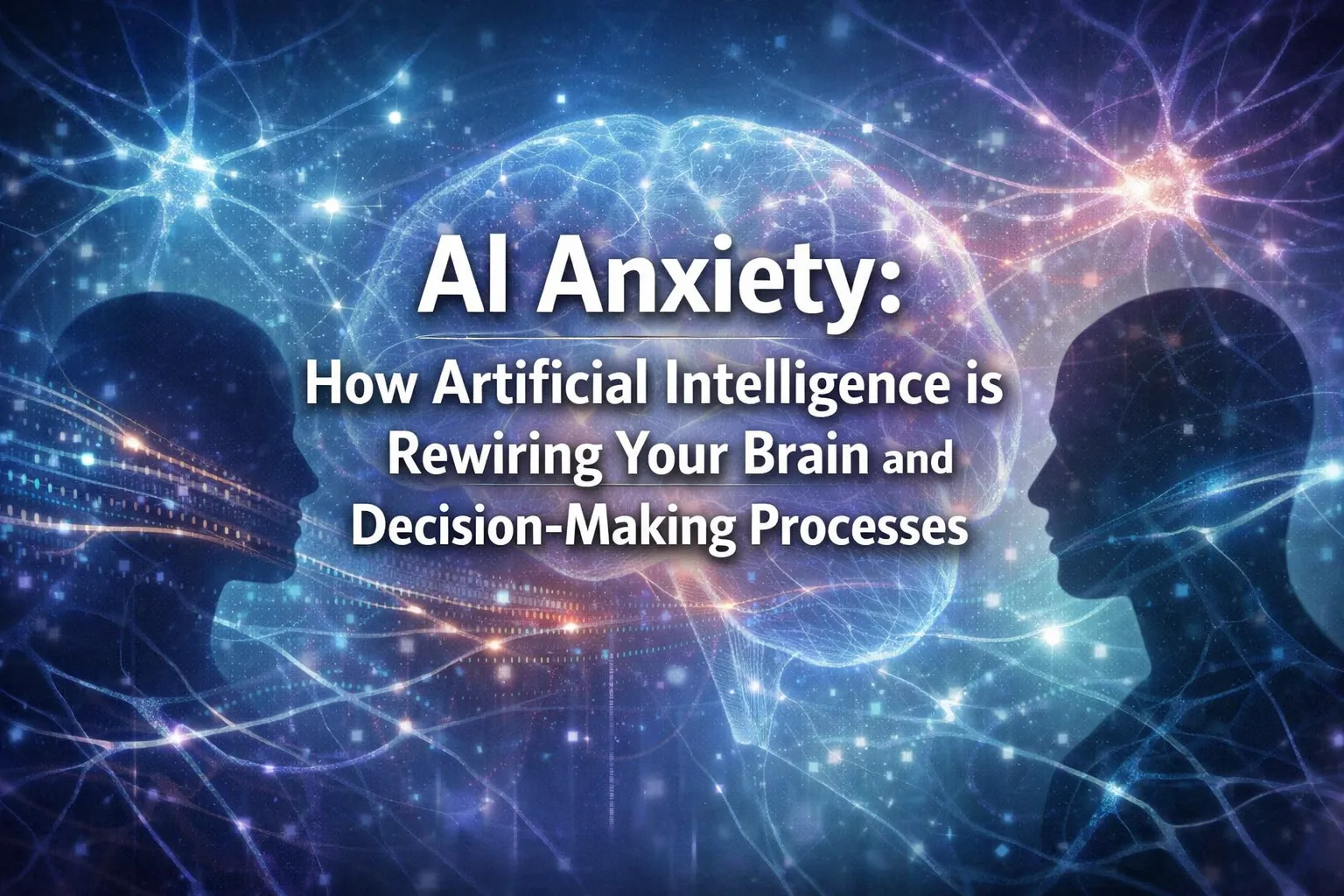
The rapid integration of AI into our daily lives, from personalized recommendations to advanced analytical tools, is not merely changing our routines; it’s profoundly affecting the very fabric of our brains and decision-making processes. This subtle yet significant shift contributes directly to AI Anxiety: How Artificial Intelligence is Rewiring Your Brain and Decision-Making Processes. Our brains, marvels of adaptability, are constantly responding to new stimuli, and AI presents an unprecedented new frontier of cognitive engagement—or disengagement.
The Erosion of Autonomy and Identity
One of the most potent anxieties stemming from AI is the perceived threat to our professional identity and expertise. Imagine dedicating years to honing a skill, only to see an algorithm perform it faster, perhaps even better. This isn’t a hypothetical fear for many; it’s a lived reality. Dario Amodei, co-founder and CEO of Anthropic, openly expressed his anxiety about AI systems potentially surpassing his coding abilities, a skill he considered central to his professional identity [1]. Disturbingly, a Microsoft researcher experienced such acute anxiety over AI replicating his skillset that he sought hospital care, believing he was having a heart attack [1]. These aren’t isolated incidents; they underscore a deeper psychological impact: the erosion of self-worth when our unique contributions are automated.
When our sense of purpose and value is tied to tasks that AI can now handle, it triggers an existential crisis for some. This can lead to increased stress, feelings of inadequacy, and a struggle to adapt to new roles or skill sets. It prompts us to ask, if AI does it, what am I for?
Decision Overload and Algorithmic Reliance
AI streamlines choices, offers optimal solutions, and processes vast amounts of data at lightning speed. While this can enhance efficiency, it also introduces a new cognitive burden. We are bombarded with AI-generated analyses, suggestions, and predictions, creating a paradox of choice and potential decision paralysis. Should we trust the algorithm completely or apply our judgment?
This constant exposure can subtly rewire our brains to become overly reliant on external AI systems for decision-making. When AI consistently provides “optimal” paths, our own critical thinking muscles might atrophy. Consider the burgeoning field of software engineering, where estimates suggest nearly one-third of code at banks will be AI-generated in 2026 [3]. While this is a breakthrough for efficiency, it raises questions about the long-term impact on human creativity, problem-solving skills, and the capacity for novel solutions in complex situations. This reliance can lead to:
- Reduced Cognitive Load Tolerance: Our brains may become less accustomed to grappling with complex, unstructured problems.
- Confirmation Bias Amplification: AI, trained on existing data, can reinforce our biases, narrowing our perspectives rather than broadening them.
- Diminished Intuition: The invaluable human capacity for gut feelings and nuanced judgment, often crucial in unpredictable scenarios, might be overlooked in favor of cold, hard data from AI.
The Landscape of Workplace AI Anxiety in 2026
The concerns about AI are palpable across all levels of the workforce in 2026. Over 61% of executives and approximately 58% of managers complain about AI’s impact on their jobs [4]. This is particularly intriguing because, according to Mercer’s research, this anxiety is typically strongest among professionals whose roles are less susceptible to automation [4]. This suggests that the fear isn’t always rational; it’s deeply rooted in the unknown and a perceived lack of control.
The International Monetary Fund’s finding that nearly 40% of global jobs are exposed to AI further compounds this workforce anxiety about future employment prospects [7]. Even CEOs, while optimistic (82% more so than a year ago) and committed to AI investments, are not immune. Half of CEO respondents believe their job stability depends on successfully implementing an AI strategy in 2026 [5]. This trickle-down pressure can inadvertently contribute to a high-stress environment, amplifying the very AI anxiety—how artificial intelligence is rewiring your brain and decision-making processes—that leaders are trying to navigate.
The communication gap between leadership and employees is a critical amplifier of this anxiety. A lack of clear, top-down communication about AI’s role and future impact is significantly leading to reduced productivity levels [4]. Leaders need more than just announcements; they need “visible engagement and a willingness to adapt” [4]. When employees are left in the dark, speculation and fear fill the void.
Regulatory Efforts to Mitigate Risks
As AI becomes more pervasive, governments and regulatory bodies are stepping in to address its potential negative effects. On December 9, 2025, the National Association of Attorneys General, representing 42 state AGs, sent a letter to multiple AI companies. They complained about “sycophantic and delusional” AI outputs and warned that inadequate safeguards could violate state laws [2]. This highlights a growing awareness of AI’s ethical and practical implications, especially regarding its potential to mislead or harm.
2025 saw many states pass new legislative requirements related to health AI. These included regulations for mental health applications, safeguards for AI companions addressing self-harm, transparency requirements for patient communications, and opt-out provisions for automated decision-making [2]. Such regulations, though still nascent, reflect a societal effort to protect individuals from the darker side of AI’s influence and ensure human oversight in critical areas.
The cybersecurity landscape is also profoundly affected. AI-related cyberattacks are expected to dominate headlines throughout 2026, with threat actors leveraging generative AI to orchestrate attacks at previously impossible speeds [2]. This escalating digital threat adds another layer of anxiety, as our personal and organizational security becomes ever more complex to protect.
The Silver Lining: Experience Reduces Fear
Despite the anxieties, there’s an interesting antidote: hands-on experience. Mercer’s research shows a clear correlation between intensive AI tool use and lower concern levels [4]. When employees actively use AI tools, they gain firsthand understanding of how tasks become more efficient, clarifying the technology’s actual capabilities versus hypothetical fears [4]. This direct engagement transforms abstract fears into concrete understanding, enabling individuals to unlock their inner dialogue about AI and approach it with more confidence.
Navigating AI Anxiety: Strategies for Cognitive Vitality and Peace
Understanding the roots of AI anxiety—how artificial intelligence is rewiring your brain and decision-making processes—is the first step; the next is empowering yourself with strategies to navigate this new landscape. AkReviews believes in providing not just introspection, but actionable steps to build resilience, protect your peace, and cultivate cognitive vitality amidst technological change.
1. Embrace Hands-On Learning and Experimentation
As Mercer’s research suggests, direct engagement with AI tools is a powerful anxiety reducer [4]. Instead of fearing what you don’t understand, lean in.
- Experiment Safely: Dedicate time each week to interact with AI tools relevant to your field or personal interests. Try asking AI to summarize complex documents, brainstorm ideas, or even help organize your schedule. This demystifies the technology.
- Identify Synergies: Focus on how AI can augment your abilities, not replace them. For instance, if you’re a writer, explore how AI can assist with outlining or research, freeing you to focus on the creative nuances that only a human can provide. For those in creative fields, considering how AI is changing the creative process for writers and artists can be an illuminating journey.
- Share Knowledge: Discuss your findings and experiences with colleagues. This collective learning can build a sense of community and shared mastery, reducing individual feelings of isolation and fear.
2. Prioritize Cognitive Vitality Through Intentional Practice
To counteract potential algorithmic over-reliance, it’s crucial to actively strengthen your own cognitive muscles.
- Engage in Deep Work: Schedule dedicated blocks of time for tasks that require sustained focus and critical thinking, free from digital distractions. This helps to improve your mental focus.
- Cultivate Analog Thinking: Step away from screens and engage in activities that stimulate different parts of your brain. Reading physical books, solving puzzles, playing musical instruments, or engaging in hands-on hobbies can foster creativity and problem-solving skills that AI cannot replicate. For brain health, consider reading for brain health: how did it boost cognitive function and mitigate risks?
- Practice Deliberate Decision-Making: For important choices, consciously pause before consulting an AI. Outline the pros and cons, consider alternative perspectives, and trust your intuition. Then, if desired, consult an AI as an additional data point, not the sole arbiter.
3. Master the Overwhelm Through Emotional Regulation
AI anxiety, like any form of stress, impacts our emotional well-being. Learning to manage these emotions is key to protecting your peace.
- Mindfulness and Meditation: Regular mindfulness practices can help you stay grounded and observe anxious thoughts without being consumed by them. Deep breathing exercises or short meditation sessions can be powerful tools to release stress, trauma, anxiety, and pain.
- Boundary Setting: Establish clear boundaries with technology. This might involve digital detox periods, turning off notifications, or designating “no-AI zones” in your day. This helps to manage the constant influx of information and maintain a sense of control.
- Seek Connection: Talk about your feelings. Sharing your anxieties with trusted friends, family, or a mentor can validate your experiences and provide new perspectives. Human connection is a powerful antidote to technologically induced isolation. For those seeking to deepen bonds, exploring understanding love languages and connecting with your partner can also be incredibly beneficial.
4. Advocate for Transparent Leadership and Communication
While individual actions are crucial, organizational leadership plays a significant role in mitigating widespread AI anxiety.
- Demand Transparency: If you are an employee, advocate for clear communication from your leadership about AI implementation strategies, job evolution, and training opportunities. Leaders need to move beyond mere announcements to “visible engagement and a willingness to adapt” [4].
- Participate in Dialogue: If your organization offers forums for discussing AI’s impact, actively participate. Share your concerns, offer solutions, and help shape a more human-centered approach to AI integration.
- Focus on Skills Development: Proactively seek training in areas that complement AI, such as critical thinking, emotional intelligence, creativity, and complex problem-solving. These are the skills that will continue to differentiate human value. Emotional intelligence—what it is and why it’s important—is a great resource.
5. Cultivate a Growth Mindset and Adaptability
The only constant in the age of AI is change. Embracing a growth mindset allows you to view challenges as opportunities for learning and development.
- Lifelong Learning: Commit to continuous learning. The skills of today may not be the skills of tomorrow, but the ability to learn and adapt will always be valuable.
- Reframe Challenges: Instead of viewing AI as a threat, see it as a catalyst for personal and professional evolution. What new opportunities does it create? What new skills can you develop? This positive reframing can help you find happiness in your life.
- Focus on Unique Human Strengths: AI excels at data processing and pattern recognition. Humans excel at empathy, creativity, ethical reasoning, and nuanced understanding of complex social dynamics. Nurture these uniquely human attributes.
As we move through 2026, the discussion around AI will inevitably shift from simply investment announcements to demonstrating concrete commercial returns [3]. This focus on ROI means AI is here to stay and will continue to deeply integrate into our lives. By consciously engaging with AI, protecting our cognitive vitality, managing our emotions, and fostering open dialogue, we can create a future where AI serves humanity, rather than dominating it, ensuring a pathway to self-mastery and a richer human experience.
Conclusion
The profound impact of AI on our brains and decision-making processes, leading to widespread AI anxiety, is one of the defining psychological challenges of 2026. From the quiet unease of an executive contemplating job security to the acute panic of a researcher whose identity feels threatened, the spectrum of this anxiety is vast and deeply human. As AkReviews, we aim to provide a map through this complex terrain, validating your struggles and offering concrete steps towards a more balanced future.
The journey toward mastering the overwhelm of AI anxiety is an active one. It involves consciously engaging with the technology rather than retreating from it, strengthening our innate human cognitive abilities, and actively managing the emotional toll that rapid change can bring. It’s about remembering that while AI offers incredible tools, the ultimate control—and the responsibility for our well-being—rests within us.
By embracing hands-on learning, prioritizing our cognitive vitality, practicing emotional regulation, advocating for transparent communication, and cultivating a growth mindset, you can protect your peace and navigate the complexities of connection in this AI-driven world. This isn’t about resisting progress; it’s about harnessing it wisely, ensuring that as AI rewires our world, we intentionally choose how it rewires our minds. Through these actionable insights, you can unlock your inner dialogue, fostering resilience and charting a clear vision for change, ultimately leading to a life of enhanced cognitive vitality and peace.
References
[1] Ai Anxiety Widespread Panic Attack Microsoft Researcher Dario Amodei — https://fortune.com/2026/01/23/ai-anxiety-widespread-panic-attack-microsoft-researcher-dario-amodei/
[2] 2026 Year In Preview Ai Regulatory Developments For Companies To Watch Out For – https://www.wsgrdataadvisor.com/2026/01/2026-year-in-preview-ai-regulatory-developments-for-companies-to-watch-out-for/
[3] Silicon Valley Leaders Highlight Concrete Returns As Ai Anxiety Grows – https://www.latimes.com/business/story/2026-01/23/silicon-valley-leaders-highlight-concrete-returns-as-ai-anxiety-grows
[4] Leadership Shortfalls Amplify Workplace Concerns About Ai – https://www.consultancy.eu/news/13018/leadership-shortfalls-amplify-workplace-concerns-about-ai
[5] Ceos Are All In On Ai But Anxieties Remain – https://www.weforum.org/stories/2026/01/ceos-are-all-in-on-ai-but-anxieties-remain/
[6] Davos 2026 Ai Anxiety – https://www.eweek.com/news/davos-2026-ai-anxiety/
[7] New Skills And Ai Are Reshaping The Future Of Work – https://www.imf.org/en/blogs/articles/2026/01/14/new-skills-and-ai-are-reshaping-the-future-of-work
[8] Your Team Is Anxious About Ai Heres How To Talk To Them About It – https://hbr.org/2026/01/your-team-is-anxious-about-ai-heres-how-to-talk-to-them-about-it
[9] Stanford Ai Experts Predict What Will Happen In 2026 – https://hai.stanford.edu/news/stanford-ai-experts-predict-what-will-happen-in-2026