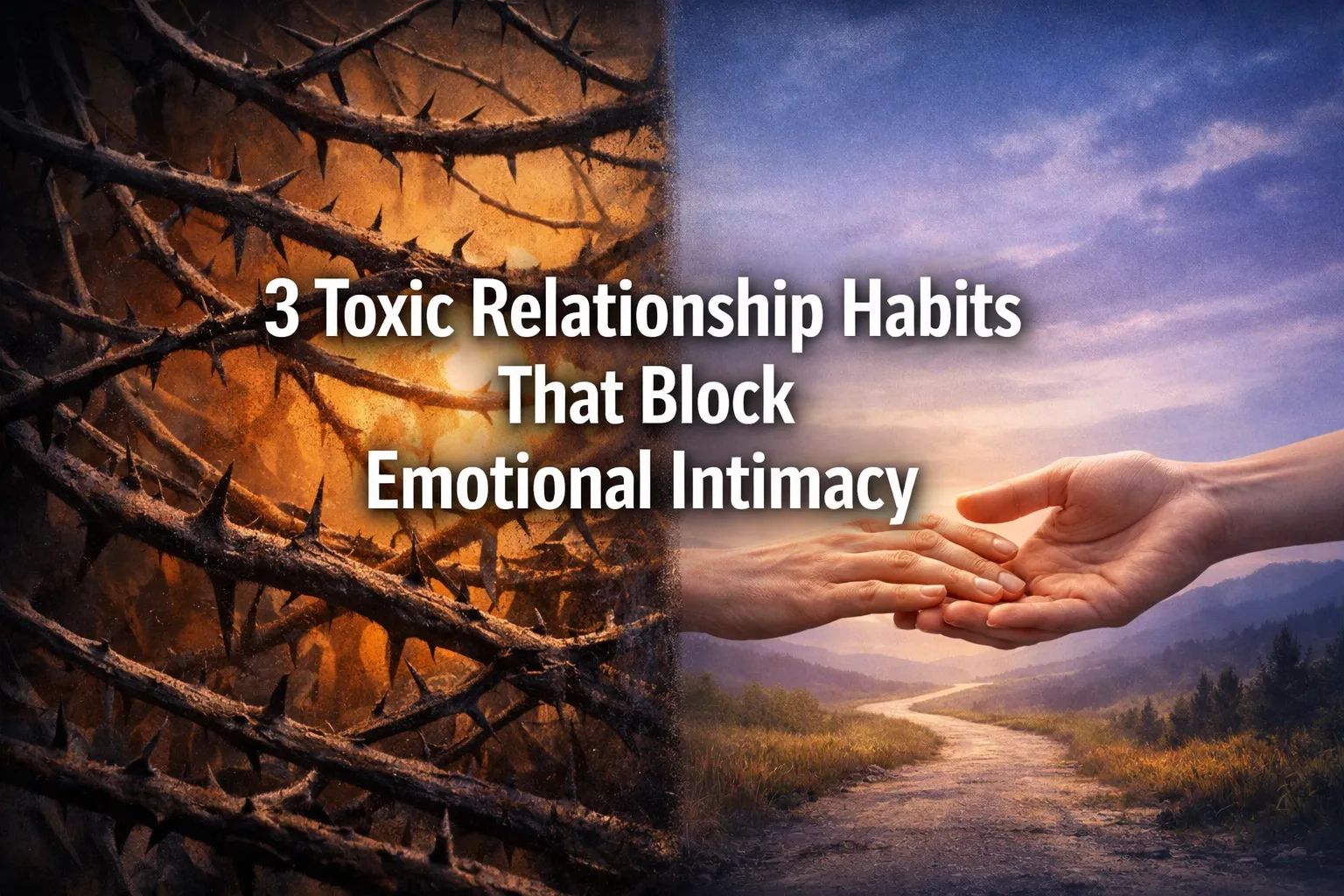
The silence in a conversation often speaks louder than words, doesn’t it? Many couples find themselves drifting apart, living parallel lives within the same home, or feeling a persistent emotional chill where warmth once resided. This isn’t always due to grand betrayals, but often the insidious creep of subtle yet profoundly damaging toxic relationship habits.
These deeply ingrained, often unconscious, unhealthy relationship patterns slowly erode trust, communication, and mutual understanding, effectively building impenetrable walls that block emotional intimacy in relationships. If you’ve ever wondered why your connection feels shallow despite your best intentions, or why true closeness seems just out of reach, you’re likely grappling with the impact of these silent saboteurs.

At AKReviews, we understand that navigating the complexities of connection requires more than just good intentions; it demands self-awareness and a willingness to examine the “scripts” that play out in our most important relationships. In this deep dive, we’ll shine a light on three common toxic relationship habits that stand as formidable barriers to a deeper emotional connection and, crucially, how you can begin the journey of relationship self-improvement to dismantle them.
Key Takeaways
- Silent Treatment & Emotional Stonewalling: Avoiding conflict or withdrawing emotionally creates impenetrable barriers, preventing genuine emotional intimacy and fostering resentment.
- Validation Seeking Over Authentic Connection: Constantly needing external praise or reassurance stifles vulnerability and makes true, reciprocal emotional connection nearly impossible, leading to superficial interactions.
- The Blame Game & Defensiveness: Refusing personal responsibility and habitually deflecting criticism traps relationships in a cycle of conflict, eroding trust and psychological safety essential for a deeper emotional connection.
- Actionable Steps for Change: Breaking these habits requires self-awareness, active communication, setting boundaries, and a commitment to personal and relationship self-improvement.
The Silent Treatment & Emotional Stonewalling: When Silence Screams

Imagine a beautiful, intricate bridge connecting two hearts. Now imagine deliberately removing a plank each time a difficult conversation arises. Eventually, the bridge becomes impassable. This is the essence of the silent treatment and emotional stonewalling – two of the most destructive toxic relationship habits that actively dismantle emotional intimacy in relationships.
What It Looks Like in Real Life:
It starts subtly. A disagreement surfaces, and instead of engaging, one partner retreats. Maybe they refuse to talk, leave the room, or become completely unresponsive. They might turn away, give monosyllabic answers, or act as if their partner isn’t even there. Over time, this becomes a pattern:
- Refusal to Discuss: “I don’t want to talk about it.”
- Changing the Subject: Deliberately shifting focus away from uncomfortable topics.
- Physical Withdrawal: Leaving the room, going for a drive, or engaging in a distracting activity like scrolling on a phone, specifically to avoid an interaction.
- Emotional Disengagement: A blank stare, a lack of eye contact, or a complete absence of verbal or non-verbal cues that signal presence.
Consider the story of Maya and David. Whenever David brought up a concern about their shared finances or asked for more help with household chores, Maya would shut down. She wouldn’t argue; she’d simply become quiet, absorbed in her phone, or find an excuse to leave the room. David, feeling unheard and dismissed, eventually stopped trying. The unresolved issues festered, creating a thick, invisible wall between them. Their once vibrant discussions dwindled to polite pleasantries, and the emotional intimacy they once shared withered.
Why It’s So Damaging to Emotional Intimacy:
Emotional intimacy thrives on vulnerability, trust, and the assurance that you can bring your whole self – including your fears and frustrations – to your partner without fear of abandonment or dismissal. When stonewalling becomes an unhealthy relationship pattern, it sends a clear, albeit unspoken, message: “Your feelings are not important,” or “I am unwilling to meet you emotionally.”
- Erosion of Trust: Your partner learns that engaging with you on difficult topics is fruitless, leading to a deep sense of distrust in your reliability as a safe emotional harbor.
- Resentment Builds: The ignored partner experiences escalating feelings of frustration, anger, and loneliness. These unexpressed emotions turn into resentment, poisoning the relationship from within.
- Prevents Conflict Resolution: All relationships encounter conflict. Stonewalling prevents any meaningful resolution, leaving issues to simmer and grow, often leading to repeated arguments about the same core problems.
- Creates Emotional Isolation: Both partners end up feeling isolated, even when physically together. The stonewaller is often overwhelmed and trying to self-soothe, while the stonewalled partner feels abandoned and unheard. This actively blocks a deeper emotional connection.
Pathways to Relationship Self Improvement:
Breaking this toxic habit requires intentional effort from both sides.
- Recognize the Pattern: The first step is acknowledging that this behavior is occurring and identifying the triggers. Is it always certain topics? Certain times of day?
- Learn Self-Soothing Techniques: Often, stonewalling is a defense mechanism when one feels overwhelmed. Taking a pre-agreed break (e.g., “I need 20 minutes to calm down, then I want to talk”) is different from stonewalling. Learn to master the overwhelm so you can return to the conversation simple techniques to release stress, trauma, anxiety effectively.
- Practice Active Listening: When your partner speaks, truly listen to understand, not just to respond. Validate their feelings, even if you don’t agree with their perspective. This is a core component of effective communication in relationships.
- Schedule Check-ins: If difficult conversations are a barrier, try scheduling regular, low-pressure check-ins where you both can share feelings and concerns in a calm environment.
- Seek Professional Help: A therapist can provide tools and a safe space to practice healthier communication strategies and address underlying issues that lead to stonewalling the benefits of couples therapy.
By committing to more open and honest communication, you can begin to rebuild that bridge and foster a truly deeper emotional connection.
Validation Seeking Over Authentic Connection: The Performance Trap
Think about a time you tried to solve a complex puzzle, only to find yourself constantly glancing at the instruction manual. You might get the answer, but the genuine satisfaction of solving it yourself is lost. Similarly, constantly seeking external validation in a relationship, rather than cultivating an authentic internal sense of self-worth and connection, is another one of those insidious toxic relationship habits. It turns your relationship into a stage where you’re constantly performing for applause, rather than a safe haven where you can simply be.
What It Looks Like in Real Life:
This habit often manifests as a relentless need for reassurance, praise, or agreement from your partner, even on small matters. It’s not about healthy affirmation; it’s a deep-seated dependency that creates unhealthy relationship patterns.
- Constant Need for Approval: “Do you think this outfit looks good?” “Was what I said okay?” “Am I good enough?”
- Fishing for Compliments: Setting up situations or statements specifically to elicit praise or reassurance.
- Fear of Disagreement: Avoiding expressing genuine opinions or desires if they might conflict with your partner’s, prioritizing harmony over honesty.
- External Locus of Self-Worth: Feeling good about yourself only when your partner expresses love, approval, or appreciation.
- Over-Explaining or Justifying: An excessive need to rationalize your actions or feelings to ensure your partner understands and validates them.
Take the example of Alex. Alex was a brilliant artist, but deeply insecure. In their relationship with Sam, Alex constantly sought Sam’s approval for every creative decision, every social interaction, and even their own feelings. If Sam seemed distracted or didn’t offer enthusiastic praise, Alex would spiral into self-doubt, interpreting it as a lack of love or personal failure. Sam, though loving, eventually felt exhausted by the constant need to reassure Alex, and began to pull back, feeling less like a partner and more like a full-time confidence booster. This performance trap made it impossible for Alex and Sam to build a truly deeper emotional connection.
Why It’s So Damaging to Emotional Intimacy:
True emotional intimacy requires vulnerability – the courage to be seen, imperfections and all. When you’re constantly seeking validation, you’re not presenting your authentic self; you’re presenting the self you hope your partner will approve of. This creates a façade that is exhausting to maintain and impossible to genuinely connect with.
- Lack of Authenticity: You can’t be truly intimate with someone if you’re not being truly yourself. The fear of disapproval prevents genuine self-expression.
- Emotional Burden on Partner: Your partner becomes responsible for your self-esteem, which is an unfair and unsustainable burden. This breeds resentment and can lead to them feeling drained or controlled.
- Stifles Individual Growth: When your self-worth is tied to external validation, you lose the opportunity to unlock your inner dialogue and develop a strong, independent sense of self.
- Prevents Deeper Understanding: If you’re always trying to please, your partner never truly gets to know the real you, including your struggles, unique perspectives, and true desires. This directly hinders emotional intimacy in relationships.
Pathways to Relationship Self Improvement:
Cultivating self-worth from within is a cornerstone of relationship self improvement.
- Develop Self-Awareness: Start noticing when and why you seek validation. Is it a fear of rejection? A past wound? Understanding the root cause is crucial.
- Practice Self-Validation: Learn to affirm your own feelings, thoughts, and choices. Ask yourself, “What do I think about this?” or “How do I feel?” before seeking external input. Journaling can be a powerful tool for this.
- Build Your Independent Identity: Pursue hobbies, interests, and friendships outside your relationship. This strengthens your sense of self and reduces dependency on your partner for your identity. Focus on cognitive vitality and personal growth.
- Communicate Your Needs (and Fears): Instead of fishing for compliments, explicitly tell your partner what kind of support or reassurance you need. For example, “Sometimes I feel insecure about my art; a specific compliment means a lot to me.” This is different from a constant demand.
- Embrace Imperfection: Understand that it’s okay not to be perfect or to always agree. Healthy relationships thrive on differences, not uniformity. True connection is about loving the real person, flaws and all.
By shifting your focus from external validation to internal strength, you create space for a truly authentic and deeper emotional connection where both partners feel secure and seen for who they truly are.
The Blame Game & Defensiveness: The Trust Erosion Machine

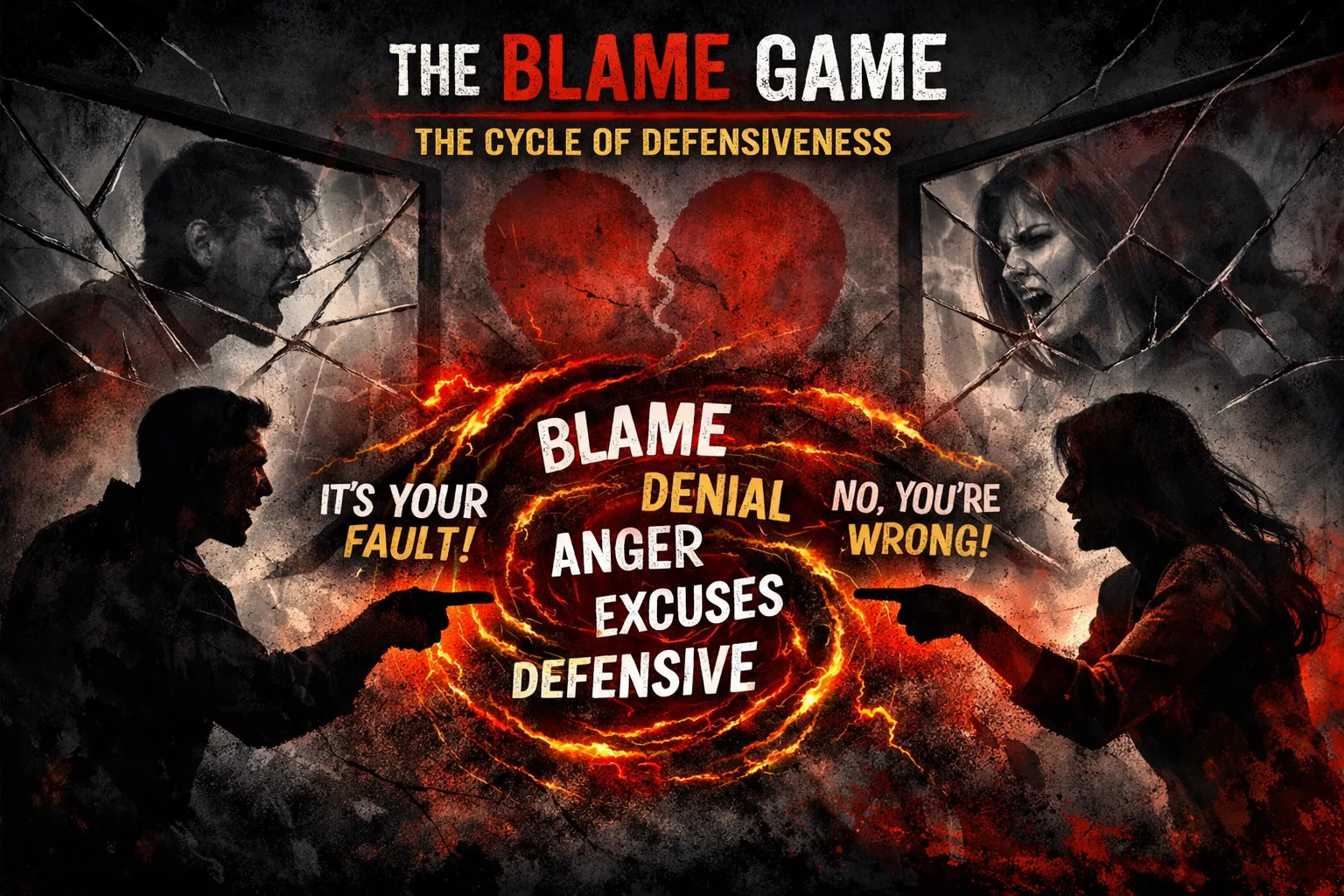
Imagine trying to build a towering structure on shifting sand. Every time you lay a brick, the ground beneath gives way. This is what it feels like to try and build emotional intimacy in relationships when the blame game and defensiveness are at play. These toxic relationship habits prevent either partner from taking responsibility, trapping the relationship in a cycle of accusation and self-preservation, and ultimately destroying the foundation of trust.
What It Looks Like in Real Life:
This pattern is marked by a refusal to acknowledge one’s own contribution to a problem, instead deflecting criticism and pointing fingers.
- “You always…” / “You never…” Statements: Generalizing and accusing the other person of being solely responsible for an issue.
- Immediate Counter-Attack: When confronted with a concern, immediately bringing up a past failing of the other person to shift the focus. “I may have done X, but you did Y last week!”
- Externalizing Blame: Attributing problems to external circumstances, other people, or anything but one’s own actions. “It’s not my fault, I was just stressed from work.”
- Playing the Victim: Adopting a “poor me” stance to avoid accountability and evoke sympathy.
- Denial of Impact: Refusing to acknowledge how one’s actions have affected their partner, dismissing their feelings.
Consider the story of Leo and Chloe. Leo forgot their anniversary, a recurring issue. When Chloe gently brought it up, expressing her hurt, Leo immediately retorted, “Well, you always forget to tell me what’s important to you anyway! And besides, you’ve been so busy with work, I thought you wouldn’t care.” Chloe, instead of feeling heard, felt attacked and invalidated. This back-and-forth, where neither truly took responsibility, was a common unhealthy relationship pattern for them, leaving both feeling bruised and unheard after every conflict, chipping away at their ability to unlock secrets to building trust in relationships.
Why It’s So Damaging to Emotional Intimacy:
Trust is the bedrock of emotional intimacy in relationships. When one or both partners are constantly defensive or engaged in the blame game, trust crumbles. It creates an environment where neither feels safe to be vulnerable or honest, knowing their feelings might be dismissed or turned against them.
- Destroys Psychological Safety: Without the safety to express concerns without fear of attack, partners withdraw. This makes open communication impossible.
- Prevents Problem-Solving: If no one owns their part of the problem, the problem can never be truly solved. It merely resurfaces in different forms.
- Erodes Respect: Constant blame and defensiveness chip away at mutual respect, making partners view each other as adversaries rather than teammates.
- Fosters Resentment and Bitterness: The accumulation of unaddressed grievances and unacknowledged hurts leads to deep-seated resentment, effectively blocking a deeper emotional connection.
- Creates a Cycle of Conflict: Each interaction becomes a battleground rather than an opportunity for understanding, further entrenching these toxic relationship habits.
Pathways to Relationship Self Improvement:
Breaking the blame game requires a shift from “me vs. you” to “us vs. the problem.” This is fundamental to relationship self improvement.
- Practice Self-Responsibility: The mantra here is: “What part did I play?” Even if it’s 5%, own that 5%. Begin by reflecting on your actions and their impact, rather than immediately focusing on your partner’s. This is a crucial aspect of emotional intelligence.
- Listen with Empathy: Before responding, try to truly understand your partner’s perspective and feelings. Validate their feelings first, even if you don’t agree with their interpretation of events. “I hear that you’re feeling hurt by my forgetting our anniversary, and I’m sorry for that.”
- Use “I” Statements: Instead of “You always make me feel…”, try “I feel X when Y happens.” This focuses on your experience rather than accusing your partner.
- Take a Breather (When Needed): If you feel yourself becoming defensive, ask for a short break to cool down before resuming the conversation. “I’m feeling a bit overwhelmed right now; can we revisit this in 30 minutes?” This helps to protect your peace and prevent reactive escalation.
- Focus on Repair, Not Winning: The goal isn’t to be right, but to repair the connection. A sincere apology and a willingness to make amends go a long way in rebuilding trust and fostering a deeper emotional connection. Learning how to deal with regret and move forward with life can also be very helpful in breaking this cycle.
By cultivating a spirit of personal responsibility and mutual understanding, you can transform conflict into an opportunity for growth and strengthen the bonds of trust and emotional intimacy in relationships.
Cultivating a Vision for Change in 2026
It’s 2026, and the landscape of relationships continues to evolve. More than ever, people are seeking genuine, emotionally rich connections that stand the test of time. Identifying and dismantling these toxic relationship habits is not about blaming yourself or your partner; it’s about recognizing unhealthy relationship patterns and committing to a vision for change. It’s about empowering yourselves with the tools for relationship self improvement to build the kind of connection you truly desire.
At AKReviews, we believe that every individual deserves to experience the profound joy of a truly intimate relationship. It takes courage to look inward, to acknowledge the ways we might be contributing to emotional distance, and to choose a different path. But the reward – a deeper emotional connection founded on trust, authenticity, and unwavering support – is immeasurable.
Your journey to mastering the overwhelm of past relationship scripts and forging new, healthier ones starts now. By committing to self-awareness, honest communication, and mutual respect, you can begin to deepen the bond, protect your peace, and cultivate the emotional intimacy in relationships that truly nourishes the soul. Remember, growth is a process, not a destination. Be patient with yourselves, celebrate small victories, and always keep striving for a connection that truly resonates.
Conclusion
The pursuit of emotional intimacy in relationships is a lifelong journey, often marked by challenges that test our resolve and reveal our deepest insecurities. The three toxic relationship habits we’ve explored – silent treatment and emotional stonewalling, validation seeking over authentic connection, and the blame game with its accompanying defensiveness – are potent inhibitors of true closeness. They prevent us from showing up as our authentic selves, from resolving conflicts constructively, and from building the trust necessary for a truly deeper emotional connection.
However, recognizing these unhealthy relationship patterns is the first, most powerful step towards transformation. This isn’t about finding fault, but about fostering self-awareness and taking personal responsibility for our part in the relationship dynamic. As we navigate the complexities of connection in 2026, the opportunity for relationship self improvement is greater than ever.
Actionable Next Steps:
- Start a Self-Reflection Practice: Dedicate 10-15 minutes each day to journaling or quiet contemplation. Ask yourself: “How did I contribute to the last conflict?” “Was I truly listening, or just waiting to respond?” “Did I seek validation today, and why?”
- Initiate “I” Statement Conversations: Practice using “I feel… when you… because I need…” statements in your next conversation, especially when addressing a difficult topic. Focus on expressing your experience rather than accusing.
- Schedule a “Check-in” Time: Set aside a specific time (e.g., 15 minutes once a week) to discuss non-urgent feelings, frustrations, and appreciations with your partner in a calm, neutral setting. This can prevent issues from escalating into stonewalling or blame.
- Identify Your Triggers for Defensiveness/Withdrawal: What situations or comments instantly make you want to shut down or lash out? Understanding these triggers allows you to consciously choose a different response.
- Seek Resources and Support: Explore resources on healthy communication, emotional intelligence, or consider individual or couples therapy. Websites like AKReviews offer a wealth of articles on personal growth and relationships. Remember, seeking help is a sign of strength, not weakness.
By consciously choosing to replace these toxic relationship habits with healthier, more proactive approaches, you can begin to dismantle the walls that block intimacy and build a stronger, more vibrant, and truly connected relationship that thrives in 2026 and beyond. Your deeper emotional connection is within reach.
References
[1] Gottman, J. M., & Levenson, R. W. (1992). Marital processes and marital outcomes: A longitudinal study of newlywed couples. Journal of Personality and Social Psychology, 63(2), 227–233.
[2] Kernis, M. H., & Goldman, B. M. (2006). A multicomponent conceptualization of authenticity: Theory and research. Advances in Experimental Social Psychology, 38, 283–357.